Shoulder anatomy & how it works
Lower Trapezius: The Under-Trained Muscle for Healthy Overhead Reach
4-minute read · Published July 27, 2026 · Updated July 27, 2026

Why this happens / What this is
The trapezius is a large muscle covering your upper back and neck. The lower trapezius is its bottom part, running from the middle of the spine toward the shoulder blade (scapula).
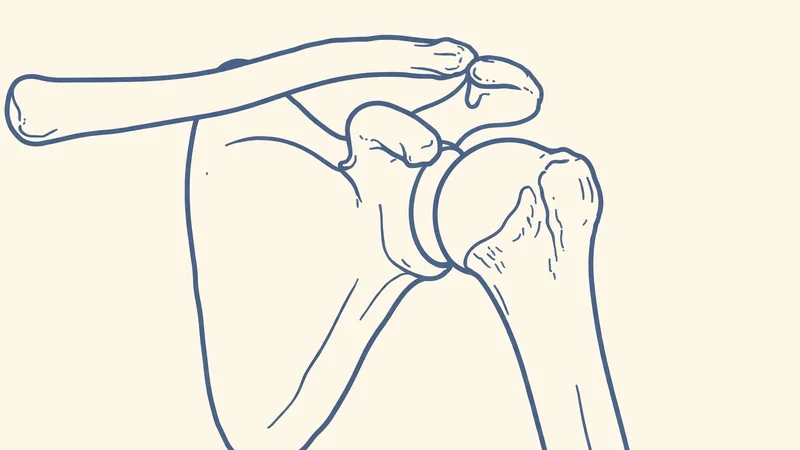
Your shoulder blade is not fixed in place. It glides and turns on the back of your ribcage. When you lift your arm overhead, the shoulder blade needs to rotate upward and tilt back, which leaves room for the arm bone to rise. The lower trapezius helps with that upward turn.
It also works as a team with the serratus anterior, a muscle along the side of the ribs that keeps the shoulder blade against the chest wall. When that team is slow or unbalanced, the arm can feel like it is reaching against a brake. That is a pattern, not a diagnosis. Only a clinician can say what is causing it.
For the bigger picture, start with how the shoulder works.
What the research says
- A 2025 review found that scapular stabilization exercise improved pain and function in people with rotator cuff-related shoulder pain [R03]. Those people had shoulder pain, so treat this as a reason to try the approach, not as proof for you.
- Shoulder problems are linked with reduced joint position sense, your body's awareness of where the joint is. Rehabilitation usually moves from range of motion, to strength, to control and coordination [R16].
- Exercise with resistance that builds gradually is the type most likely to help shoulder pain. Gentle, unloaded movement alone probably does not change pain much [R01].
- In adults over 60, strength, mobility, body composition and posture are each linked with shoulder pain and disability. These are possible targets, although the research is still developing [R28].
What you can do
- Try a seated shoulder blade glide. Hold one arm in front of you at chest height. Let the other hand gently guide it forward and back. Keep the movement small and smooth, and stop at any sharp pain.
- Try a standing counter slide. Stand facing a kitchen counter with your hands on the edge, and let your shoulder blades slide around your ribs.
- Lift one arm slowly overhead. Seated or standing, raise one arm toward a high shelf. Keep the shoulder away from your ears, and lower with control.
- Add resistance later. Once movements feel easy, resist a little harder with the other arm, move through more range, or do longer sets.
Where ShoulderBack Pro fits — and where it doesn't
Two of the 16 lessons suit this muscle. SeeSaw has one arm guide the other through gentle reaches, so the shoulder blades move with little effort. Around the World is one large, unhurried circle in front of you, and the site lists it as working the serratus anterior and lower trapezius. The resistance comes from your other arm, so you control it. It's a simple movement tool, not a treatment; nobody has run a clinical trial on it. ShoulderBack Pro is $29 CAD with a 30-day guarantee.
When to see a professional
See a doctor or physiotherapist promptly if you have: pain after a fall or injury with sudden weakness or loss of movement; a shoulder that looks deformed, very swollen or bruised; fever or feeling unwell alongside the pain; chest pain or breathlessness (call emergency services); constant pain that doesn't change with rest or activity; pain that wakes you most nights; numbness, tingling or weakness into the arm or hand; pain in several joints at once; or pain that hasn't improved after a couple of weeks of sensible self-care.
A physiotherapist can check how your shoulder blade moves.
Try this movement
SeeSaw (the muscles around the shoulder blade) →Frequently asked questions
Is the lower trapezius hard to train?
Not really. It responds well to slow, controlled movement and light load. The harder part is noticing it, because it works quietly behind the shoulder blade.
Can a weak lower trapezius cause shoulder pain?
Poor shoulder blade movement can be part of shoulder pain for some people. In adults over 60, strength, mobility and posture are each linked with shoulder pain, but only a clinician can tell whether shoulder blade movement is part of yours [R28].
Should I do these seated or standing?
Either works. Start seated if you are unsure, then move to standing once the movement feels comfortable and steady.
Sources
- Frontiers in Bioengineering & Biotechnology (2025). Specific modes of exercise to improve rotator cuff-related shoulder pain: systematic review and meta-analysis. https://pmc.ncbi.nlm.nih.gov/articles/PMC12011739/
- Naunton J et al. (2020). Effectiveness of progressive and resisted and non-progressive or non-resisted exercise in rotator cuff related shoulder pain: systematic review and meta-analysis of RCTs. Clinical Rehabilitation. https://search.pedro.org.au/search-results/record-detail/61404
- Mureşan et al. (2022). Effects of a novel proprioceptive rehabilitation device on shoulder joint position sense, pain and function. Medicina. https://www.ncbi.nlm.nih.gov/pmc/articles/PMC9505091/
- PMC narrative review (2026). Body composition, strength, mobility and posture associated with shoulder pain and disability in community-dwelling older adults. https://www.ncbi.nlm.nih.gov/pmc/articles/PMC13513864/