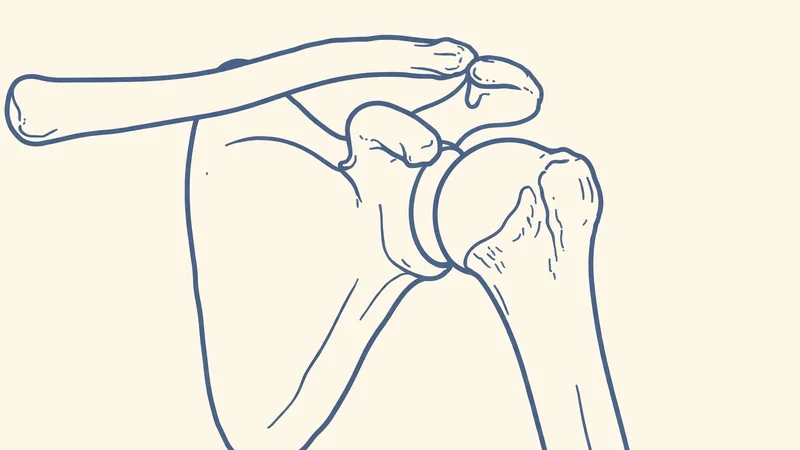
Shoulder anatomy & how it works
Levator Scapulae: The Muscle Behind That Knot in Your Neck
4-minute read · Published June 12, 2026 · Updated June 12, 2026

What this muscle does
The levator scapulae (pronounced lev-AY-tor SCAP-yoo-lee) starts at the upper neck. It runs down to the top, inner corner of the shoulder blade, which is called the scapula. Its main job is to lift the shoulder blade. It also helps turn the neck.
A "knot" is simply a firm, tender spot you can feel where the neck meets the shoulder.
Why it can feel tight
Tightness is often linked to how the muscle is being used. Holding the shoulders up, leaning the head forward or staying still for a long time can ask it to work hard. Stress can also make people hold their shoulders higher.
These are patterns, not proof of a problem. Only a clinician can explain what is going on in your neck.
What the research says
- The shoulder blade plays a real part in shoulder pain and function. In a 2025 review of exercise types, scapular stabilization exercise improved pain and function [R03].
- Strength, mobility and posture are each linked to shoulder pain and disability in adults 60 and over. The evidence on posture is limited [R28].
- Neck and shoulder symptoms that come with numbness, tingling or weakness need assessment first [R30].
What you can do
- Sit tall in a firm chair. Feet flat, arms relaxed at your sides.
- Gentle shoulder-blade squeeze. Draw the shoulder blades slightly toward each other and down. Hold for a breath, then release.
- Shrug and release. Lift the shoulders a little, then let them drop slowly. Repeat slowly, keeping the movement small.
- Slow ear-to-shoulder tilt. Tilt one ear toward the same-side shoulder with no force. Breathe, come back, and switch sides. Stop at any sharp pain.
- Raise your screen. Bring the screen up to eye level so your head stays over your shoulders.
Where ShoulderBack Pro fits and where it doesn't
The site lists Grinders, small circles between the shoulder blades, as designed to work the levator scapulae and rhomboid minor. SeeSaw adds slow, alternating reaches for the muscles around the shoulder blade, with one arm resisting the other. Both are seated-friendly.
It does not target the neck directly. It is a wellness tool, not a treatment, and there are no clinical trials of it yet.
When to see a professional
See a doctor or physiotherapist promptly if you have: pain after a fall or injury with sudden weakness or loss of movement; a shoulder that looks deformed, very swollen or bruised; fever or feeling unwell alongside the pain; chest pain or breathlessness (call emergency services); constant pain that doesn't change with rest or activity; pain that wakes you most nights; numbness, tingling or weakness into the arm or hand; pain in several joints at once; or pain that hasn't improved after a couple of weeks of sensible self-care.
A doctor or physiotherapist is the right person to diagnose neck and shoulder pain.
Try this movement
SeeSaw (the muscles around the shoulder blade) →Frequently asked questions
Is a knot in my neck a sign of damage?
Not necessarily. A tender spot is a sensation, not a diagnosis. Pain that persists, or any red-flag symptom, needs a clinician.
Can stretching get rid of it?
Gentle movement may ease tightness for some people. Forceful stretching is not a good idea, so keep every move slow and within a comfortable range.
Is this the same as a pinched nerve?
Not necessarily. Nerve symptoms, such as numbness, tingling or weakness, need assessment. Tightness alone is different.
Sources
- Frontiers in Bioengineering & Biotechnology (2025). Specific modes of exercise to improve rotator cuff-related shoulder pain: systematic review and meta-analysis. PROSPERO CRD42024550602. https://pmc.ncbi.nlm.nih.gov/articles/PMC12011739/
- PMC narrative review (2026). Body composition, strength, mobility and posture associated with shoulder pain and disability in community-dwelling older adults. https://www.ncbi.nlm.nih.gov/pmc/articles/PMC13513864/
- NHS Greater Glasgow & Clyde, shoulder red flags; NHS MPFT self-help, shoulder pain; BESS/BOA pathway summary (2021). https://pmc.ncbi.nlm.nih.gov/articles/PMC7905504