Coordination, control & how ShoulderBack Pro works
How Hard Should You Resist? Finding Your Effort Level With SBP
4-minute read · Published January 7, 2026 · Updated January 7, 2026
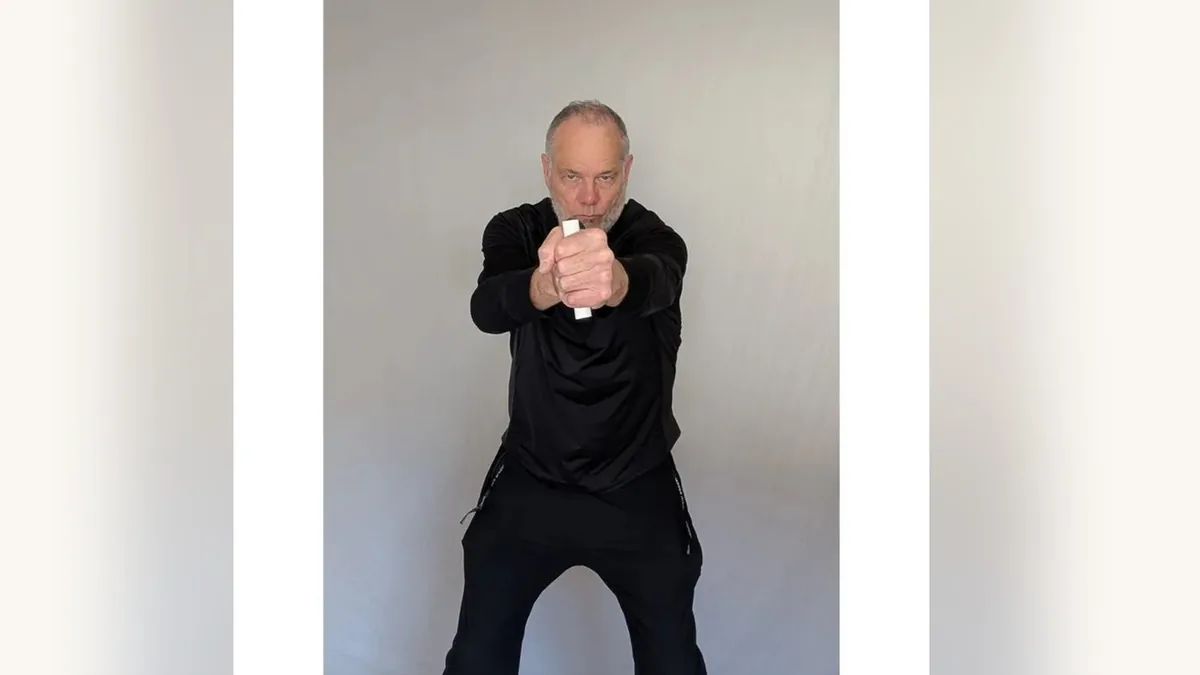
What "resistance" means here
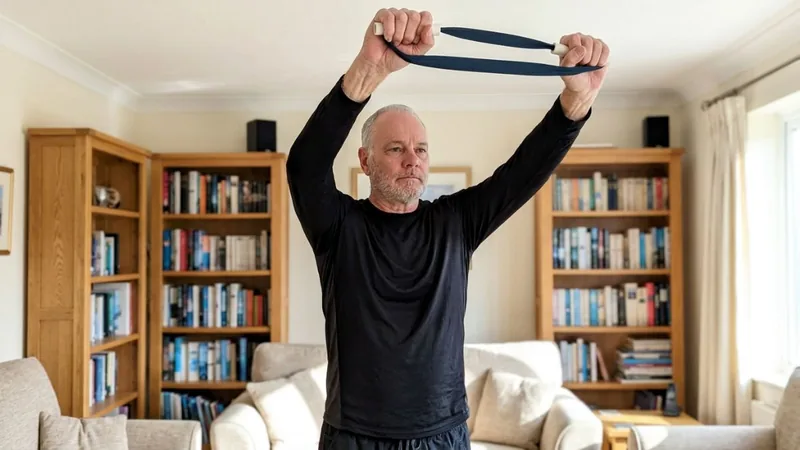
Resistance is the load your muscles push against. In a gym, that is usually weight. With ShoulderBack Pro, the resistance comes from your other arm. One arm assists while the other resists, and the strap is fixed and non-elastic, so nothing stretches or snaps. You control how hard the resisting arm works.
That makes the effort adjustable in a simple way. You can ease off with a lighter push, or work a bit harder when you feel ready.
What the research says
- Resisted exercise that progresses probably helps. In rotator-cuff-related pain, progressive, resisted exercise showed a benefit of uncertain clinical size. Gentle movement without added load probably does not move pain much [R01].
- Specific exercise types helped too. One review found benefit from mobilization and stretching, and from scapular stabilization, over about two months [R03].
These are general findings about shoulder exercise. They are not studies of ShoulderBack Pro specifically.
What you can do
- Start light. Choose an effort level where the movement feels easy for the first three repeats.
- Check the finish. You should be able to finish the set calmly, breathing normally, without shrugging.
- Watch the shoulder. Mild working feeling is common. Sharp pain, pinching or pain that lingers the next day means you should reduce the effort.
- Hold the level for a week. Only increase when the shoulder feels settled, both during and after the session.
- Change one thing at a time. Adjust effort, range or repeats, not all three at once.
- Keep notes. Record the effort setting, how the set felt and how the shoulder felt the next morning.
Where ShoulderBack Pro fits — and where it doesn't
Effort is the one thing the ShoulderBack Pro leaves entirely to you, because the other arm provides the resistance. SeeSaw is a good place to find your starting level, and Bicep Tricep, where one arm curls while the other extends, makes it easy to feel how hard each arm is pushing. The 16 free video lessons show each pace. It is a wellness tool, not a treatment, and there are no clinical trials of it yet. If you have shoulder pain, let a clinician set your progression.
When to see a professional
See a doctor or physiotherapist promptly if you have: pain after a fall or injury with sudden weakness or loss of movement; a shoulder that looks deformed, very swollen or bruised; fever or feeling unwell alongside the pain; chest pain or breathlessness (call emergency services); constant pain that doesn't change with rest or activity; pain that wakes you most nights; numbness, tingling or weakness into the arm or hand; pain in several joints at once; or pain that hasn't improved after a couple of weeks of sensible self-care.
A doctor or physiotherapist is the right person to diagnose your shoulder and to set the load you should aim for.
How to find your starting level
- Sit in a supportive chair with your back against it.
- Set the effort low and do three slow repeats.
- If the movement feels easy and calm, do one more set.
- Rest, then note how the shoulder feels for the next day.
- Only raise the effort when the shoulder has felt settled for several days.
Try this movement
All 16 video lessons →Frequently asked questions
How do I know if the effort is too hard?
If you cannot finish the set calmly, if you shrug, or if you have sharp or worsening pain, the effort is too high. Reduce it and rest.
Should I feel a burn?
A mild working feeling is common. Sharp pain, pinching or pain that lingers into the next day means you should back off and ask a clinician.
How do I make it harder over time?
Change one thing at a time, such as a little more effort, a slightly longer range or a few more repeats. Hold each step for a week or two.
Does resistance have to be heavy?
No. Exercise with resistance that builds gradually is the type most likely to help [R01], and many clinicians suggest starting light and building up.
Sources
- Naunton J et al. (2020). Effectiveness of progressive and resisted and non-progressive or non-resisted exercise in rotator cuff related shoulder pain: systematic review and meta-analysis of RCTs. Clinical Rehabilitation. https://search.pedro.org.au/search-results/record-detail/61404
- Frontiers in Bioengineering & Biotechnology (2025). Specific modes of exercise to improve rotator cuff-related shoulder pain: systematic review and meta-analysis. PROSPERO CRD42024550602. https://pmc.ncbi.nlm.nih.gov/articles/PMC12011739/
More in this topic
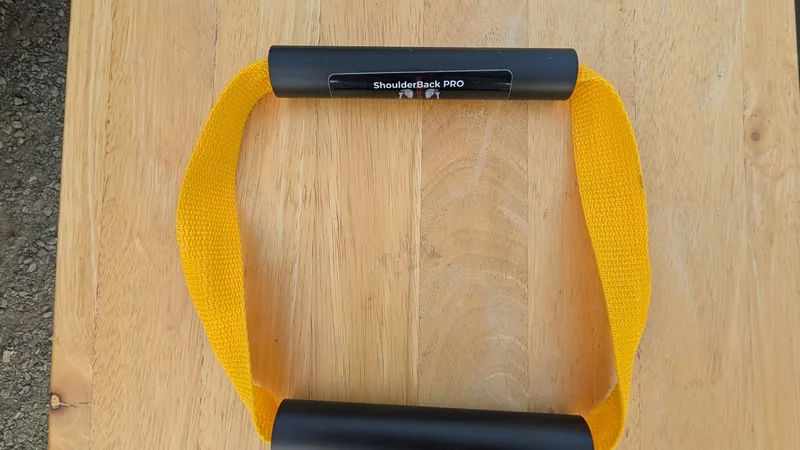 Essential guide: How ShoulderBack Pro Works: One Device, Two Connected Handles, Your Own Resistance
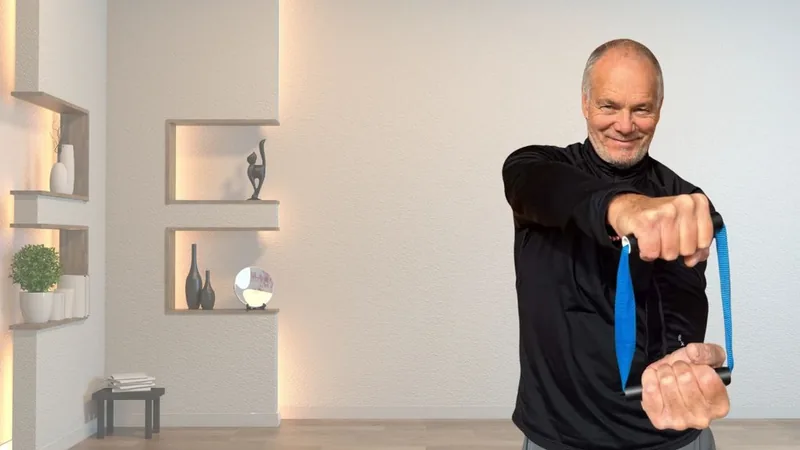 Pairing SBP With Walking: The Simplest Whole-Body Routine for Active Aging
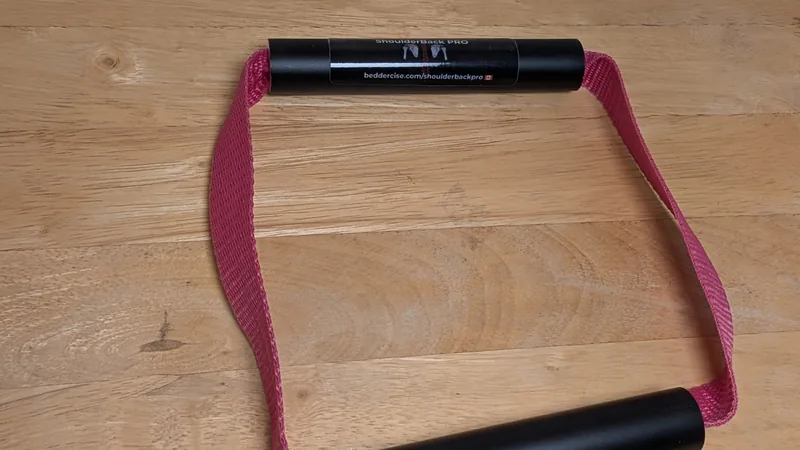 Locomotive: Rolling Circles for the Upper Back and Rear Cuff
 Overhead Press (High Shelf Reach): Trapezius and Deltoids Without a Weight