Comparisons, buyer's guides & honest product answers
Buying for a Care Home or Seniors' Group: 4-Packs, Fridge Cards and Group Routines
5-minute read · Published March 17, 2026 · Updated March 17, 2026
Why this matters
Many people find group programs help them keep moving. Strength training supports function, independence and quality of life, and the position statement notes that fears and barriers should be addressed [R06]. Many people in a group setting also enjoy the social side of a routine.
Group exercise is not a medical treatment, though. Staff who plan a session need to think about safety, consent and each person's health. Whether a shoulder program helps any one person is not something a product page can promise (evidence varies, so ask each resident's clinician).
What the research says
- Progressive, resisted exercise probably makes a modest difference shoulder pain. Gentle, unloaded movement alone probably does not [R01].
- Exercise-based interventions reduced pain and improved function and range of motion in middle-aged and older adults with rotator cuff-related shoulder pain. This is from the abstract of a 2026 review [R04].
- Guidelines say every move counts, and adults 65 and older are encouraged to do multicomponent activity that builds balance and strength [R07].
What you can do
- Check first. Before any new routine, ask each resident's clinician and read your facility's health policy. Anyone with a recent fall, fracture, surgery or diagnosed shoulder condition needs an assessment first [R30].
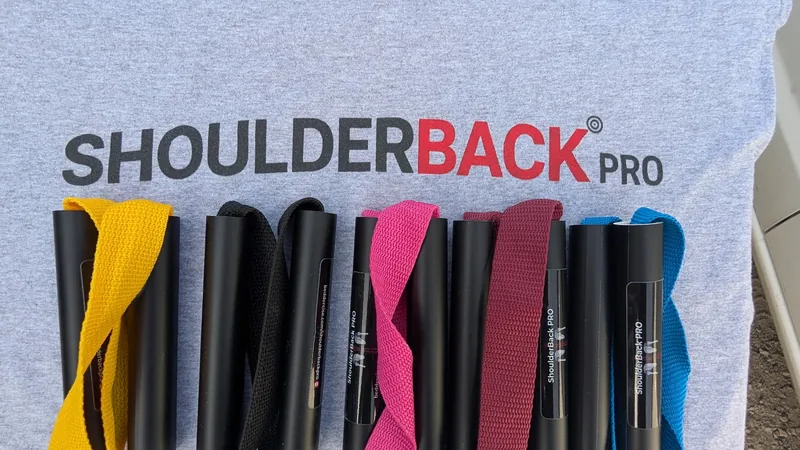
- Start seated. Use chairs with back and arm support. Let each person pick a strap colour and move within a comfortable range.
- Keep sessions short. One of the three 3-minute rituals, Refreshing Awareness, Greet the Morning or Vitality & Posture Perk, is a good length for a group.
- Post a routine card. A printed routine card on the fridge or in the activity room helps people remember the moves between sessions. You can read the routine card page for the layout.
- Track simply. Note who attended and whether anyone reported more pain or stiffness the next day. Stop and report any change.
- Keep the group relaxed. Encourage people to stop when they need to, and make it clear that no one has to keep up with anyone else.
Where ShoulderBack Pro fits — and where it doesn't
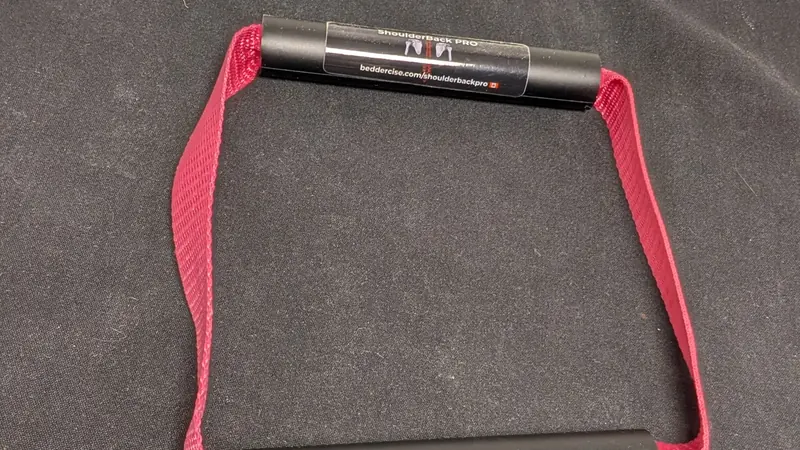
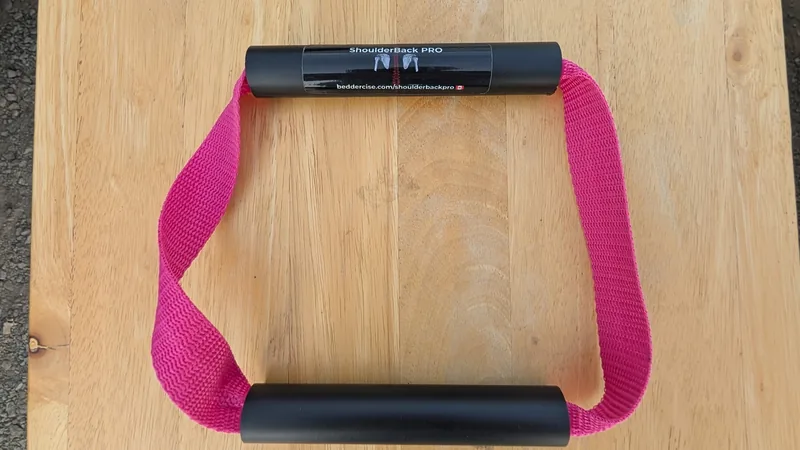
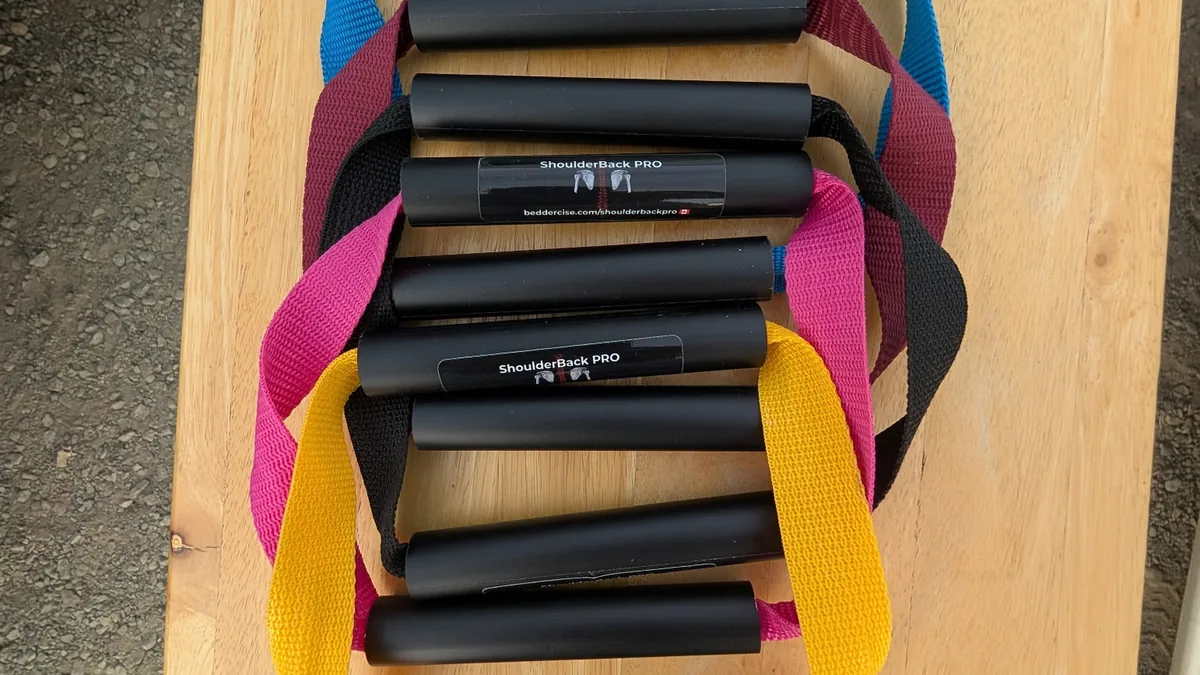
A four-pack suits a small group or a shared activity room: $87 CAD (buy three, get one free) with free shipping, and the four strap colours all have the same resistance, so colour is only a way to tell them apart. Steering, turning an imaginary wheel at ten-and-two, is an easy seated starting point, and Around the World is a gentle next step for people who can manage it. Because the other arm provides the resistance, each person sets their own effort, which suits mixed abilities. The 16 video lessons are free on the routines page.
It's a wellness tool, not a medical device or a treatment for any resident's condition, and there are no clinical trials of it yet. If it isn't right for your group, the 30-day guarantee refunds in full. You can order online or call 1-800-555-0199.
Related reading: for the comparison behind this guide, see resistance bands vs ShoulderBack Pro. You can also read dumbbells vs body-controlled resistance and seniors' centres and group routines.
When to see a professional
See a doctor or physiotherapist promptly if you have: pain after a fall or injury with sudden weakness or loss of movement; a shoulder that looks deformed, very swollen or bruised; fever or feeling unwell alongside the pain; chest pain or breathlessness (call emergency services); constant pain that doesn't change with rest or activity; pain that wakes you most nights; numbness, tingling or weakness into the arm or hand; pain in several joints at once; or pain that hasn't improved after a couple of weeks of sensible self-care [R30].
Staff should report any of these signs to the resident's clinician rather than carry on with the routine.
Try this movement
All 16 video lessons →Frequently asked questions
Can residents use it seated?
Yes. The trainer can be used seated in an armchair or standing. Start seated, and let each person choose what feels comfortable.
Do I need approval before a group starts?
Yes. Check each person's clinician and your facility's health policies before any new routine. Anyone with a recent fall, fracture, surgery or a diagnosed shoulder condition needs an assessment first [R30].
Does group exercise help shoulder pain?
Exercise-based programs have reduced pain and improved function and range of motion in middle-aged and older adults with rotator cuff pain [R04]. Results vary, so track how each person does.
What if it is not right for the group?
The 30-day Living Room Guarantee gives a full refund.
Sources
- Naunton J et al. (2020). Effectiveness of progressive and resisted and non-progressive or non-resisted exercise in rotator cuff related shoulder pain: systematic review and meta-analysis of RCTs. Clinical Rehabilitation. https://search.pedro.org.au/search-results/record-detail/61404
- BMC Musculoskeletal Disorders (2026). Exercise interventions for rotator cuff-related shoulder pain in middle-aged and older adults: systematic review and meta-analysis. https://link.springer.com/10.1186/s12891-026-10035-4
- Fragala MS, Cadore EL, Dorgo S et al. (2019). Resistance Training for Older Adults: Position Statement From the National Strength and Conditioning Association. J Strength Cond Res. https://pubmed.ncbi.nlm.nih.gov/31343601/
- WHO (2020). Guidelines on physical activity and sedentary behaviour. https://www.sydney.edu.au/news-opinion/news/2020/11/26/new-global-guidelines-on-physical-activity-and-sedentary-behavio.html
- NHS Greater Glasgow & Clyde, Shoulder red flags; NHS MPFT self-help, Shoulder pain; BESS/BOA pathway summary (2021). https://www.nhsggc.scot/page_category/services/page/33