Coordination, control & how ShoulderBack Pro works
Boxing: Rhythmic Pushes for Serratus and Triceps (No Snapping)
4-minute read · Published April 21, 2025 · Updated April 21, 2025
What this is
The serratus anterior is a muscle that wraps around the side of your ribs and attaches to your shoulder blade. When you push or reach forward, it keeps the blade close to the ribs so the arm can work well.
The triceps sit at the back of the upper arm. They straighten the elbow.
"Snapping" means driving the elbow hard to full straight at the end of each push. That jolt can be unpleasant for a sensitive shoulder. Many clinicians suggest a smooth, controlled pattern instead.
What the research says
- Blade-stability work helps. A 2025 review found that scapular stabilization exercise improved pain and function in rotator cuff-related shoulder pain [R03]. Soft pushing is not that exact exercise, but the serratus is one of the muscles involved.
- Progressive resistance probably helps. Resisted exercise that gets a little harder over the weeks probably helps shoulder pain. Gentle movement with no load probably does not [R01].
What you can do
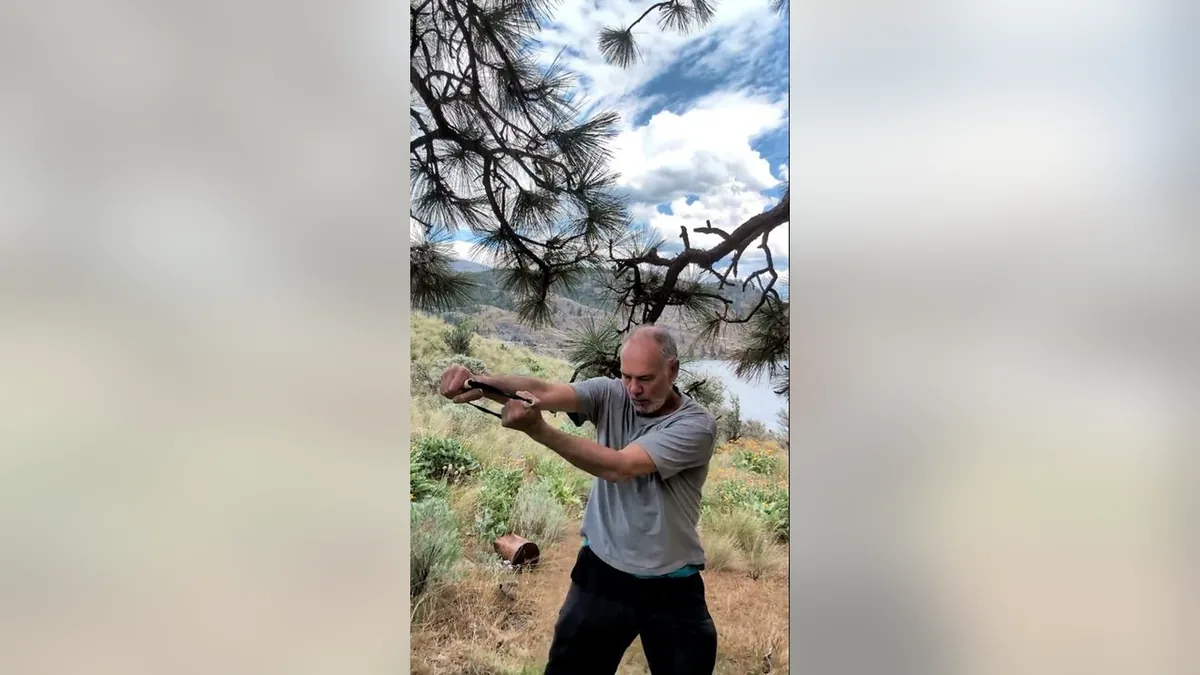
- Start seated. Sit in an armchair with your back supported and feet flat. Bring both fists up to chest height, elbows bent.
- Push one fist forward softly. Let it travel a short distance with a slight twist of the forearm. Stop before the elbow locks straight.
- Return and switch. Bring that hand back to chest height, then push with the other hand. Keep the pace relaxed, like a light rope skip rather than a punch.
- Keep the blade moving. As you push, let the shoulder blade glide gently forward. As you return, let it settle back.
- Stop if something is wrong. Pause for sharp pain, catching, or sudden weakness.
Where ShoulderBack Pro fits, and where it doesn't
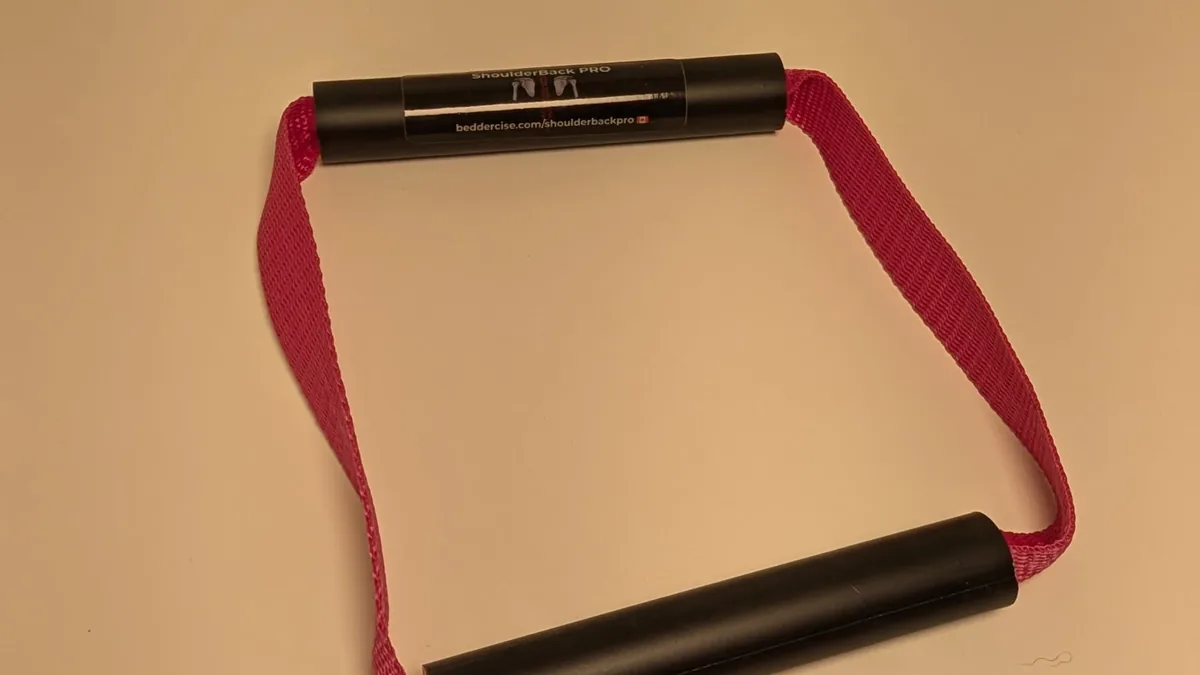
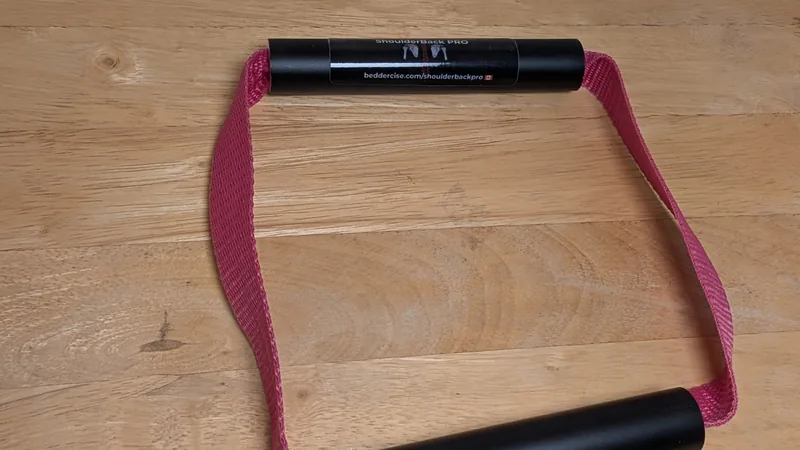
Boxing is the trainer's own version of this move, and the site lists the serratus anterior and triceps as its targets. With the handles joined by a fixed strap, each soft push is met by the other arm, so the resistance is yours to set. To progress, resist a little harder, push through slightly more range or do longer sets, never by snapping. It works seated or standing. The rest of the routine is in all 16 video lessons.
It is a wellness tool, not a treatment, and there are no clinical trials of it yet. You can find the trainer in the shop.
When to see a professional
See a doctor or physiotherapist promptly if you have: pain after a fall or injury with sudden weakness or loss of movement; a shoulder that looks deformed, very swollen or bruised; fever or feeling unwell alongside the pain; chest pain or breathlessness (call emergency services); constant pain that doesn't change with rest or activity; pain that wakes you most nights; numbness, tingling or weakness into the arm or hand; pain in several joints at once; or pain that hasn't improved after a couple of weeks of sensible self-care.
A doctor or physiotherapist is the right person to assess a painful shoulder before you add a new pushing routine.
Try this movement
All 16 video lessons →Frequently asked questions
Is seated boxing safe for older shoulders?
Many people find soft, controlled pushing gentler than fast or loaded punching. Ask a clinician before starting if you have shoulder pain, recent surgery or a sudden injury.
Why does the arm need to avoid snapping straight?
Snapping the elbow straight at the end of each push adds a jolt. Many clinicians prefer smooth movement while a shoulder is sensitive.
Can I do this seated?
Yes. The seated version is a good starting point for many people, and you can stand once it feels comfortable.
Sources
- Naunton J et al. (2020). Effectiveness of progressive and resisted and non-progressive or non-resisted exercise in rotator cuff related shoulder pain: systematic review and meta-analysis of RCTs. Clinical Rehabilitation. https://search.pedro.org.au/search-results/record-detail/61404
- Frontiers in Bioengineering & Biotechnology (2025). Specific modes of exercise to improve rotator cuff-related shoulder pain: systematic review and meta-analysis. https://pmc.ncbi.nlm.nih.gov/articles/PMC12011739/
More in this topic
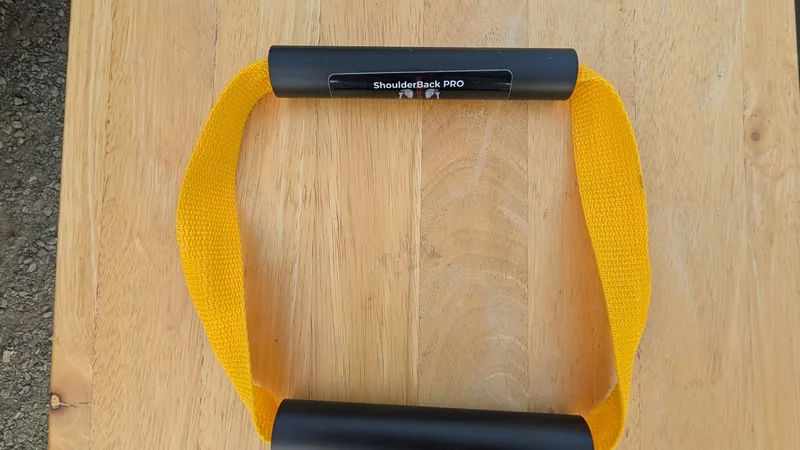 Essential guide: How ShoulderBack Pro Works: One Device, Two Connected Handles, Your Own Resistance
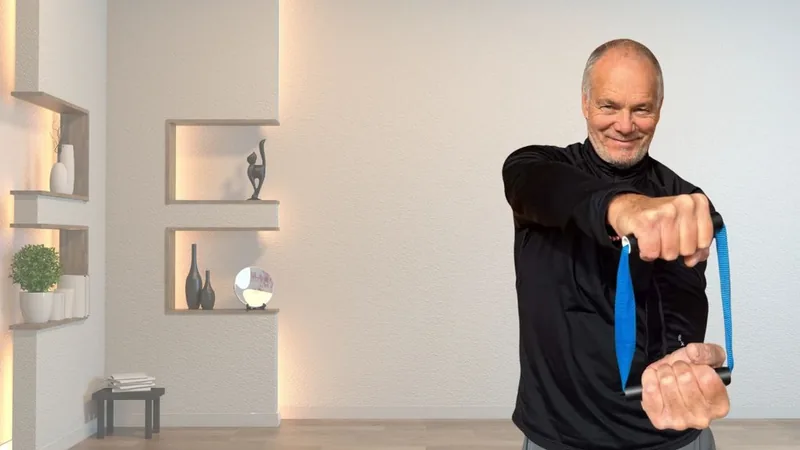 Pairing SBP With Walking: The Simplest Whole-Body Routine for Active Aging
 Locomotive: Rolling Circles for the Upper Back and Rear Cuff
 Overhead Press (High Shelf Reach): Trapezius and Deltoids Without a Weight