Food, nutrition & eating for joints and muscle
Bone Broth, Gelatin and Joints: Tradition vs Evidence
4-minute read · Published April 8, 2026 · Updated April 8, 2026
What this is
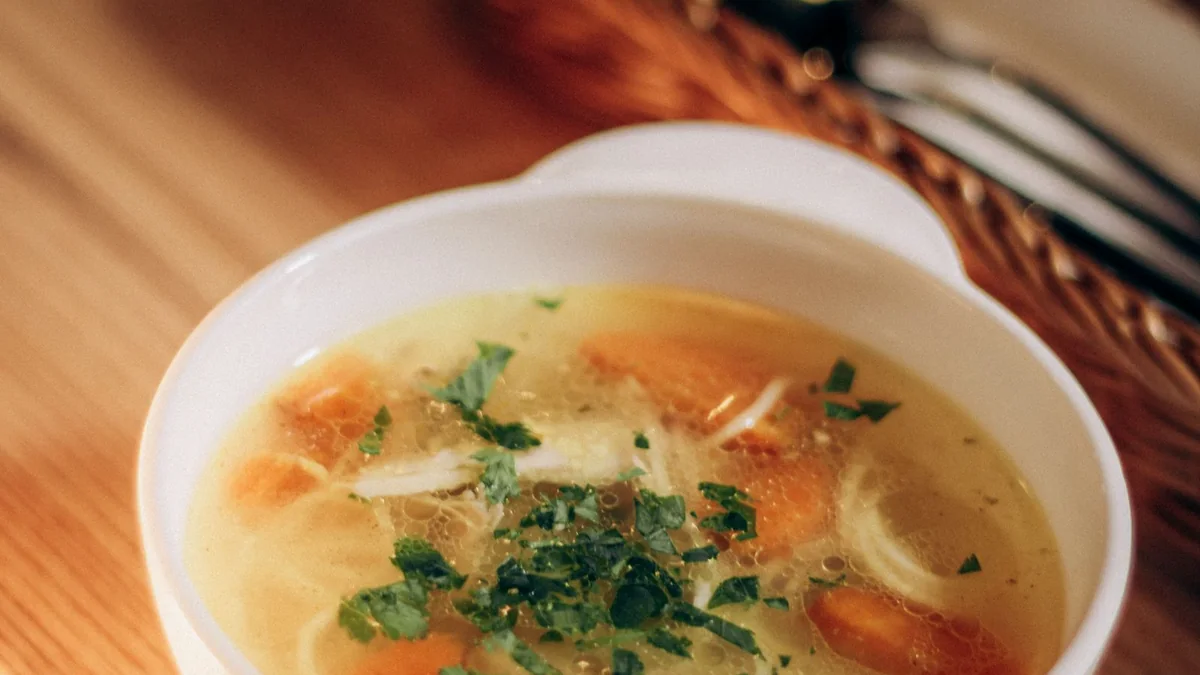
Bone broth is made by simmering animal bones and connective tissue for a long time. Gelatin is a protein made from collagen. Both are often promoted for joints.
The idea is tempting. Collagen is part of tendons and cartilage, so a food that contains it sounds like it should help. But eating a food does not automatically mean it repairs your joints. None of the sources we use test broth or gelatin for shoulder or joint pain.
What the research says
Here is the evidence level for each item, using the scale in our sources:
- Bone broth as a food: insufficient evidence for joint pain in our sources. Tradition is not proof.
- Gelatin and collagen supplements: there isn't strong research on these specifically in our sources, so the evidence should be seen as limited for now.
- Whole-diet patterns: Mediterranean-style and plant-based patterns are linked to less pain and better function in osteoarthritis [R21]. The word is "linked," not "proven."
- Supplements in general: many have insufficient evidence for musculoskeletal pain. The NCCIH notes some support for omega-3s in rheumatoid arthritis, but insufficient evidence for many others [R20].
- Anti-inflammatory eating: an anti-inflammatory diet can complement medical care, and it does not replace it [R23].
What you can do
- Enjoy broth as a food, not a joint plan. Use it as part of a balanced meal. Seated option: sip it at the table.
- Build meals around whole foods. Vegetables, beans, fish, nuts and olive oil fit the eating patterns linked to less joint pain [R21].
- Ask before you supplement. Bring the product label to your pharmacist. Talk to your pharmacist or doctor if you take blood thinners or other medication.
- Keep moving. Food does not replace movement. Gentle, seated shoulder work is one option your clinician may approve.
- Track how you feel over weeks. Note your joints over a few weeks, not one good day. For the broader evidence, see omega-3s for joint pain and ginger for joint pain.
Where ShoulderBack Pro fits — and where it doesn't
ShoulderBack Pro is a movement trainer and has no bearing on nutrition, so it doesn't fit this topic. For food and supplement questions, a dietitian, pharmacist or doctor is the right person to ask. If you later want a gentle movement habit, the routines are a separate option.
When to see a professional
See a doctor or physiotherapist promptly if you have: pain after a fall or injury with sudden weakness or loss of movement; a shoulder that looks deformed, very swollen or bruised; fever or feeling unwell alongside the pain; chest pain or breathlessness (call emergency services); constant pain that doesn't change with rest or activity; pain that wakes you most nights; numbness, tingling or weakness into the arm or hand; pain in several joints at once; or pain that hasn't improved after a couple of weeks of sensible self-care.
Try this movement
Refreshing Awareness 3-minute ritual →Frequently asked questions
Does bone broth help arthritis?
Our sources do not show that it does. It can be a warm, enjoyable food, but it is not a proven joint therapy.
Is gelatin or collagen worth trying?
The evidence is limited and mixed, so ask a pharmacist or doctor first, especially if you take blood thinners or other medication.
What is the simplest food step?
Most people can start with whole-food meals built around vegetables, beans, fish and olive oil. That is a general habit, not a targeted joint therapy.
Sources
- NCCIH (US National Center for Complementary and Integrative Health). Nutritional Approaches for Musculoskeletal Pain and Inflammation. https://www.nccih.nih.gov/health/providers/digest/musculoskeletal
- PMC narrative review (2025/26). Nutritional Interventions in Osteoarthritis: Mechanisms, Clinical Evidence, and Translational Opportunities. https://www.ncbi.nlm.nih.gov/pmc/articles/PMC12844890/
- EBSCO Health Notes. Exploring anti-inflammatory diets in rheumatology. https://about.ebsco.com/blogs/health-notes/exploring-anti-inflammatory-diets-rheumatology