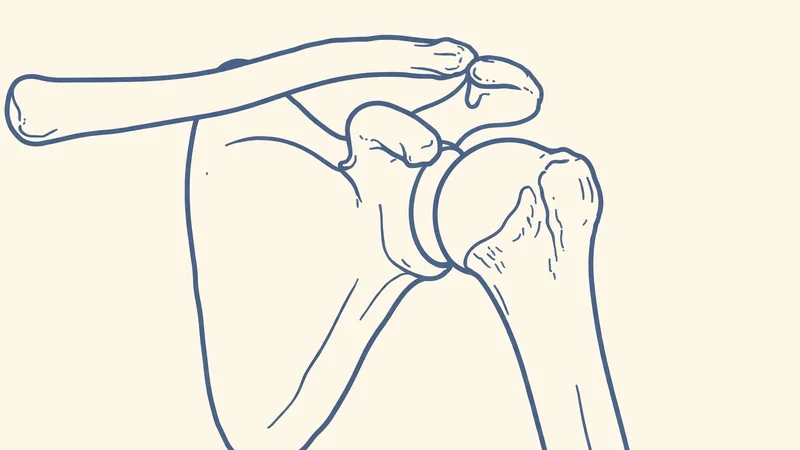
Shoulder anatomy & how it works
Biceps and the Shoulder: Why Arm Muscles Affect Shoulder Comfort
4-minute read · Published May 25, 2026 · Updated May 25, 2026
What the biceps does
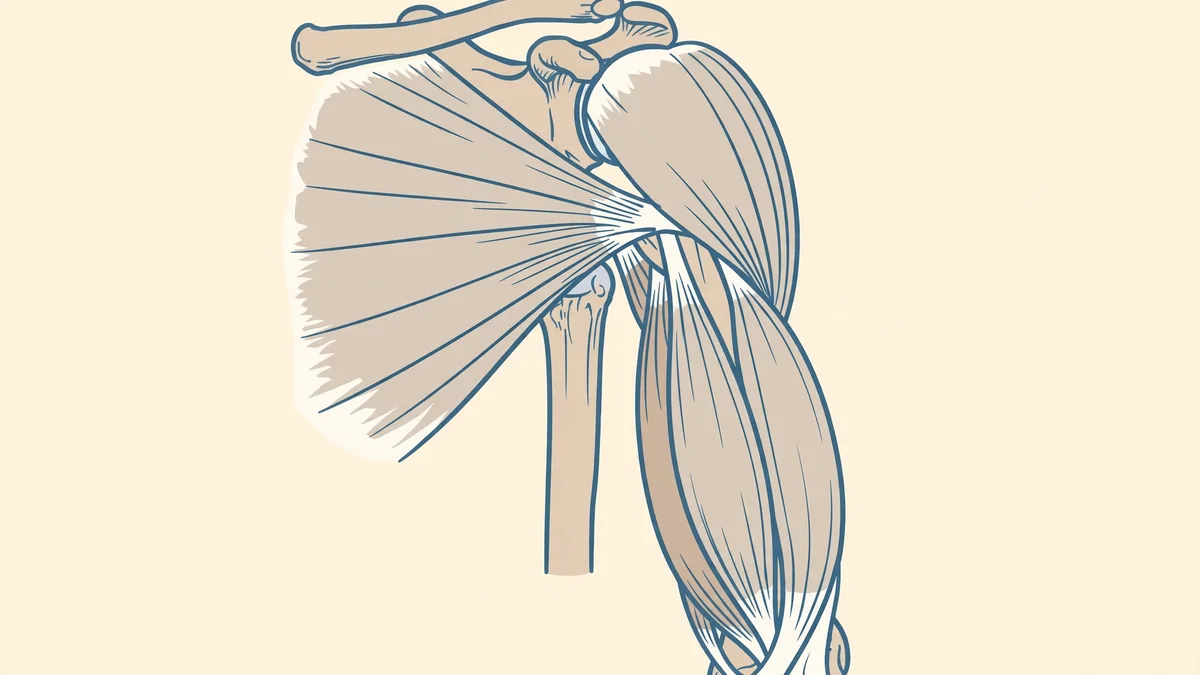
The biceps bends the elbow and turns the forearm palm up. It also helps the shoulder move. Its long tendon, the tough cord that joins muscle to bone, runs through a groove at the front of the shoulder and attaches near the top of the joint.
Because of that route, the tendon can become irritated, for example after overuse or a sudden change in load. A common result is a dull or sharp ache at the front of the shoulder.
What the research says
- A 2025 review of rotator-cuff-related shoulder pain found that scapular stabilization exercise improved pain and function [R03].
- Resisted, progressive exercise probably helps shoulder pain, while gentle unloaded movement alone probably does not [R01].
- Shoulder problems are often linked with weaker joint position sense. Rehab usually moves from range of motion, to strength, to control and coordination [R16].
- There isn't strong research on the biceps tendon specifically; the studies above are about rotator-cuff-related pain, so they are the closest evidence available.
What you can do
- Book an appointment with your family doctor or a physiotherapist, and ask them to check the biceps and the shoulder together.
- Until you are assessed, avoid heavy pulling, sudden lifts and hard curls.
- Seated option: once a clinician agrees, try slow, pain-free elbow bends and forearm turns while sitting.
- Keep a short note of what makes the ache better or worse. It helps your clinician.
- Report tingling, numbness or weakness in the hand promptly.
Where ShoulderBack Pro fits — and where it doesn't
A clinician should assess the tendon and decide what load is safe. Starting with a trainer first could delay the right care, so ShoulderBack Pro is not the answer to biceps pain.
Once you've been cleared for gentle, controlled movement, it can be an optional general-conditioning tool. The SeeSaw lesson shows the style, and the trainer is there if your clinician agrees. It's a wellness tool, not a treatment for tendon pain.
When to see a professional
See a doctor or physiotherapist promptly if you have: pain after a fall or injury with sudden weakness or loss of movement; a shoulder that looks deformed, very swollen or bruised; fever or feeling unwell alongside the pain; chest pain or breathlessness (call emergency services); constant pain that doesn't change with rest or activity; pain that wakes you most nights; numbness, tingling or weakness into the arm or hand; pain in several joints at once; or pain that hasn't improved after a couple of weeks of sensible self-care. [R30]
Only a doctor, physiotherapist or other licensed clinician can diagnose a biceps tendon problem. Imaging is not always needed, and NHS guidance advises against routine scans unless a treatment pathway exists [R30].
Try this movement
SeeSaw (the muscles around the shoulder blade) →Frequently asked questions
Is biceps pain the same as a rotator cuff problem?
Not necessarily. They can occur together, and only a clinician can sort out which tissue is involved.
Can I lift weights with a biceps problem?
Avoid heavy pulling and sudden loads until a clinician has assessed you. Then ask them how to progress.
Should I see someone after a sudden pop in the upper arm?
Yes. A sudden pop, a change in the shape of the arm, or sudden weakness needs prompt assessment.
Sources
- Naunton J et al. (2020). Effectiveness of progressive and resisted and non-progressive or non-resisted exercise in rotator cuff related shoulder pain: systematic review and meta-analysis of RCTs. Clinical Rehabilitation. https://search.pedro.org.au/search-results/record-detail/61404
- Frontiers in Bioengineering & Biotechnology (2025). Specific modes of exercise to improve rotator cuff-related shoulder pain: systematic review and meta-analysis. https://pmc.ncbi.nlm.nih.gov/articles/PMC12011739/
- Mureşan et al. (2022). Effects of a novel proprioceptive rehabilitation device on shoulder joint position sense, pain and function. Medicina. https://www.ncbi.nlm.nih.gov/pmc/articles/PMC9505091/
- NHS Greater Glasgow & Clyde, Shoulder red flags; NHS MPFT self-help, Shoulder pain; BESS/BOA pathway summary (2021). https://www.nhsggc.scot/page_category/services/page/33