Coordination, control & how ShoulderBack Pro works
Bear Hugs You: Reaching Forward for Chest and Front Shoulder
4-minute read · Published May 19, 2025 · Updated May 19, 2025
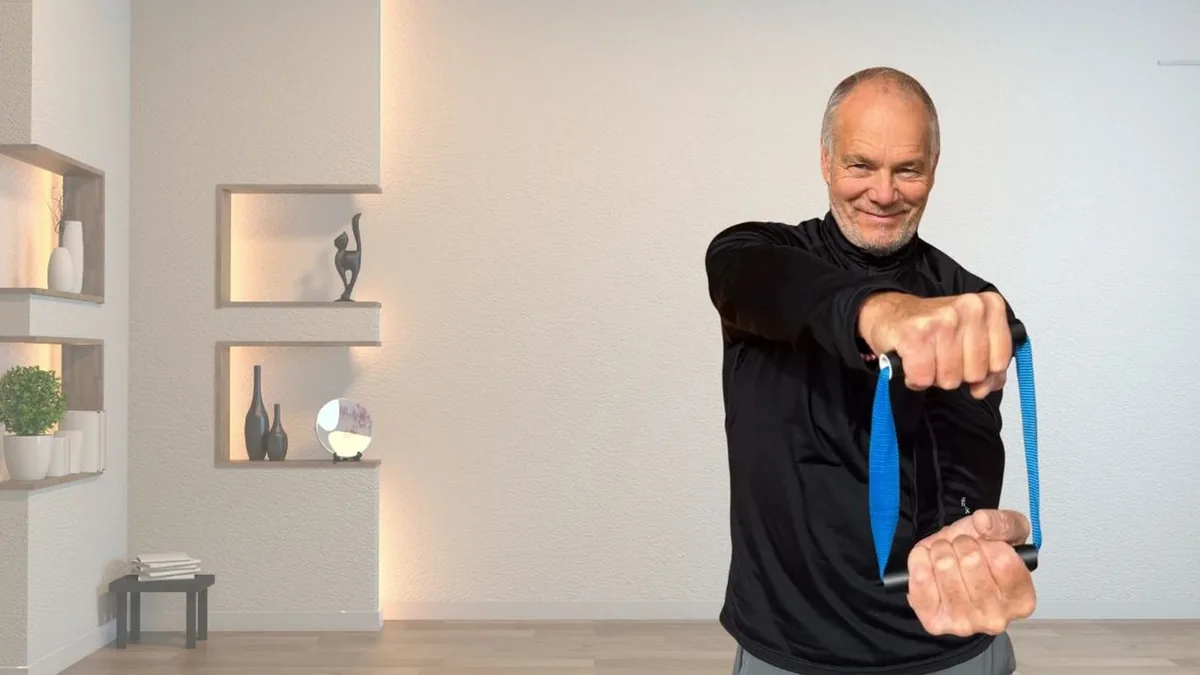
What this movement is
Bear Hugs You is designed to work the pectoralis major (the large chest muscle) and the anterior deltoid (the front part of the shoulder), according to the site. Both help bring the arm forward and across the body.
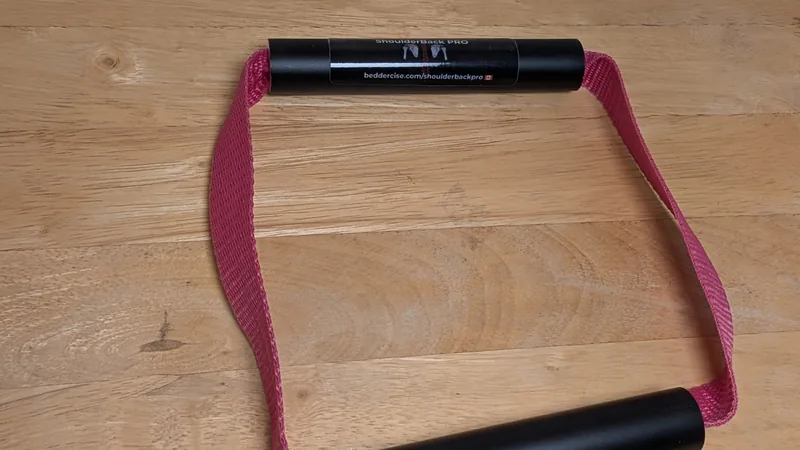
In ShoulderBack Pro, one arm assists while the other resists. You decide how hard, how fast and how far. To see how the two handles work together, read how the trainer works.
What the research says
Exercise that adds resistance and progresses over time probably helps rotator cuff-related shoulder pain. Gentle, unloaded movement alone probably does not move pain much [R01]. Programs that focus on control and coordination may work a little better than generic exercise, though it is not yet clear why [R02].
A common rehab order runs from range of motion, to strength, to control and coordination [R16]. Bear Hugs You fits the strength and control stage of that order. It does not replace a plan from your clinician.
What you can do
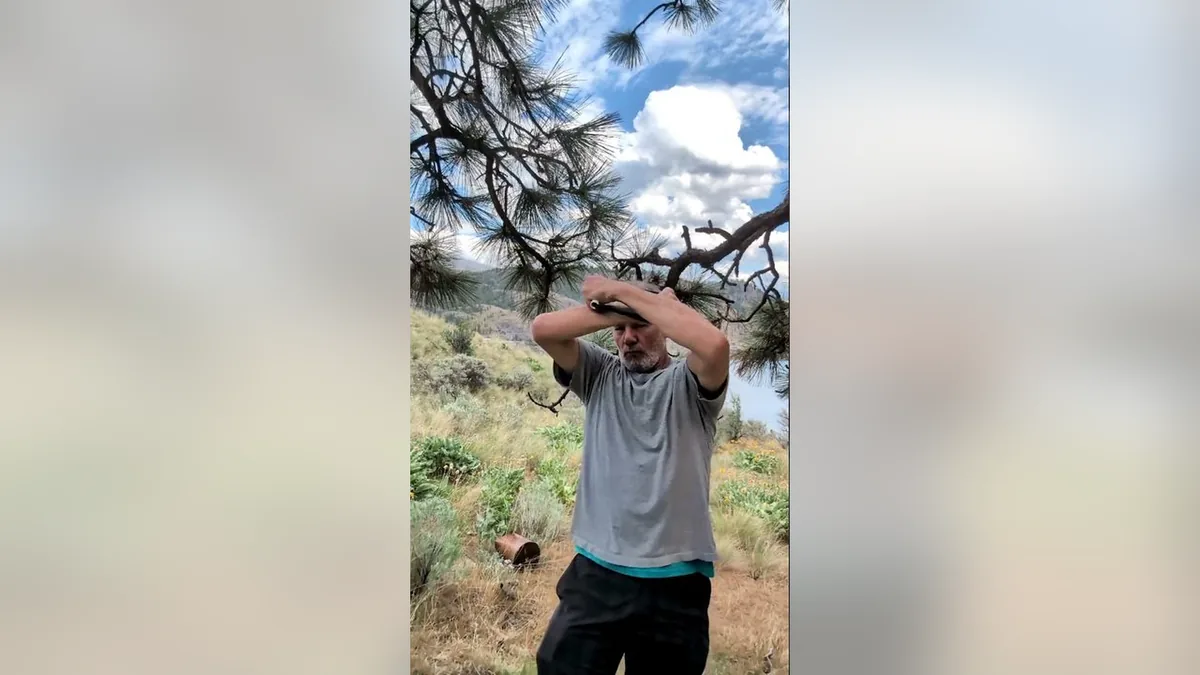
- Sit tall. Use an armchair with your back supported and both feet flat on the floor.
- Hold the trainer at chest height. Keep your elbows soft and your shoulders down, away from your ears.
- Reach forward slowly. Move both arms forward as if you are about to hug.
- Return with control. Let the arms come back in as slowly as they went out.
- Start small. Do a few slow reps at low effort. Rest, then notice how your shoulder feels later that day and the next morning.
- Standing option. Once the seated version feels easy, do the same movement standing, feet hip-width apart.
Stop if you feel sharp pain, numbness, tingling or sudden weakness.
Where ShoulderBack Pro fits — and where it doesn't
The reach is a natural match for this pattern, since both arms move together and one arm provides the resistance for the other. To progress, resist harder, reach through a little more range, or do longer sets. It suits people cleared for gentle, controlled shoulder work.
It's not a medical device and not a treatment, and there is no trial evidence about it specifically. It does not treat a torn tendon or a nerve symptom. Research does not support waiting out a frozen shoulder, so have a clinician assess one rather than relying on a trainer [R19]. Watch the lesson in the free routines library; the trainer is $29 CAD with a 30-day guarantee in the shop.
When to see a professional
See a doctor or physiotherapist promptly if you have: pain after a fall or injury with sudden weakness or loss of movement; a shoulder that looks deformed, very swollen or bruised; fever or feeling unwell alongside the pain; chest pain or breathlessness (call emergency services); constant pain that doesn't change with rest or activity; pain that wakes you most nights; numbness, tingling or weakness into the arm or hand; pain in several joints at once; or pain that hasn't improved after a couple of weeks of sensible self-care.
Only a doctor or physiotherapist can diagnose the cause of chest or shoulder pain. This article does not diagnose anything.
Try this movement
All 16 video lessons →Frequently asked questions
Can I do Bear Hugs You sitting down?
Yes. Sit tall in an armchair with your back supported. Start with low effort, and stop if the shoulder feels sharp.
Is Bear Hugs You a stretch?
No. It is a controlled, resisted reach. The effort, pace and range come from you, not from a band or a door anchor.
Will this make my shoulder pain go away?
No promises. ShoulderBack Pro is not a treatment and does not diagnose anything. It is one simple way to practise controlled movement, if you have been cleared for it.
Sources
- Naunton J et al. (2020). Effectiveness of progressive and resisted and non-progressive or non-resisted exercise in rotator cuff related shoulder pain: systematic review and meta-analysis of RCTs. Clinical Rehabilitation. https://search.pedro.org.au/search-results/record-detail/61404
- Dubé M-O et al. (2024). The Efficacy of Exercise Therapy for Rotator Cuff-Related Shoulder Pain According to the FITT Principle: Systematic Review With Meta-analyses. JOSPT. https://pubmed.ncbi.nlm.nih.gov/38848304/
- Mureşan et al. (2022). Effects of a novel proprioceptive rehabilitation device on shoulder joint position sense, pain and function. Medicina. https://www.ncbi.nlm.nih.gov/pmc/articles/PMC9505091/
- Wong CK et al. (2017). Natural history of frozen shoulder: fact or fiction? A systematic review. Physiotherapy 103(1):40-47. https://pubmed.ncbi.nlm.nih.gov/27641499/
More in this topic
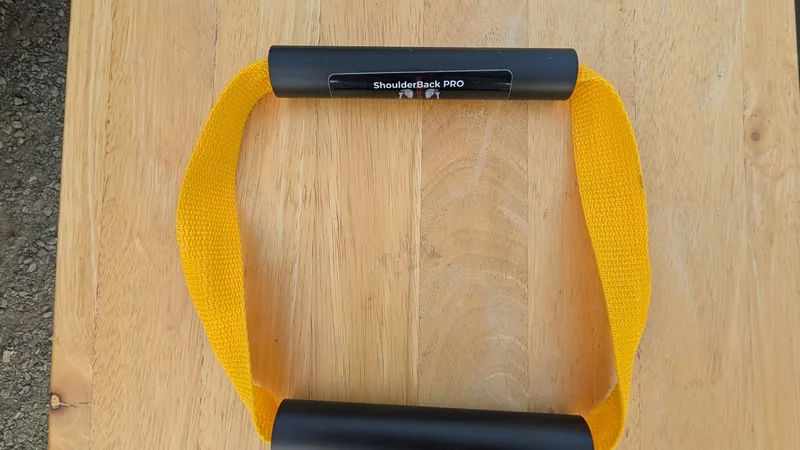 Essential guide: How ShoulderBack Pro Works: One Device, Two Connected Handles, Your Own Resistance
 Pairing SBP With Walking: The Simplest Whole-Body Routine for Active Aging
 Locomotive: Rolling Circles for the Upper Back and Rear Cuff
 Overhead Press (High Shelf Reach): Trapezius and Deltoids Without a Weight