Ancient wisdom & traditional movement practices
Ayurveda and Joints: Oil, Warmth and Routine — Tradition Meets Evidence
6-minute read · Published December 29, 2025 · Updated December 29, 2025
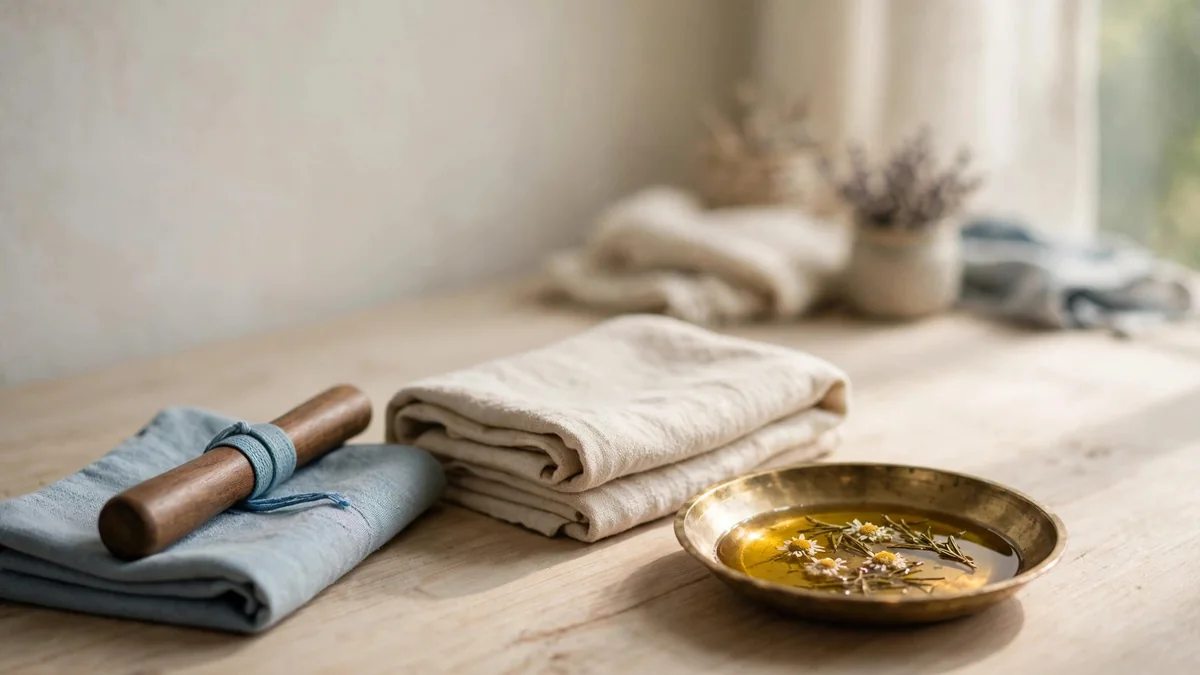
What this is
Ayurveda developed in South Asia over many centuries. Its texts describe daily routines, diet, herbs and massage with warm oils, and many people still follow these ideas alongside modern care. Its framework for body type and balance is different from modern anatomy, so the two do not always map neatly onto each other.
Stiff shoulders can be real in either framework. The useful question is which approach has evidence for your specific problem. Our guide to ancient movement practices puts these traditions side by side, and the tai chi guide looks at the trial evidence in more detail.
What the research says
- Tai chi and qigong: limited to moderate. A review of trials in older adults found that these practices may help physical function, and may reduce fall risk, depression and anxiety [R10]. They are not Ayurvedic practices.
- Yoga: limited, from small trials. In one 12-week program of Thai yoga, sedentary adults over 60 improved in chair stands, arm curls, reach and a six-minute walk, compared with a control group [R11]. A pilot trial of Iyengar yoga found better standing balance and mobility in older adults [R12].
- Herbal supplements: mostly insufficient. Evidence for ginger in musculoskeletal pain is unclear, and turmeric and curcumin have insufficient evidence despite promising lab work [R20]. Other herbs used in traditional systems were not assessed there, so apply the same caution.
- Warm oil massage for shoulders: insufficient. We found no study testing oil massage for shoulder pain. Massage may feel pleasant, but we can't say it changes the joint.
- Exercise: the strongest support. Progressive, resisted exercise probably helps rotator-cuff-related pain, while gentle movement without added load probably does not [R01].
What you can do
- Keep tradition and evidence separate in your plan. If you enjoy a traditional practice, keep it as comfort or routine, and keep your movement plan separate.
- Try a warm, seated routine. Sit in an armchair, rub the front of your shoulders gently with your palms for a short time, then do slow shoulder rolls within comfort.
- Choose movement with trial support. A gentle tai chi or qigong class with a qualified teacher has trial support in older adults, and seated versions are common.
- Check herbs and oils first. Ask your pharmacist or doctor. If you take blood thinners or other medication, check for interactions before starting any herbal product.
- Keep a symptom diary. Note pain, stiffness and what you did that day.
- See a clinician if the shoulder is getting worse or any red-flag symptom appears.
Where ShoulderBack Pro fits — and where it doesn't
ShoulderBack Pro doesn't fit this topic; it is a modern movement trainer, not a traditional practice or a remedy. For a structured start, a physiotherapist can design one, and gentle tai chi or qigong has trial support in older adults. The routine library can wait until a clinician agrees.
When to see a professional
See a doctor or physiotherapist promptly if you have: pain after a fall or injury with sudden weakness or loss of movement; a shoulder that looks deformed, very swollen or bruised; fever or feeling unwell alongside the pain; chest pain or breathlessness (call emergency services); constant pain that doesn't change with rest or activity; pain that wakes you most nights; numbness, tingling or weakness into the arm or hand; pain in several joints at once; or pain that hasn't improved after a couple of weeks of sensible self-care. Red-flag guidance here is summarised from NHS shoulder pages [R30].
A doctor or physiotherapist is the right person to diagnose a shoulder condition. Tell your clinician about any Ayurvedic oil, herb or practitioner advice you are following, so they can check for interactions and plan your care alongside it.
Try this movement
Around the World (circles, both arms) →Frequently asked questions
Is Ayurveda proven for joint pain?
No. A long history does not mean its methods have been tested. Some traditional movement practices have modern trials, but those trials are for tai chi, qigong and yoga, not for Ayurveda as a whole.
Is warm oil safe to use on a sore shoulder?
For many people it is comfortable. Stop if your skin reacts, and ask a clinician first if you have a skin condition, a recent injury or any red-flag symptom.
Can herbs replace my medication?
No. Do not stop or swap prescribed medicine without talking to your doctor or pharmacist.
What has the best evidence for shoulder comfort?
Progressive, resisted exercise has the most support in the research. A physiotherapist or doctor can help you choose a safe starting level.
Sources
- Naunton J et al. (2020). Effectiveness of progressive and resisted and non-progressive or non-resisted exercise in rotator cuff related shoulder pain: systematic review and meta-analysis of RCTs. Clinical Rehabilitation. https://search.pedro.org.au/search-results/record-detail/61404
- Rogers CE, Larkey LK, Keller C (2009). A review of clinical trials of tai chi and qigong in older adults. West J Nurs Res 31(2):245-79. https://qigonginstitute.org/abstract-print/4690
- Noradechanunt C, Worsley A, Groeller H (2017). Thai Yoga improves physical function and well-being in older adults: a randomised controlled trial. J Sci Med Sport. https://ro.uow.edu.au/smhpapers/4599
- Tiedemann A et al. (2013). A 12-week Iyengar yoga program improved balance and mobility in older community-dwelling people: pilot RCT. J Gerontol A. https://www.qigonginstitute.org/abstract-print/9524
- NCCIH (US National Center for Complementary and Integrative Health). Nutritional Approaches for Musculoskeletal Pain and Inflammation. https://www.nccih.nih.gov/health/providers/digest/musculoskeletal
- NHS Greater Glasgow & Clyde, Shoulder red flags; NHS MPFT self-help, Shoulder pain; BESS/BOA pathway summary (2021). https://pmc.ncbi.nlm.nih.gov/articles/PMC7905504
More in this topic
 Essential guide: Ancient Wisdom for Strong Shoulders: What Traditional Movement Got Right (and What Science Adds)
 The Chinese Medicine Clock and Morning Movement: Fun Framing, Real Habit
 Cold Water and Shoulders: From Nordic Plunges to Modern Ice Baths
 Ancient Massage Traditions: Thai, Tui Na, Lomi Lomi — Comfort vs Proof