Coordination, control & how ShoulderBack Pro works
Arm Wrestler: The Seated Internal Pivot for Pecs and Subscapularis
4-minute read · Published October 31, 2024 · Updated October 31, 2024
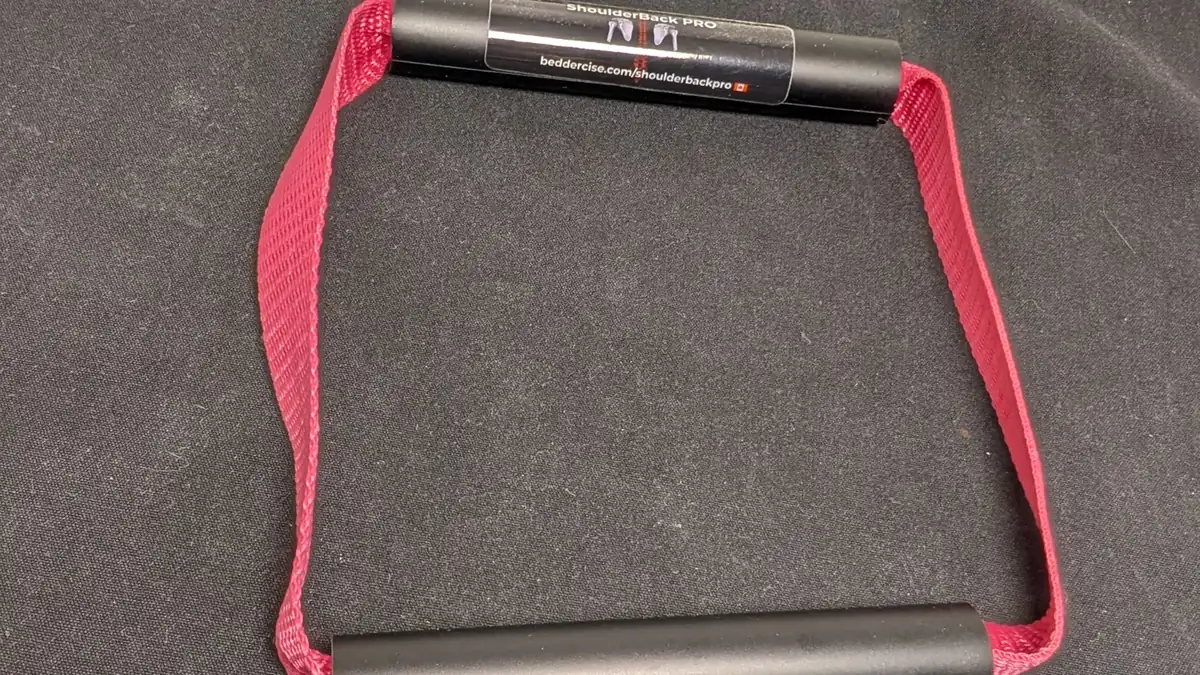
Why this happens / What this is
Internal rotation means turning your arm inward, toward your body. You use it when you reach across your chest or put on a jacket.
The pectoralis major is the large chest muscle that helps bring the arm in front of you and toward your body. The subscapularis is a rotator cuff muscle on the front of the shoulder blade. It helps turn the arm inward and keeps the ball of the joint steady.
In Arm Wrestler, your elbow stays close to your side and acts as a hinge. Your forearm pivots inward, and the chest and front shoulder muscles control the turn.
What the research says
- Training that challenges your sense of joint position, called proprioception, improved control in the trained wrist and also in the opposite, untrained wrist. The two sides of the body seem to learn from each other [R15]. This was a wrist study, not a shoulder study.
- In stroke rehabilitation, training both arms together produced greater shoulder-movement gains than single-arm training. This comes from stroke patients, so it is a reason to be curious, not proof for healthy adults [R14].
- Programs that focus on control and coordination may reduce shoulder disability a little more than generic exercise, though the pain effect is uncertain [R02].
What you can do
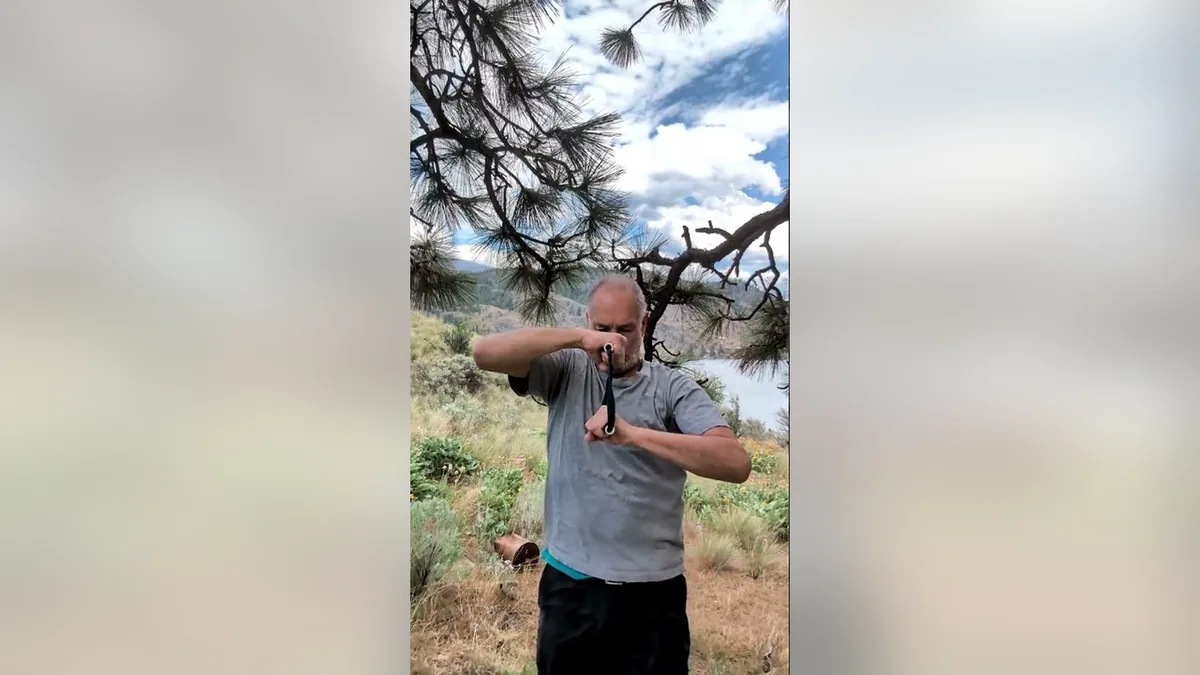
- Sit tall in a stable chair with your back supported.
- Bend your elbow to about a right angle. Keep the elbow close to your side. Let it act as a hinge rather than a lever you swing.
- Turn the forearm inward, slowly. Move the trainer or your forearm toward your belly. Stop before you feel any pinch or strain.
- Return with control. Let the forearm come back to the start without letting it drop. Smooth is better than fast.
- Repeat a few times, then rest. Build up across weeks.
Where ShoulderBack Pro fits — and where it doesn't
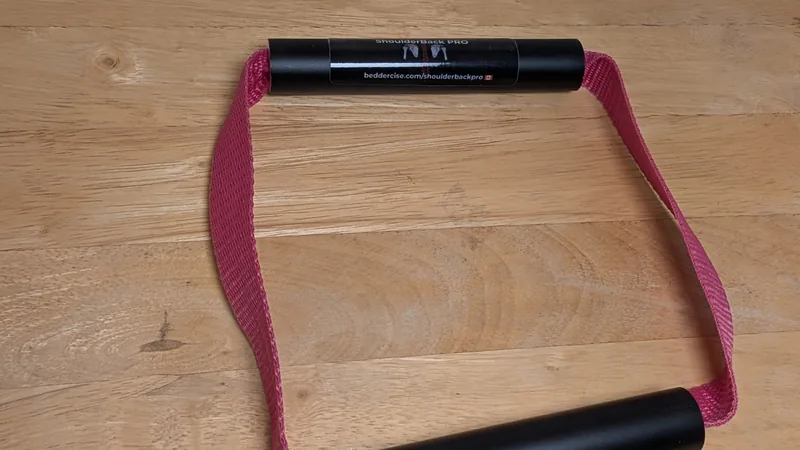
This move is the one the trainer was designed around for the chest and the subscapularis. The fixed-length strap lets one arm guide the turn while the other resists it, so the resistance comes from your own arm and you choose how hard to push. Progress by resisting a little more, turning through more range, or doing longer sets. It is one of the 16 video lessons, and it stays seated.
It is a wellness tool, not a treatment, and there are no clinical trials of it yet. It does not address a painful chest or front-shoulder problem, a tear or nerve symptoms. If you have been cleared to move your shoulder gently, the trainer is on the shop page.
When to see a professional
See a doctor or physiotherapist promptly if you have: pain after a fall or injury with sudden weakness or loss of movement; a shoulder that looks deformed, very swollen or bruised; fever or feeling unwell alongside the pain; chest pain or breathlessness (call emergency services); constant pain that doesn't change with rest or activity; pain that wakes you most nights; numbness, tingling or weakness into the arm or hand; pain in several joints at once; or pain that hasn't improved after a couple of weeks of sensible self-care.
Only a doctor, physiotherapist or other qualified clinician can diagnose a chest or shoulder problem. If you notice numbness or weakness in the arm or hand, get an assessment before any new movement.
Try this movement
All 16 video lessons →Frequently asked questions
What is internal rotation?
It is turning your arm inward, toward your body. You use it when you do things like reaching across your chest or putting on a jacket.
Can I do Arm Wrestler seated?
Yes. The move is designed to be done seated, with your back supported and your elbows at your sides.
Is this safe if my chest or shoulder is tight?
Keep the effort gentle and stop if you feel sharp pain. Ask a clinician first if your shoulder is painful, recently injured or recovering from surgery.
Sources
- Journal of Physical Therapy Science (2016). The effects of bilateral movement training on upper limb function in chronic stroke patients. https://pmc.ncbi.nlm.nih.gov/articles/PMC5011582
- Scientific Reports (2021). Proprioceptive-focused training transfers gains to the opposite, untrained limb. https://pmc.ncbi.nlm.nih.gov/articles/PMC7935923
- Dubé M-O et al. (2024). The Efficacy of Exercise Therapy for Rotator Cuff-Related Shoulder Pain According to the FITT Principle: Systematic Review With Meta-analyses. JOSPT. https://pubmed.ncbi.nlm.nih.gov/38848304/
More in this topic
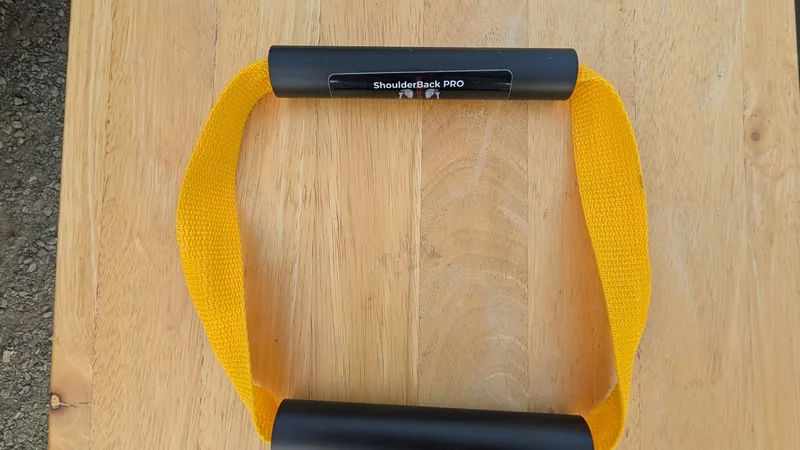 Essential guide: How ShoulderBack Pro Works: One Device, Two Connected Handles, Your Own Resistance
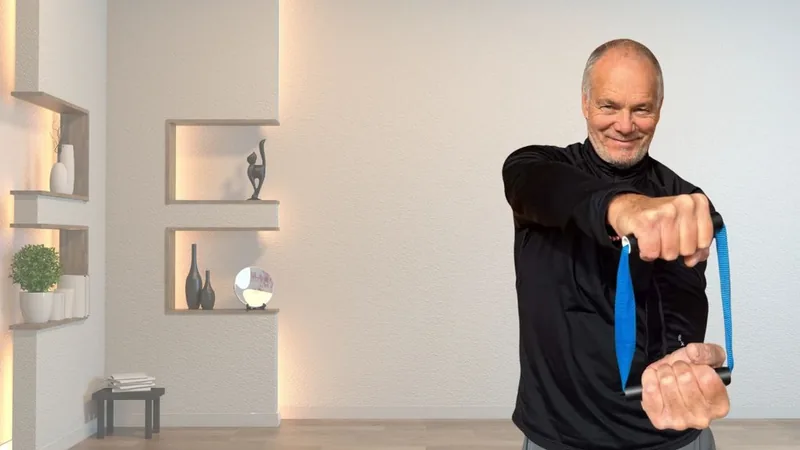 Pairing SBP With Walking: The Simplest Whole-Body Routine for Active Aging
 Locomotive: Rolling Circles for the Upper Back and Rear Cuff
 Overhead Press (High Shelf Reach): Trapezius and Deltoids Without a Weight