Comparisons, buyer's guides & honest product answers
Yoga Strap vs ShoulderBack Pro: Similar Idea, Different Feedback
3-minute read · Published January 14, 2026 · Updated January 14, 2026
What this is
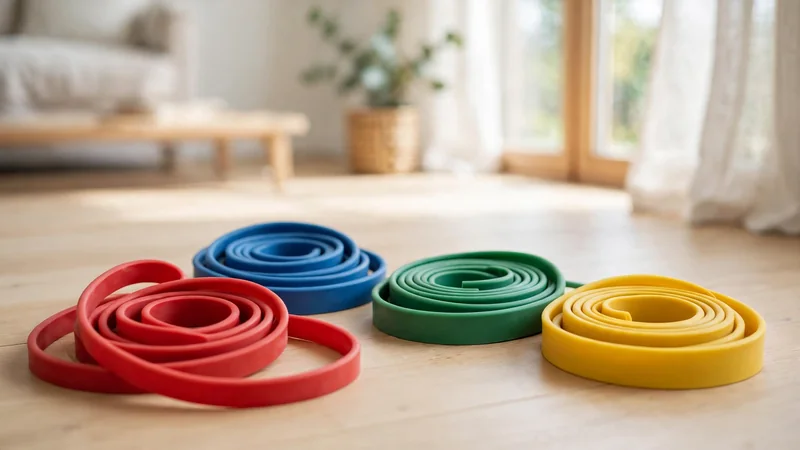
Both tools can look alike in a drawer. Both involve holding a long strip of material and moving with it. The difference is what the material does when you pull.
A yoga strap is usually used for support in a stretch. It helps you reach a foot, a hip or a stiff shoulder without strain. Most straps ask you to hold a position rather than push or pull against something.
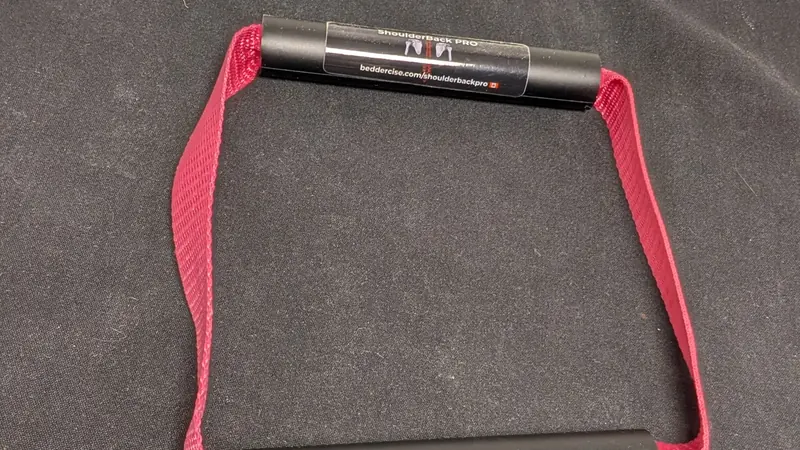
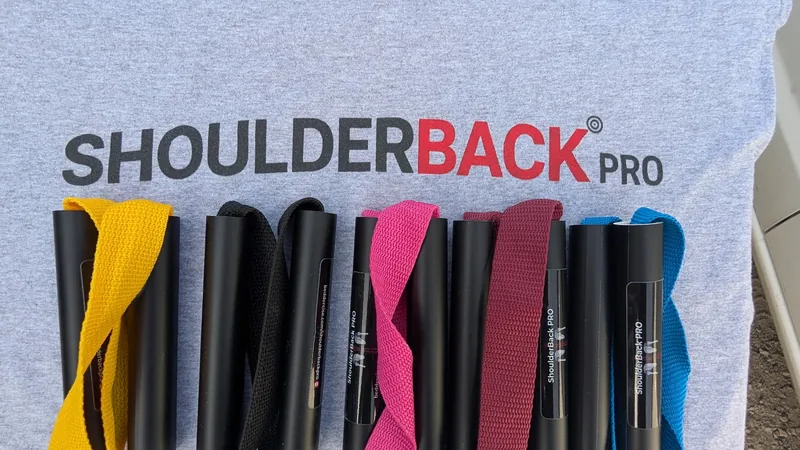
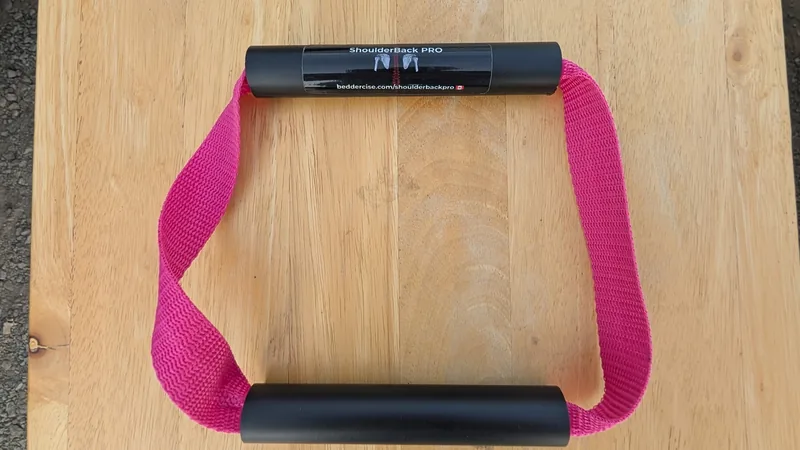
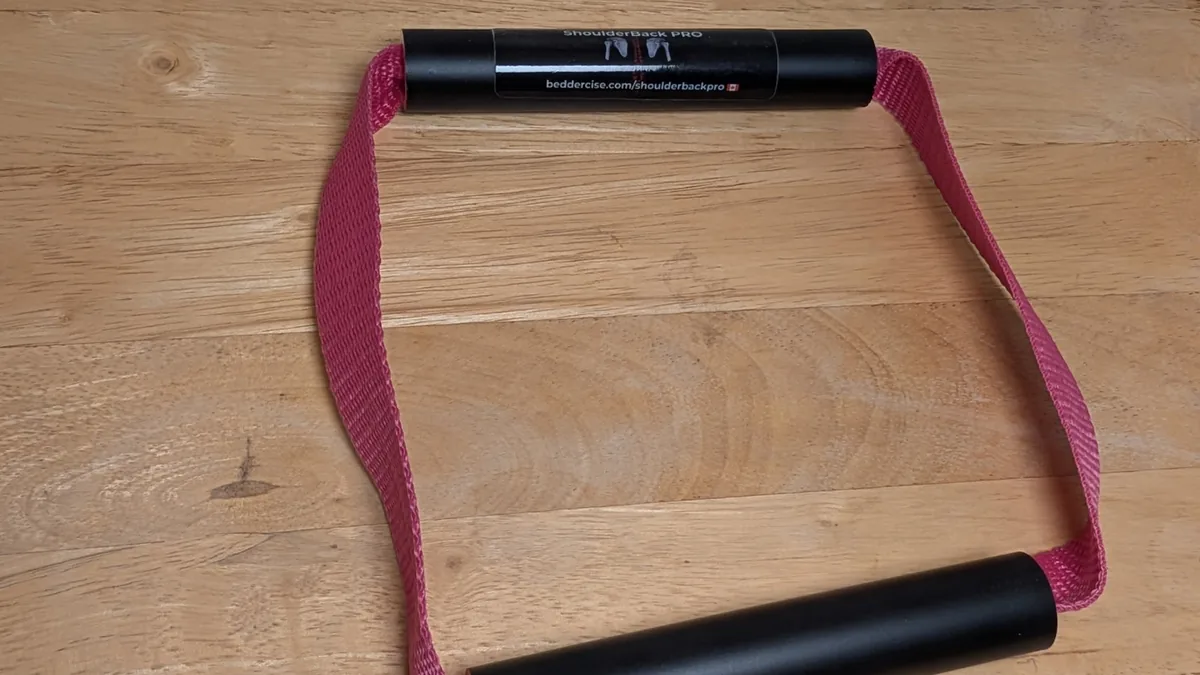
ShoulderBack Pro is a 160 g, pocket-size trainer. Two handles are joined by a fixed-length, non-elastic strap. One arm assists while the other resists, so the work is shared between both sides.
Why the difference matters
Feedback is how your body learns. A strap that helps you stretch gives you a position to hold. A trainer where one arm resists the other gives you a two-sided exchange, and you choose how hard it is. That is a different kind of practice, not a better or worse one.
What the research says
- Bilateral (both-arm) training improved shoulder movement more than single-arm training in stroke rehabilitation. That evidence comes from stroke patients, not healthy adults, so treat it as a reason to be curious, not as proof [R14].
- In one study of the wrists, training that challenged joint position sense improved the trained wrist and the untrained opposite wrist. The two sides of the body can learn from each other [R15].
- Resisted exercise that progresses over time probably helps rotator cuff-related shoulder pain, while gentle unloaded movement alone probably does not change pain much [R01].
What you can do
- Decide what you want. Is it a stretch aid or a resistance-style practice? The answer points you to the right tool.
- Keep the strap for stretching. If you already own one, use it to reach gently. Stretch with comfort, not force.
- Progress slowly with resistance. Start with easy effort and build up over weeks. Seated or standing both work.
- Stop if something is wrong. Sharp pain, numbness or new weakness means stop and see a clinician.
Where ShoulderBack Pro fits — and where it doesn't
Two-arm, self-resisted movement is the thing a plain strap cannot give you, and that is where ShoulderBack Pro is a reasonable choice. Arm Wrestler (pivoting the forearms inward, working the chest and a shoulder muscle under the shoulder blade) and SeeSaw (one arm guiding the other through alternating reaches) are good first picks. Progress by resisting a little harder with the other arm, moving through more range, or doing longer sets. The free video lessons show both.
A strap is cheaper and you may already own one, so keep it for stretching; see also resistance bands vs ShoulderBack Pro. ShoulderBack Pro is a wellness tool, not a treatment, and there are no clinical trials of it yet. It is $29 CAD with a 30-day Living Room Guarantee, and you can order online.
When to see a professional
See a doctor or physiotherapist promptly if you have: pain after a fall or injury with sudden weakness or loss of movement; a shoulder that looks deformed, very swollen or bruised; fever or feeling unwell alongside the pain; chest pain or breathlessness (call emergency services); constant pain that doesn't change with rest or activity; pain that wakes you most nights; numbness, tingling or weakness into the arm or hand; pain in several joints at once; or pain that hasn't improved after a couple of weeks of sensible self-care.
Try this movement
All 16 video lessons →Frequently asked questions
Can I use a yoga strap instead of ShoulderBack Pro?
For stretch support, a strap may be all you need. If you want two-arm resisted movement, ShoulderBack Pro is aimed at that kind of practice.
Is ShoulderBack Pro better than resistance bands?
There is no head-to-head trial, so neither can be called better. Choose the tool you will actually use, and ask a clinician if you have a shoulder condition.
Do I need to be flexible to use either one?
No. Use a range that feels comfortable and that you can control. Seated and standing options both work for ShoulderBack Pro.
Sources
- Naunton J et al. (2020). Effectiveness of progressive and resisted and non-progressive or non-resisted exercise in rotator cuff related shoulder pain: systematic review and meta-analysis of RCTs. Clinical Rehabilitation. https://search.pedro.org.au/search-results/record-detail/61404
- Journal of Physical Therapy Science (2016). The effects of bilateral movement training on upper limb function in chronic stroke patients. https://pmc.ncbi.nlm.nih.gov/articles/PMC5011582
- Scientific Reports (2021). Proprioceptive-focused training transfers gains to the opposite, untrained limb. https://pmc.ncbi.nlm.nih.gov/articles/PMC7935923