Ancient wisdom & traditional movement practices
The Five Tibetan Rites: What They Are and What They Aren't
6-minute read · Published December 5, 2025 · Updated December 5, 2025
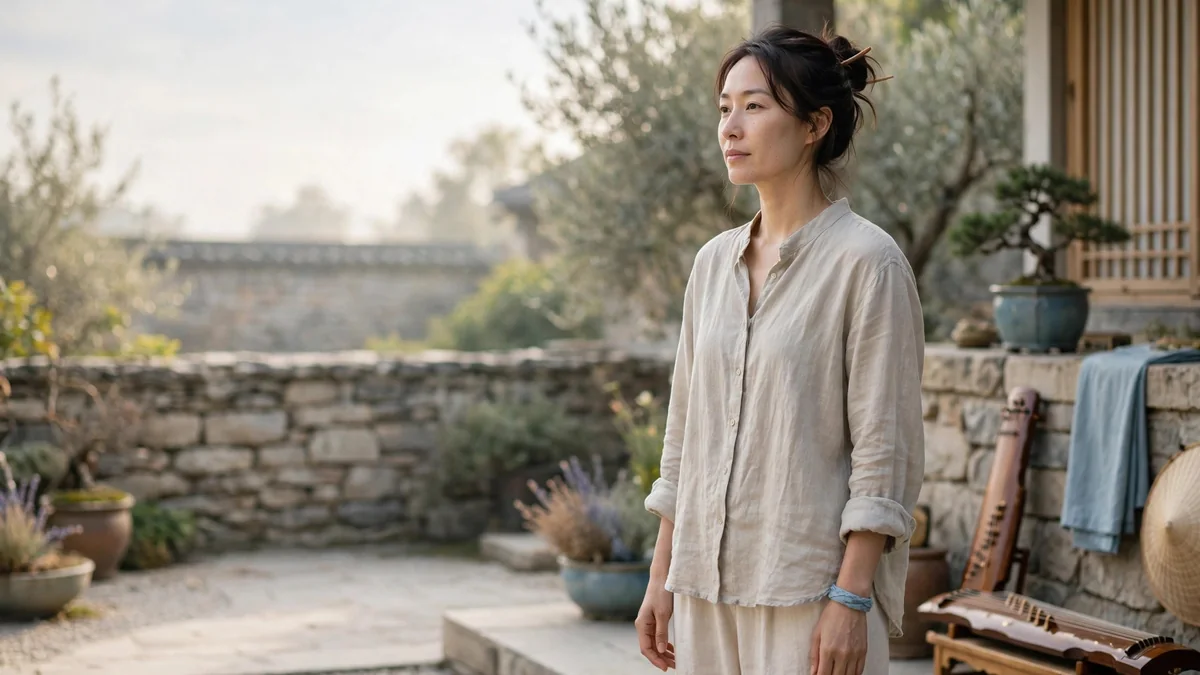
What the Five Rites are
The Rites are five movements that are often practised each morning. They are usually described as traditional or ancient, and many people know them from books and online videos.
Versions differ from teacher to teacher, so ask whoever teaches you to show each movement slowly first. Then you will know what you are actually doing.
Where the history stands
Claims of great age are common with traditional practices. Our sources do not include a reliable history of the Rites themselves, so this article does not say when they began or who first described them. For traditional practices in general, the honest approach is to describe the history accurately, cite modern trials where they exist, and never equate "ancient" with "proven."
What the research says
- Tai chi and qigong may help adults 55 and over improve physical function. Trials also looked at blood pressure, fall risk, depression and anxiety [R10].
- In a 7-week Tai Chi softball program, older adults improved upper-limb function, including shoulder mobility, arm strength and grip. This was a modest-quality trial [R13].
- Twelve weeks of low-intensity Thai Yoga improved shoulder reach and other function in sedentary adults over 60, compared with a control group [R11].
- The Five Rites themselves have not been tested in the trials in our reference list, so there is no direct evidence for them.
What you can do
- Start with the seated version. Sit tall in a sturdy chair with your feet flat. Use only movements you can do without strain, and skip any that involve spinning or getting down to the floor. Pause between each one and notice how your shoulders feel before you go on.
- Try slow arm circles (seated or standing). Make one small, unhurried circle at a time, both arms together, 5 to 10 times each way.
- Leave out floor work for now. If you have a neck, back or shoulder condition, leave out floor movements until a clinician has checked them.
- Go slowly and stop at pain. Dizziness, sharp pain, or pain that lasts into the next day means stop and get advice.
- Choose what you will keep doing. Many clinicians suggest choosing movement you enjoy and will keep doing. A short practice you repeat is worth more than a long one you drop after a week.
Where ShoulderBack Pro fits, and where it doesn't
ShoulderBack Pro has no spinning or floor work, so it is not a version of the Rites. The nearest cousin is Around the World, one large, unhurried circle in front of you that the site lists as working serratus anterior and lower trapezius. Steering, a slow ten-and-two turn of an imaginary wheel, is a second gentle option. Both can be done seated, with one arm resisting the other. It's a wellness tool rather than a treatment, and it has not been tested in clinical trials. See the Around the World routine or the trainer.
When to see a professional
See a doctor or physiotherapist promptly if you have: pain after a fall or injury with sudden weakness or loss of movement; a shoulder that looks deformed, very swollen or bruised; fever or feeling unwell alongside the pain; chest pain or breathlessness (call emergency services); constant pain that doesn't change with rest or activity; pain that wakes you most nights; numbness, tingling or weakness into the arm or hand; pain in several joints at once; or pain that hasn't improved after a couple of weeks of sensible self-care [R30].
Only a doctor, physiotherapist or other licensed clinician can diagnose a shoulder problem. If you have a condition, ask that clinician whether any traditional movement practice is a good fit.
Try this movement
Around the World (circles, both arms) →Frequently asked questions
Are the Five Tibetan Rites really ancient?
They are often described that way, but the sources we can cite do not confirm an ancient origin. View the history with caution.
Do the Five Tibetan Rites keep you young?
Our sources cannot back that up. Tai chi and qigong have some trial evidence for physical function, fall risk and mood in older adults, but that is not evidence for the Rites [R10].
Are the rites safe for my shoulders?
Gentle, seated versions may suit some people. Floor work and spinning need a clinician's go-ahead if you have a shoulder, neck or back condition.
Should I replace my routine with the rites?
Not necessarily. Add movement you enjoy and that a clinician has approved, and keep what already works for you.
Sources
- Rogers CE, Larkey LK, Keller C (2009). A review of clinical trials of tai chi and qigong in older adults. West J Nurs Res 31(2):245-79. https://qigonginstitute.org/abstract-print/4690
- Noradechanunt C, Worsley A, Groeller H (2017). Thai Yoga improves physical function and well-being in older adults: a randomised controlled trial. J Sci Med Sport. https://ro.uow.edu.au/smhpapers/4599
- Lou L et al. (2017). Effect of Tai Chi softball on function-related outcomes in older adults: RCT. Evid Based Complement Alternat Med. https://search.pedro.org.au/search-results/record-detail/49889
- NHS Greater Glasgow & Clyde, Shoulder red flags; NHS MPFT, Self-help: shoulder pain; BESS/BOA shoulder pathway summary (2021). https://www.nhsggc.scot/page_category/services/page/33
More in this topic
 Essential guide: Ancient Wisdom for Strong Shoulders: What Traditional Movement Got Right (and What Science Adds)
 The Chinese Medicine Clock and Morning Movement: Fun Framing, Real Habit
 Cold Water and Shoulders: From Nordic Plunges to Modern Ice Baths
 Ancient Massage Traditions: Thai, Tui Na, Lomi Lomi — Comfort vs Proof