Comparisons, buyer's guides & honest product answers
ShoulderBack Pro vs Doing Nothing New: When Your Current Routine Is Already Enough
5-minute read · Published April 6, 2026 · Updated April 6, 2026
What this is
This question is about whether a new tool adds something to the routine you already have. For most shoulder concerns, the basic ingredients are the same: movement through a comfortable range, gradual strength work, and enough repetition over time to notice change.
A device is one way to deliver those ingredients. It is not a requirement. The useful question is whether a tool will help you do the work consistently.
What the research says
- Exercise that adds resistance and progresses over time probably helps rotator-cuff-related pain. Gentle, unloaded movement alone probably does not move pain much [R01].
- Programs that teach control and coordination may edge out generic exercise, though we do not fully know why [R02].
- Adults are advised to do muscle-strengthening activity at least two days a week, and adults 65 and over to add balance and strength work on three or more [R07].
- In a review of exercise for chronic low back pain, no single exercise type came out on top. The authors suggested people choose exercise they enjoy and will keep doing [R05]. That review is about low back pain, not shoulders, but the point about sticking with it carries over.
What you can do
- Look at what you already do. Write down your shoulder work for one week. If it includes some resisted, progressive exercise you enjoy, keep it.
- Add a small progression. Increase time, range or effort in small steps. Seated option: keep the same moves seated and slow the tempo.
- Match the tool to the gap. Bands, dumbbells and a body-controlled trainer each suit different needs. The full band comparison lays out the trade-offs, and why some people find bands irritating is worth reading if bands have bothered you before. Seated option: a seated band row or seated trainer work.
- Keep sessions short enough to repeat. Many people find a short daily session easier to maintain than a long weekly one.
- Get an assessment if a red flag shows up. New night pain, numbness or weakness is a reason to see a clinician, not a reason to buy a new tool.
Where ShoulderBack Pro fits — and where it doesn't
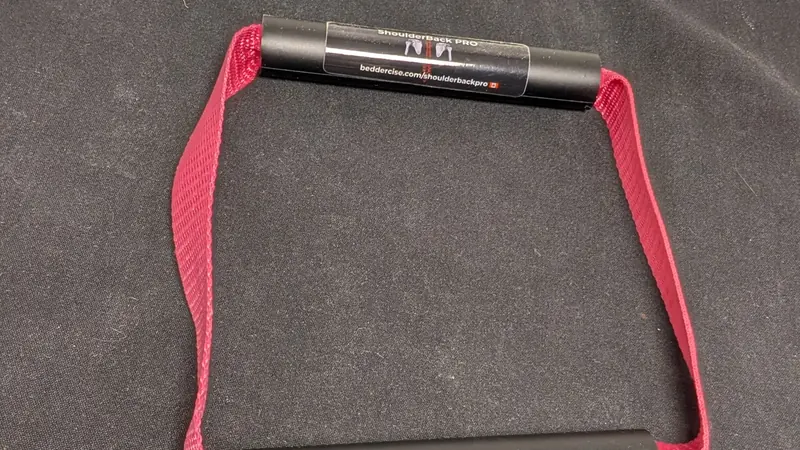
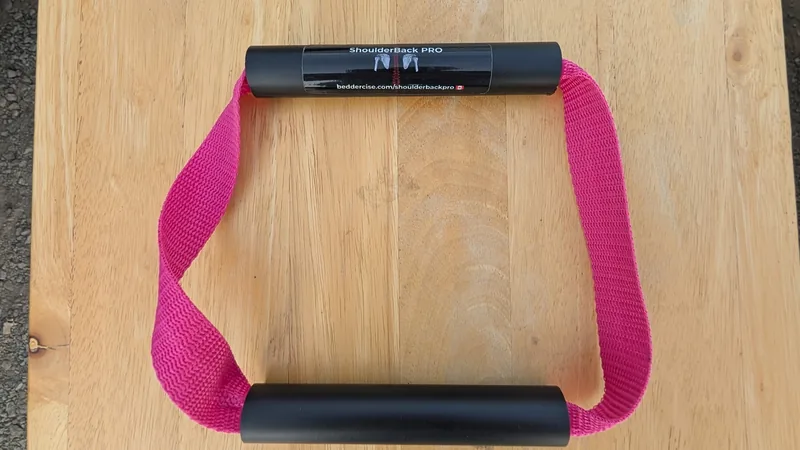
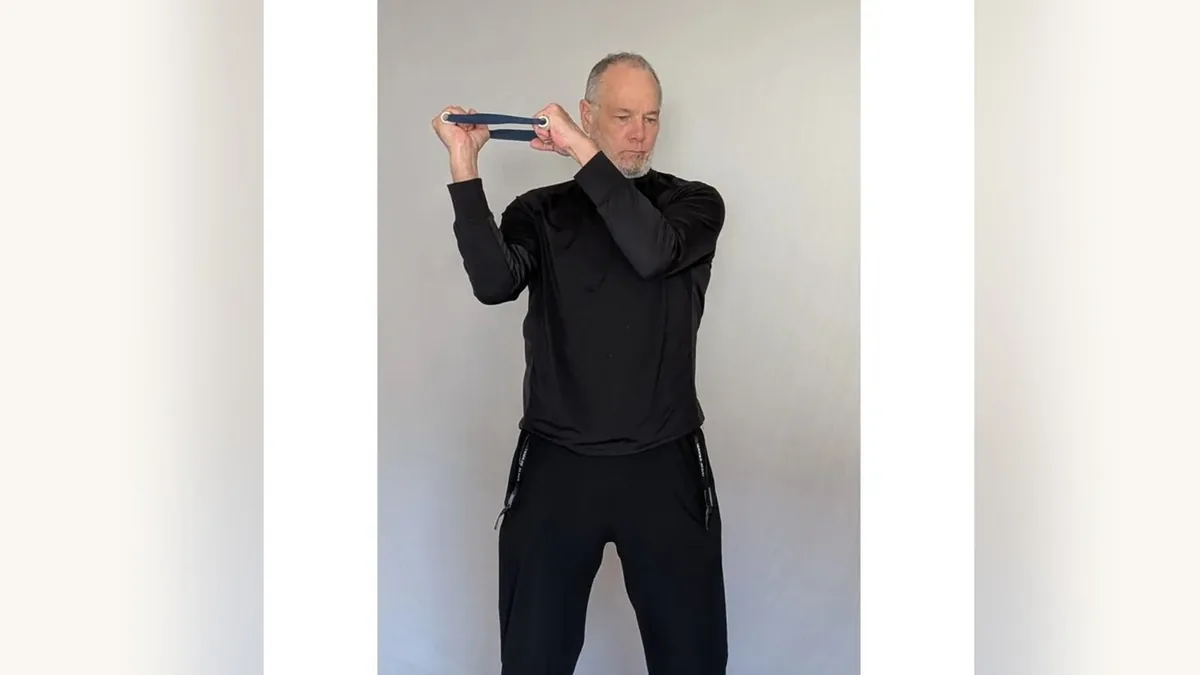
If your routine already works, keep it. If you want a pocket-size trainer for seated or standing work, two movements fit the "resisted and progressive" idea well: Bear Hugs Me, which draws the handles to your chest for the muscles between the shoulder blades, and Overhead Press (High Shelf Reach). The other arm provides the resistance, so you progress by resisting harder or moving through more range.
It is a wellness tool, not a treatment, and there are no clinical trials of it. You can watch the 16 free lessons on the lessons page before deciding. The shop lists the $29 CAD price and a 30-day money-back guarantee.
When to see a professional
See a doctor or physiotherapist promptly if you have: pain after a fall or injury with sudden weakness or loss of movement; a shoulder that looks deformed, very swollen or bruised; fever or feeling unwell alongside the pain; chest pain or breathlessness (call emergency services); constant pain that doesn't change with rest or activity; pain that wakes you most nights; numbness, tingling or weakness into the arm or hand; pain in several joints at once; or pain that hasn't improved after a couple of weeks of sensible self-care.
Buying a tool is not a substitute for an assessment. Only a clinician can diagnose the cause of persistent shoulder pain.
Try this movement
All 16 video lessons →Frequently asked questions
Do I need a shoulder exercise device?
No. Many people do well with bands, dumbbells, or a simple routine they already enjoy. A device helps only if it helps you keep going.
What should a shoulder routine include?
Some resisted work you can progress over time, plus movement through a comfortable range [R01]. Choose something you will repeat [R05].
Is ShoulderBack Pro better than bands?
The research does not compare ShoulderBack Pro directly with bands. Each suits different people, and the choice is yours.
What if I am not sure which one I need?
Ask a physiotherapist. That is the simplest way to match the tool to the problem, especially if pain wakes you at night.
Sources
- Naunton J et al. (2020). Effectiveness of progressive and resisted and non-progressive or non-resisted exercise in rotator cuff related shoulder pain: systematic review and meta-analysis of RCTs. Clinical Rehabilitation. https://search.pedro.org.au/search-results/record-detail/61404
- Dubé M-O et al. (2024). The Efficacy of Exercise Therapy for Rotator Cuff-Related Shoulder Pain According to the FITT Principle: Systematic Review With Meta-analyses. JOSPT. https://pubmed.ncbi.nlm.nih.gov/38848304/
- Hayden JA et al. (2021). Exercise therapy for chronic low back pain. Cochrane Database of Systematic Reviews, Issue 9, CD009790. https://pmc.ncbi.nlm.nih.gov/articles/PMC8477273
- WHO (2020). Guidelines on physical activity and sedentary behaviour. https://www.sydney.edu.au/news-opinion/news/2020/11/26/new-global-guidelines-on-physical-activity-and-sedentary-behavio.html