Comparisons, buyer's guides & honest product answers
Physiotherapy vs Home Tools: When You Need a Professional
5-minute read · Published November 10, 2025 · Updated November 10, 2025
What each option does
Physiotherapy is a hands-on, personal service. A physiotherapist examines your shoulder, tests strength and movement, and works out what is driving your symptoms. They then build a plan, teach you how to do the exercises and change the plan as you improve.
Home tools are about practice. They make it easy to move every day, at a low cost and on your own schedule. The limit is that you are guessing about form, load and progress unless someone checks in with you.
These two options work best together for many people. The professional sets the direction, and the home tool supports consistency between appointments.
Cost and access matter too. Some people wait a long time for an appointment, and physiotherapy is not always affordable. Home tools can keep you moving in the meantime, as long as you know what is safe to do. Ask your clinician what to do while you wait.
What the research says
- Exercise that adds resistance and progresses over time probably helps rotator cuff-related shoulder pain. Gentle, unloaded movement alone did not show a clear pain benefit [R01].
- Motor-control exercise programs may reduce disability slightly more than generic exercise in the short and medium term. We do not fully know why [R02].
- Most shoulder pain is managed in primary care with advice and exercise. Acute severe pain after trauma needs proper diagnosis [R30].
- Frozen shoulder does not reliably settle on its own, so it is not a condition to wait out at home, and a clinician should assess it [R19].
What you can do
- Get an assessment early if pain is unclear. A clinician can tell whether home work is safe and suitable for your shoulder.
- Ask what to avoid. Find out which movements or loads your clinician wants you to hold back on.
- Use home tools for consistency. Once cleared, short daily practice can keep the plan moving between appointments.
- Track your progress. Note what gets easier, what hurts and what you tried, and bring the notes to your next visit.
- Try a seated option. Sit in a supportive chair and practise the movements your clinician has approved, keeping the range small.
- Stop when a symptom changes. New numbness, weakness or pain that spreads is a reason to call your clinician.
- Write down your questions. Before an appointment, list what you want to know: what is driving the pain, what to avoid, what progress looks like and when to come back.
Where ShoulderBack Pro fits — and where it doesn't
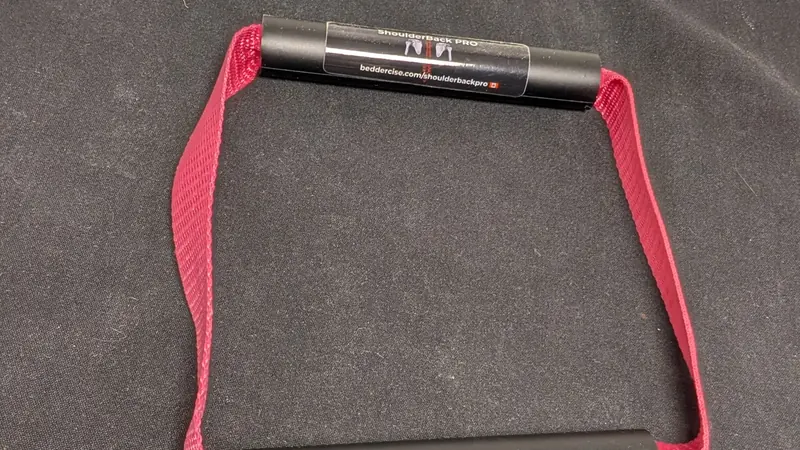
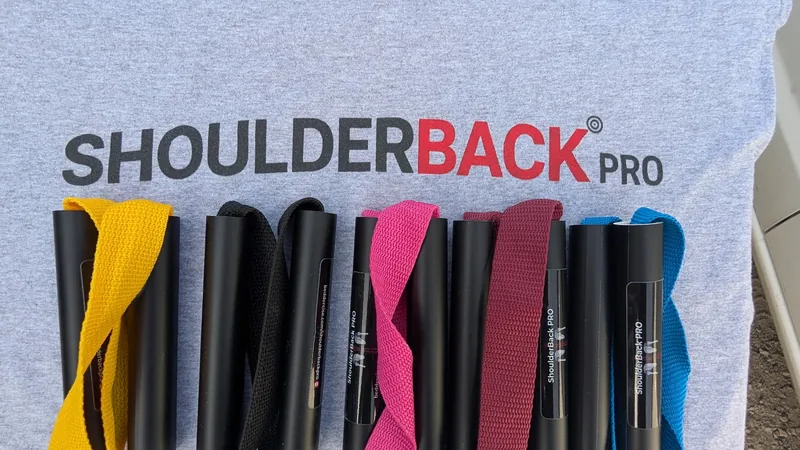
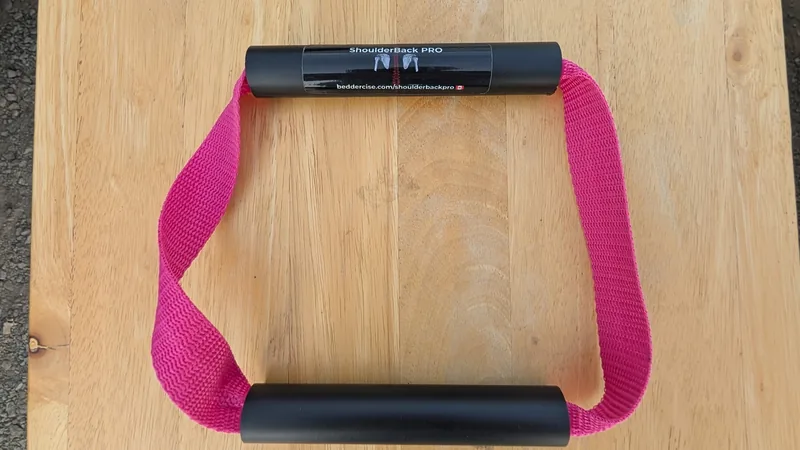
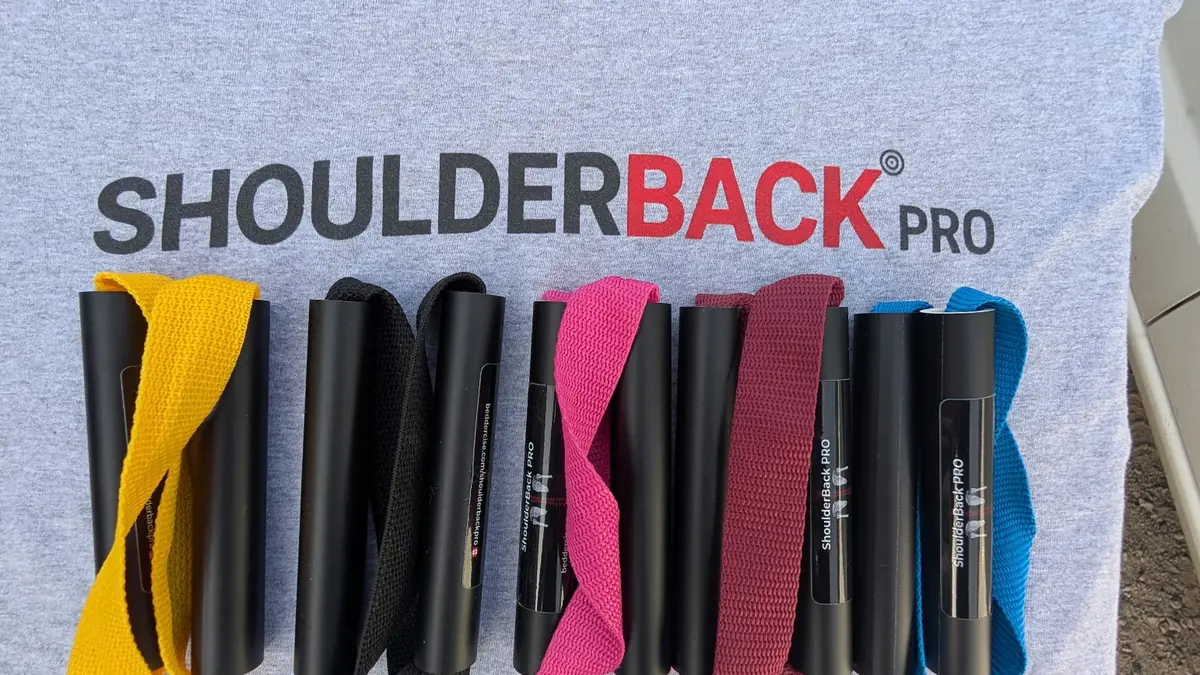
Once a clinician has cleared you, ShoulderBack Pro can be one simple way to practise between visits. SeeSaw and Windshield Wipers are slow, self-resisted moves that suit early, gentle practice: one arm guides while the other resists, and you set the effort, pace and range. To progress, resist harder or move through more range.
It is a wellness tool, not a treatment, and it cannot assess your shoulder or track your progress. The shop page shows the trainer if you want to look.
When to see a professional
Only a doctor, physiotherapist or other qualified clinician can diagnose your shoulder. Book an assessment before you start any new routine if you are unsure. A visit is also a chance to ask questions. Bring notes about your pain, what makes it worse and what you have already tried.
See a doctor or physiotherapist promptly if you have: pain after a fall or injury with sudden weakness or loss of movement; a shoulder that looks deformed, very swollen or bruised; fever or feeling unwell alongside the pain; chest pain or breathlessness (call emergency services); constant pain that doesn't change with rest or activity; pain that wakes you most nights; numbness, tingling or weakness into the arm or hand; pain in several joints at once; or pain that hasn't improved after a couple of weeks of sensible self-care.
Try this movement
All 16 video lessons →Frequently asked questions
Can home tools replace physiotherapy?
No. Home tools can support a plan, but they do not replace a hands-on assessment or a clinician's judgment about your shoulder.
What does a physiotherapist do that home practice cannot?
They examine the shoulder, test strength and movement, look for patterns and adjust the plan as you improve. That feedback is hard to get on your own.
Is home exercise worth doing alongside physio?
Often yes, if your clinician agrees. Consistent practice is part of most plans, and home work can fill the gaps between appointments.
How do I know if I need a professional now?
Book an assessment if pain is new or severe, wakes you at night, comes with numbness or weakness, or does not improve after a couple of weeks.
Sources
- Naunton J et al. (2020). Effectiveness of progressive and resisted and non-progressive or non-resisted exercise in rotator cuff related shoulder pain: systematic review and meta-analysis of RCTs. Clinical Rehabilitation. https://search.pedro.org.au/search-results/record-detail/61404
- Dubé M-O et al. (2024). The Efficacy of Exercise Therapy for Rotator Cuff-Related Shoulder Pain According to the FITT Principle: Systematic Review With Meta-analyses. JOSPT. https://pubmed.ncbi.nlm.nih.gov/38848304/
- Wong CK et al. (2017). Natural history of frozen shoulder: fact or fiction? A systematic review. Physiotherapy 103(1):40-47. https://pubmed.ncbi.nlm.nih.gov/27641499/
- NHS Greater Glasgow & Clyde — Shoulder red flags; NHS MPFT self-help — Shoulder pain; BESS/BOA pathway summary (2021). https://pmc.ncbi.nlm.nih.gov/articles/PMC7905504