Ancient wisdom & traditional movement practices
Ikigai and Movement: Purpose as a Reason to Keep Your Shoulders Working
5-minute read · Published January 23, 2025 · Updated January 23, 2025
Why this happens
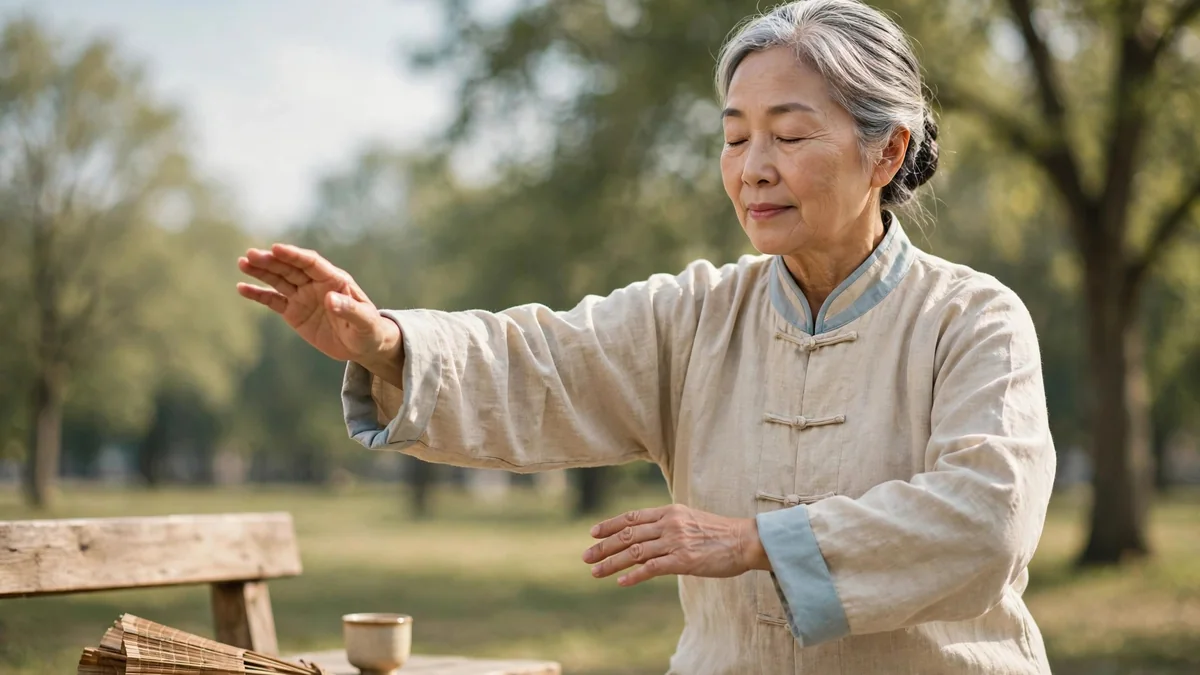
Many people stop moving their shoulders not because movement hurts, but because it feels pointless. Reaching for a jar or lifting a grandchild becomes a chore, and a chore is easy to skip. A reason to move changes that. You are no longer exercising. You are gardening, playing, or getting to the next thing you love.
Ikigai is a useful way to think about this. It is a Japanese concept that roughly means "the thing that gives your days meaning." It is not a medical idea, and we are not claiming it heals anything.
What the research says
There isn't research on ikigai or purpose and shoulder health, and any claim that purpose protects your joints would go beyond the evidence. What is studied is the movement itself.
- Tai chi and qigong trials in adults 55 and older report help with physical function, and with fall risk, blood pressure, depression and anxiety [R10].
- A 12-week Thai Yoga program in sedentary adults over 60 improved chair stands, arm curls, reaching behind the back and a six-minute walk compared with a control group [R11].
- The WHO recommends regular activity for adults, and says "every move counts" [R07].
These are trials of traditional movement, not of ikigai. They are small, and their quality varies. Still, they show that slow, varied movement can be useful for older adults.
What you can do
- Name one reason to move. Write it down, such as "reach the top shelf for the grandkids' art" or "garden without stopping." A clear reason is easier to return to on a hard day.
- Try a seated circle. Sit tall. Make one slow, unhurried circle in front of you with both arms, as if drawing a large ring in the air. Repeat three or four times, then rest.
- Pair movement with something you already enjoy. Stretch with the morning tea, or move while you listen to a favourite radio show.
- Choose a class you would look forward to. Tai chi, qigong and gentle yoga have trials behind them in older adults. Look for a teacher who offers seated options.
- Keep it short. Two or three minutes most days beats one long session you dread.
Where ShoulderBack Pro fits, and where it doesn't
Around the World is the natural fit: one large, unhurried circle in front of you, which the site lists as working the serratus anterior and lower trapezius. With the ShoulderBack Pro one arm guides while the other resists, so you can make it easier or harder yourself, and it works in an armchair. It's a wellness tool, not a treatment, there are no clinical trials of it yet, and it isn't a replacement for a class or a clinician. It costs $29 CAD with a 30-day guarantee.
When to see a professional
See a doctor or physiotherapist promptly if you have: pain after a fall or injury with sudden weakness or loss of movement; a shoulder that looks deformed, very swollen or bruised; fever or feeling unwell alongside the pain; chest pain or breathlessness (call emergency services); constant pain that doesn't change with rest or activity; pain that wakes you most nights; numbness, tingling or weakness into the arm or hand; pain in several joints at once; or pain that hasn't improved after a couple of weeks of sensible self-care.
If you have had a recent fall, start with a medical check before any new movement.
Try this movement
Around the World (circles, both arms) →Frequently asked questions
Does having a sense of purpose protect my shoulders?
There isn't research on that question, so we can't say it does. Many people find a reason to move makes a routine easier to keep.
Do tai chi and yoga have research behind them?
Yes, for older adults. Trials of tai chi and qigong and of some yoga programs report better physical function. The trials are small and vary in quality.
What is a seated way to start?
Try Around the World seated, making one slow, unhurried circle in front of you with both arms. Stop before you feel strain.
Sources
- WHO (2020). Guidelines on physical activity and sedentary behaviour. https://www.sydney.edu.au/news-opinion/news/2020/11/26/new-global-guidelines-on-physical-activity-and-sedentary-behavio.html
- Rogers CE, Larkey LK, Keller C (2009). A review of clinical trials of tai chi and qigong in older adults. West J Nurs Res 31(2):245-79. https://qigonginstitute.org/abstract-print/4690
- Noradechanunt C, Worsley A, Groeller H (2017). Thai Yoga improves physical function and well-being in older adults: a randomised controlled trial. J Sci Med Sport. https://ro.uow.edu.au/smhpapers/4599
More in this topic
 Essential guide: Ancient Wisdom for Strong Shoulders: What Traditional Movement Got Right (and What Science Adds)
 The Chinese Medicine Clock and Morning Movement: Fun Framing, Real Habit
 Cold Water and Shoulders: From Nordic Plunges to Modern Ice Baths
 Ancient Massage Traditions: Thai, Tui Na, Lomi Lomi — Comfort vs Proof