Comparisons, buyer's guides & honest product answers
Foam Roller vs Massage Ball vs Movement for Tight Shoulders
4-minute read · Published December 2, 2025 · Updated December 2, 2025
What each option does
A foam roller spreads pressure along a muscle. A massage ball presses into one spot. Movement asks the shoulder blades and arms to move through a range, under control, and that is the part the research is most interested in.
What the research says
- In a 2025 review of exercise types for rotator cuff-related shoulder pain, mobilization and stretching improved function and pain over about two months. Scapular stabilization exercise also helped [R03].
- Exercise that adds resistance and progresses over time probably helps shoulder-related pain. Unloaded movement alone probably does not [R01].
- There isn't strong research on foam rollers or massage balls for the shoulder specifically, so ask your clinician whether they suit you.
What you can do
- Start with a seated movement. Sit tall and roll both shoulders up, back and down, 10 times. Move slowly and stop before any pinch.
- Use a massage ball as a short, optional add-on (seated). Place it against the back of a chair, and press gently for a short time. Stop if you feel sharp pain, tingling or numbness.
- Add light resistance two or three times a week. Use a light band, light weights or a self-resisted trainer while seated. The WHO advises muscle-strengthening activity at least two days a week [R07].
Where ShoulderBack Pro fits, and where it doesn't
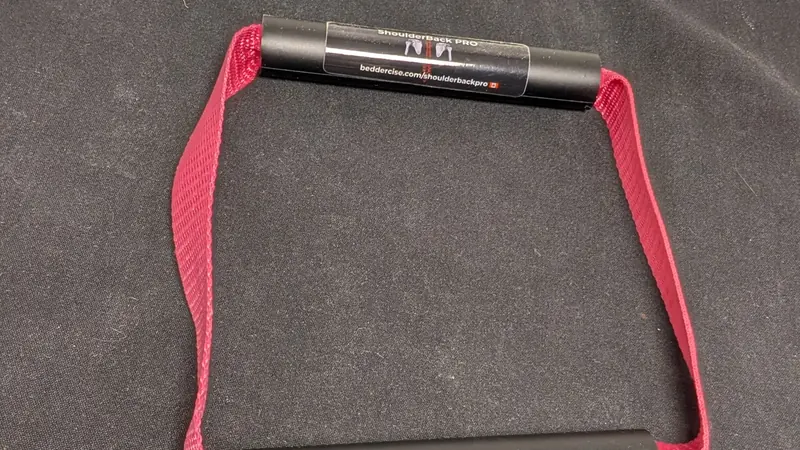
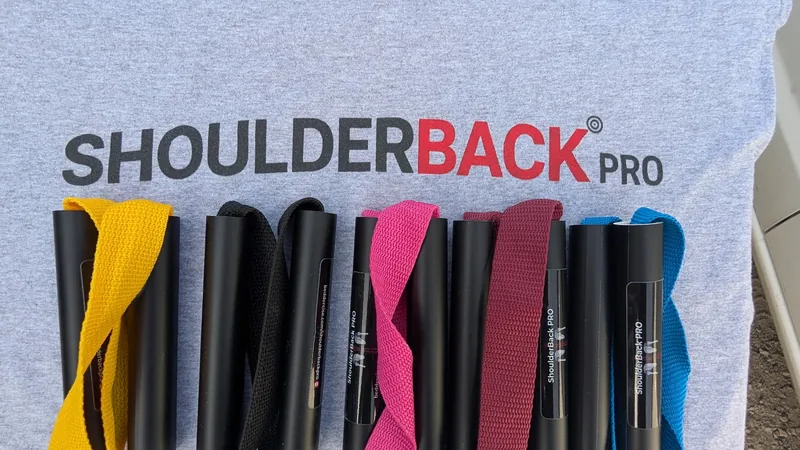
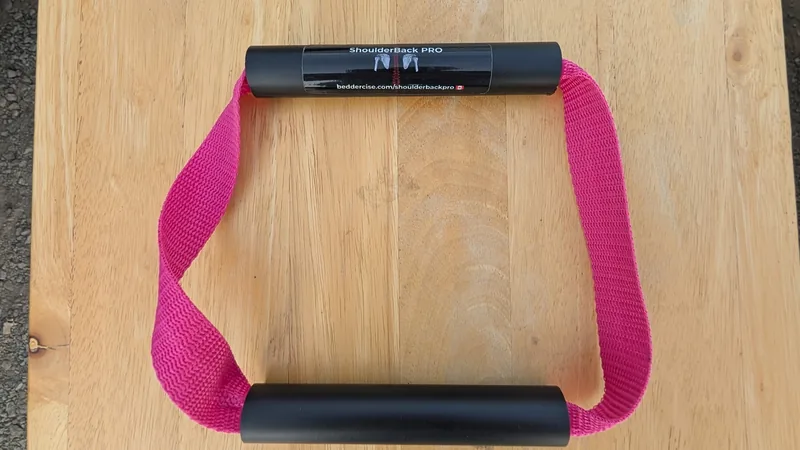
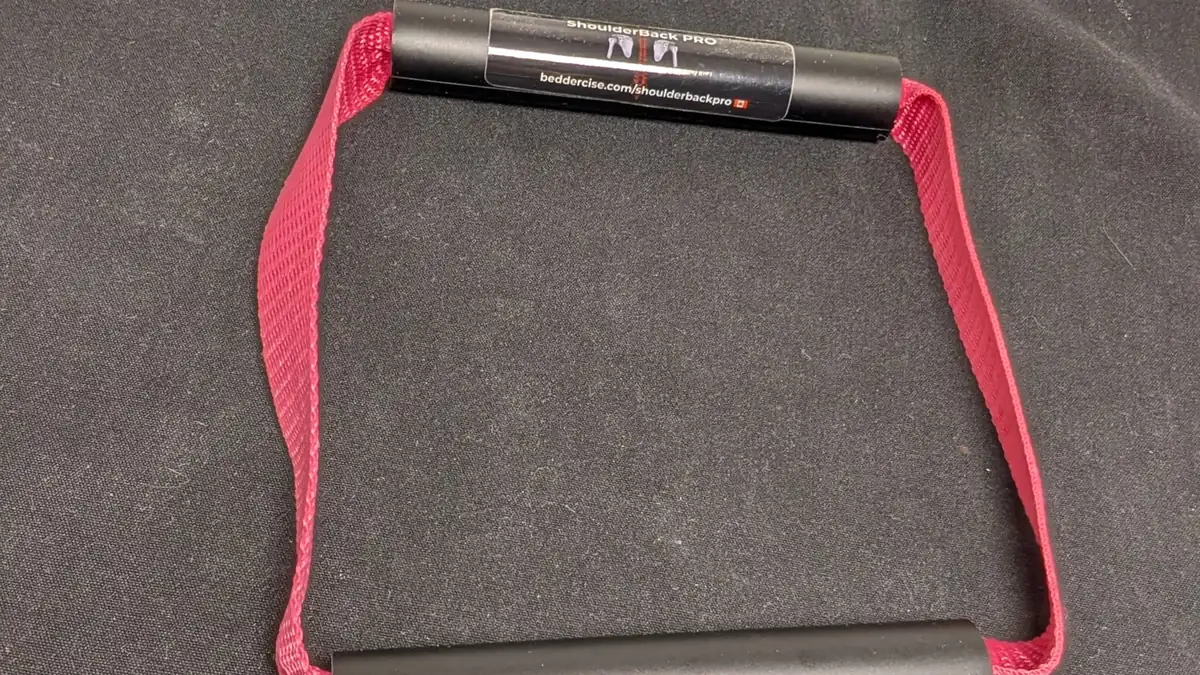
If movement is the side you want to build, SeeSaw is a gentle starting point: one arm guides the other through alternate reaches, and the other arm provides the resistance. It can be done seated. The trainer is a movement tool with no clinical trials. It does no hands-on tissue work, so it is no substitute for a roller or a massage therapist. The 16 lessons are on the routines page.
When to see a professional
See a doctor or physiotherapist promptly if you have: pain after a fall or injury with sudden weakness or loss of movement; a shoulder that looks deformed, very swollen or bruised; fever or feeling unwell alongside the pain; chest pain or breathlessness (call emergency services); constant pain that doesn't change with rest or activity; pain that wakes you most nights; numbness, tingling or weakness into the arm or hand; pain in several joints at once; or pain that hasn't improved after a couple of weeks of sensible self-care [R30].
A doctor or physiotherapist diagnoses the cause of shoulder pain. Tightness that keeps returning deserves that assessment.
Try this movement
All 16 video lessons →Frequently asked questions
Does foam rolling help tight shoulders?
Some people find it soothing for a short time. The sources in this article do not settle whether it helps long term, so evidence varies and it is worth asking your clinician.
Is a massage ball better than a foam roller?
Neither is shown to be better in the sources we can cite. Choose the one that feels comfortable, and avoid pressing directly on bone or on any area that tingles.
What is the best first step for tight shoulders?
Gentle, controlled movement you can repeat, with slow progression. If the tightness lasts or comes with other symptoms, a clinician should assess it.
Sources
- Naunton J et al. (2020). Effectiveness of progressive and resisted and non-progressive or non-resisted exercise in rotator cuff related shoulder pain: systematic review and meta-analysis of RCTs. Clinical Rehabilitation. https://search.pedro.org.au/search-results/record-detail/61404
- Frontiers in Bioengineering & Biotechnology (2025). Specific modes of exercise to improve rotator cuff-related shoulder pain: systematic review and meta-analysis. https://pmc.ncbi.nlm.nih.gov/articles/PMC12011739/
- WHO (2020). Guidelines on physical activity and sedentary behaviour. https://www.sydney.edu.au/news-opinion/news/2020/11/26/new-global-guidelines-on-physical-activity-and-sedentary-behavio.html
- NHS Greater Glasgow & Clyde, Shoulder red flags; NHS MPFT, Self-help: shoulder pain; BESS/BOA shoulder pathway summary (2021). https://www.nhsggc.scot/page_category/services/page/33