Canadian seasons, caregivers & community
Summer Cottage Season: Paddles, Docks and Sore Shoulders
4-minute read · Published July 2, 2025 · Updated July 2, 2025
Why this happens
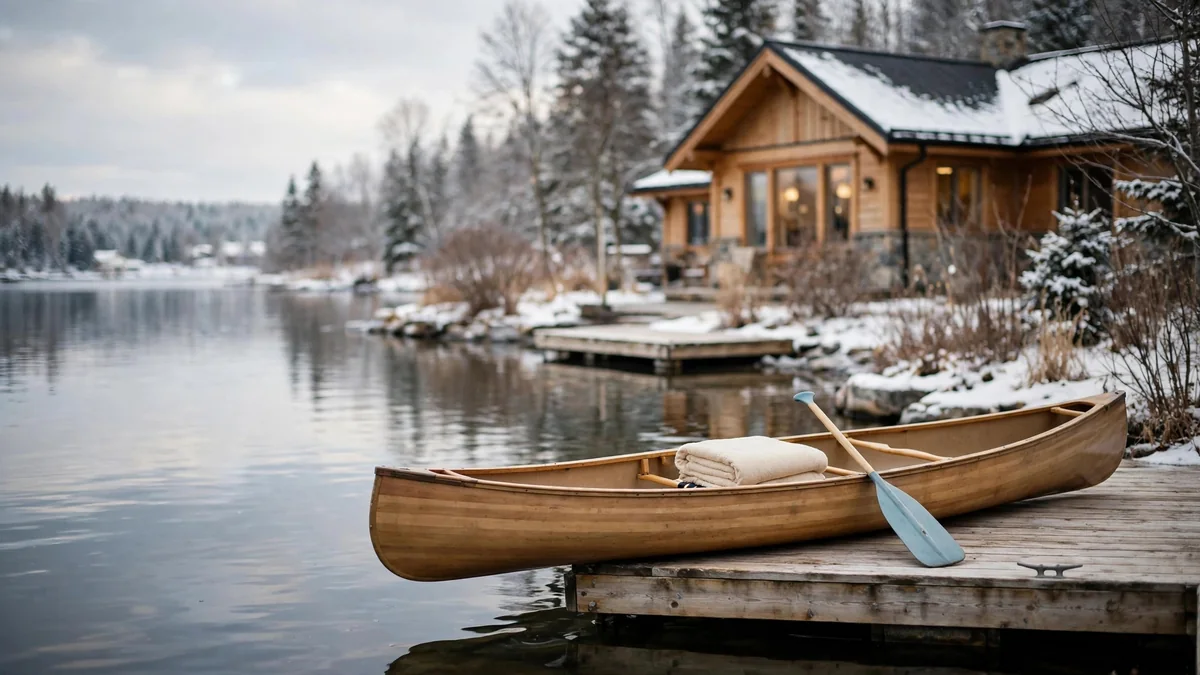
Cottage life packs a lot into a few days. You might paddle a canoe for an hour, carry coolers down a dock, lift a kayak onto a roof rack, or haul branches in the yard. Many of these jobs repeat the same arm and shoulder-blade motions again and again.
Shoulders that have been mostly still all winter may feel less ready for that load. That is a normal feeling, and it is one reason a short warm-up makes sense. The shoulder blade (scapula) steadies the arm, so its muscles matter for almost any reach or pull.
What the research says
Official activity guidance supports this kind of preparation. The WHO recommends muscle-strengthening activity at least two days a week for adults. For adults 65 and older, it adds multicomponent activity that builds functional balance and strength on at least three days a week [R07].
Resistance training is a strong part of healthy ageing. A position statement from the National Strength and Conditioning Association notes that it supports function, mobility and independence in older adults. It also says that fears and barriers should be addressed [R06].
Those sources are about general strength, not cottage tasks specifically. Use them as a reason to keep moving through the season, not as proof that any one warm-up prevents injury.
What you can do
- Seated reaches first. Sit tall in a sturdy chair. Reach both arms forward slowly, then sweep them out to the sides. Repeat a few times, keeping it comfortable.
- Paddle-stroke practice, seated. Hold a light, empty grip at chest height. Slowly rotate your upper body to one side, as if drawing a paddle past your hip, then return. Switch sides.
- Dock-lift prep. Stand with your feet hip-width apart and your back long. Bend the knees and practise lifting an empty bucket to waist height and back down.
- High-shelf reach. Reach up slowly with one arm at a time, as if placing something on a high shelf. Stop before any strain.
- Keep both arms working. Let one hand gently guide the other through the air, then switch. Slow and smooth beats fast.
- Take breaks. Set the paddle down, stretch your arms overhead, and walk the dock for a minute between jobs.
Do the seated moves on the first morning, then add the standing ones as the week goes on.
Where ShoulderBack Pro fits, and where it doesn't
Two of the 16 guided movements suit cottage tasks. Crosscuts glides on a diagonal from high shoulder to opposite hip, a bit like a paddle stroke, and the site lists it as working the lats and the muscles that draw the shoulder blades back. Around the World is one large, unhurried circle that takes both arms through a controlled range. The printable fridge card keeps the sequence handy.
The resistance comes from your other arm, so you choose the effort; resist a little harder or go longer as the season goes on. It is a wellness tool, not a treatment, and there are no clinical trials of it. A life jacket and careful steps on wet boards matter more than any trainer. You can order from the shop.
When to see a professional
See a doctor or physiotherapist promptly if you have: pain after a fall or injury with sudden weakness or loss of movement; a shoulder that looks deformed, very swollen or bruised; fever or feeling unwell alongside the pain; chest pain or breathlessness (call emergency services); constant pain that doesn't change with rest or activity; pain that wakes you most nights; numbness, tingling or weakness into the arm or hand; pain in several joints at once; or pain that hasn't improved after a couple of weeks of sensible self-care.
A doctor or physiotherapist diagnoses any shoulder injury. Get checked first after a fall off a dock or a capsized canoe.
Try this movement
Printable fridge card →Frequently asked questions
Should I warm up before paddling?
A short, gentle warm-up before the first long session can help you feel ready. Keep it easy and stop before any sharp pain.
Is it safe to start if I am over 65?
Most people can start gentle movement. Check with your clinician first if you have a known shoulder condition or other health concerns.
What if my shoulder aches after a day on the water?
Mild ache that eases with rest is common after new activity. Sharp, sudden or lasting pain past a couple of weeks needs a clinician.
Sources
- Fragala MS, Cadore EL, Dorgo S et al. (2019). Resistance Training for Older Adults: Position Statement From the National Strength and Conditioning Association. Journal of Strength and Conditioning Research. https://pubmed.ncbi.nlm.nih.gov/31343601/
- WHO (2020). Guidelines on physical activity and sedentary behaviour (University of Sydney summary). https://www.sydney.edu.au/news-opinion/news/2020/11/26/new-global-guidelines-on-physical-activity-and-sedentary-behavio.html