Canadian seasons, caregivers & community
Shovelling Snow Without Wrecking Your Shoulders
5-minute read · Published January 5, 2027 · Updated January 5, 2027
What happens to your shoulders
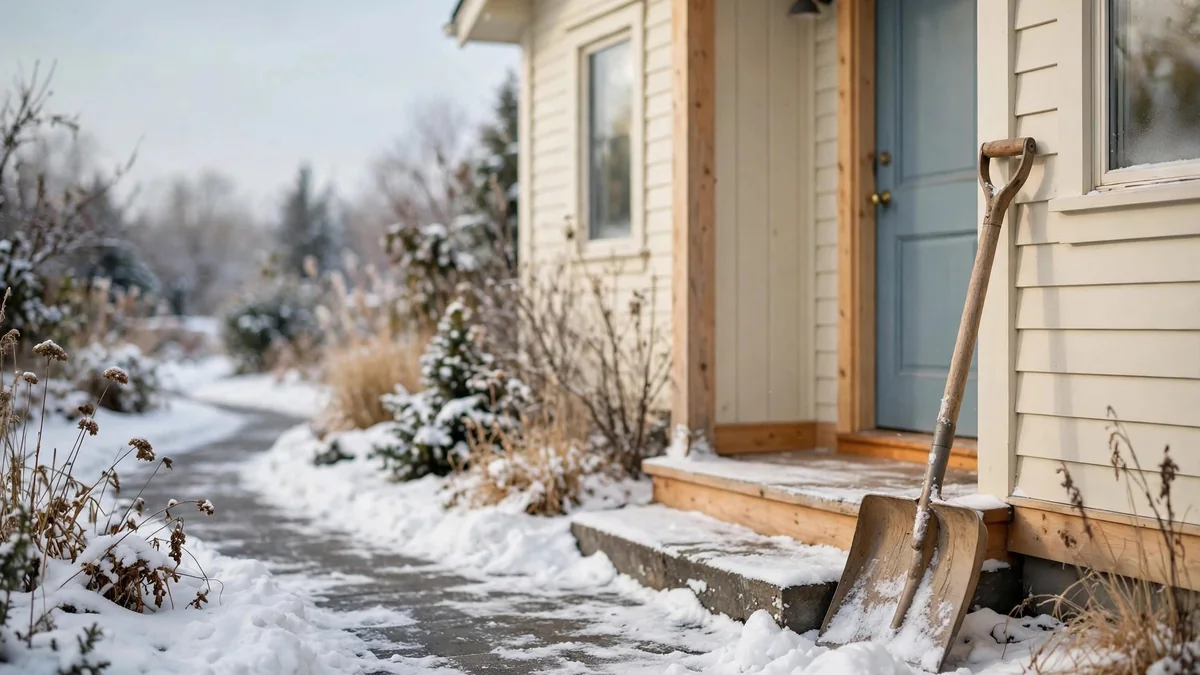
Shovelling combines several demands at once. You lift a load, turn your body, reach forward and sometimes throw snow over your shoulder. The shoulder blade muscles and rotator cuff have to steer and steady the arm the whole time.
Many people feel stiffer in the cold. It is also easy to start hard, especially on the first big snowfall of the season. Both may make a shoulder more likely to complain the next day.
Shovelling is also hard work for the heart. Stop and get help if you have chest pain or breathlessness.
What the research says
Research on snow shovelling specifically is limited, so the advice below is general good practice, not proven prevention. The broader research on strength and movement does help explain why it matters.
- Strength supports everyday tasks. Resistance training helps older adults keep strength, mobility and independence, which are the abilities that heavy chores ask for [R06].
- Weekly strength and balance matter. The WHO suggests adults do muscle-strengthening activity at least two days a week. Adults 65 and older should add functional balance and strength work at least three days a week [R07].
- Shoulder strength and mobility are linked to pain. In adults 60 and older, strength, mobility and posture are each linked to shoulder pain and disability [R28].
- Build up in stages. Shoulder rehabilitation commonly moves from range of motion to strength, then control, then coordination [R16]. The same logic suits shovelling: build up the load over the season.
What you can do
- Warm up before you start. Do easy arm circles, shoulder rolls and a few gentle reaches. Keep everything comfortable. Seated option: Sit tall in a sturdy chair and do the same arm circles and shoulder rolls.
- Use a lighter shovel and smaller loads. Take smaller scoops. Keep the load close to your body rather than reaching out. Seated option: If standing is hard, ask someone to do the heavy lifting, or use a wheeled pusher.
- Push rather than lift when you can. Many people find pushing snow along the ground easier on the shoulders than lifting it. Seated option: Use a light broom to clear fresh, dry snow from a step while sitting on a sturdy stool, if that is safe for you.
- Turn with your feet, not your shoulders. Keep your feet apart, bend your knees and turn your whole body. Avoid throwing snow over your shoulder. Seated option: Clear snow in short passes and avoid twisting while reaching.
- Take breaks and split the job. Short sessions with rests in between are easier to manage than one long push. Seated option: Rest in a chair indoors between sessions.
- Cool down and build strength off the season. Many people find gentle movement afterward leaves them less stiff. Keep a light strength routine going through the year [R07].
Where ShoulderBack Pro fits, and where it doesn't
ShoulderBack Pro can fit into the off-season prep: slow, self-resisted shoulder and upper-back work on quiet days. Around the World (serratus anterior, lower trapezius) uses large, unhurried circles, and Bear Hugs Me (middle trapezius, rhomboids) is designed to work the upper back. Both can be done seated, and you raise the challenge by resisting harder with the other arm or doing longer sets.
It does nothing for the lifting, the cold or the load on your heart, and it is a wellness tool with no clinical trials. A printable plan for beside the door is on the fridge card, and the trainer is here if you want it.
When to see a professional
See a doctor or physiotherapist promptly if you have: pain after a fall or injury with sudden weakness or loss of movement; a shoulder that looks deformed, very swollen or bruised; fever or feeling unwell alongside the pain; chest pain or breathlessness (call emergency services); constant pain that doesn't change with rest or activity; pain that wakes you most nights; numbness, tingling or weakness into the arm or hand; pain in several joints at once; or pain that hasn't improved after a couple of weeks of sensible self-care.
Chest pain or breathlessness while shovelling means stop right away and call emergency services.
Try this movement
Printable fridge card →Frequently asked questions
Is shovelling snow bad for your shoulders?
It can strain them, especially with heavy, repeated lifting and throwing. Research on snow shovelling specifically is limited, so the tips below are sensible habits rather than proven prevention.
Should I warm up before shovelling?
A few minutes of gentle movement is a sensible habit. Start with easy arm circles and shoulder rolls, and keep them comfortable.
Can I shovel with a sore shoulder?
Ask for help or wait if you can. If you do shovel, use a light load, keep the work short, and stop if pain increases. Persistent or severe shoulder pain needs a clinician's assessment.
Why does my shoulder ache the day after shovelling?
Mild soreness after unaccustomed work is common, and it often settles with gentle movement. Pain that lasts, worsens or affects sleep should be checked by a clinician.
Sources
- Fragala MS, Cadore EL, Dorgo S et al. (2019). Resistance Training for Older Adults: Position Statement From the National Strength and Conditioning Association. J Strength Cond Res. https://pubmed.ncbi.nlm.nih.gov/31343601/
- WHO (2020). Guidelines on physical activity and sedentary behaviour. https://www.sydney.edu.au/news-opinion/news/2020/11/26/new-global-guidelines-on-physical-activity-and-sedentary-behavio.html
- Mureşan et al. (2022). Effects of a novel proprioceptive rehabilitation device on shoulder joint position sense, pain and function. Medicina. https://www.ncbi.nlm.nih.gov/pmc/articles/PMC9505091/
- PMC narrative review (2026). Body composition, strength, mobility and posture associated with shoulder pain and disability in community-dwelling older adults. https://www.ncbi.nlm.nih.gov/pmc/articles/PMC13513864/