Alternative & complementary remedies: what the evidence says
Herbal Remedies for Joint Pain: Devil's Claw, Boswellia, Willow Bark
6-minute read · Published February 17, 2026 · Updated February 17, 2026
What these remedies are
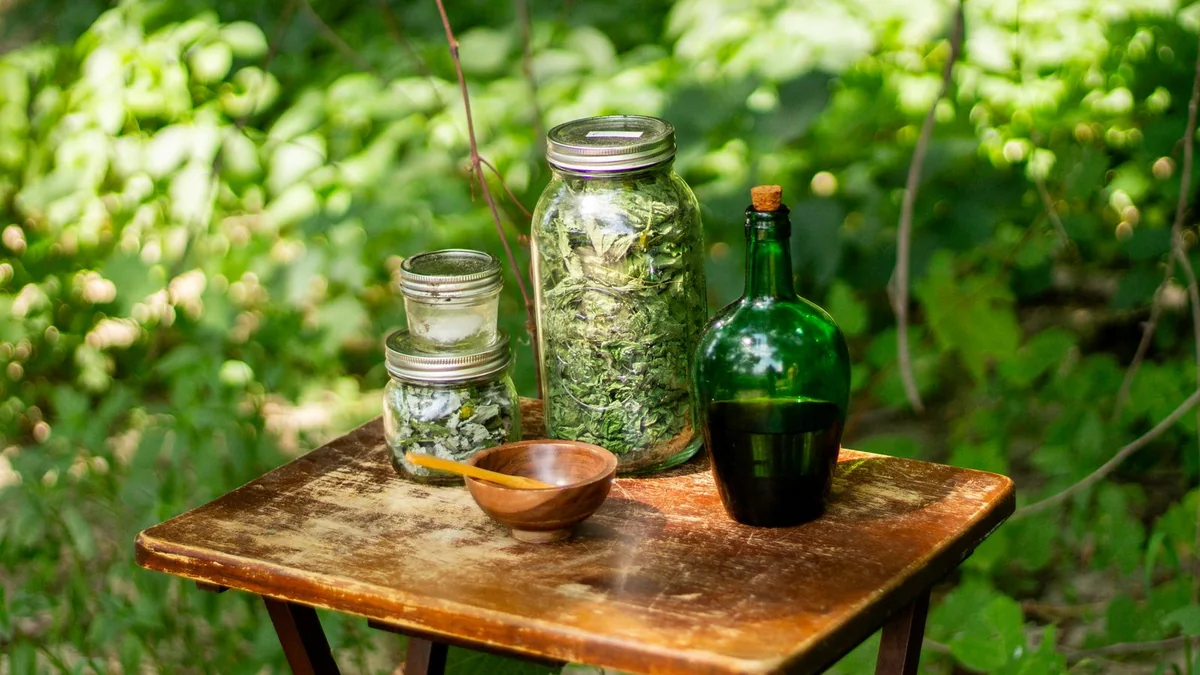
Devil's claw, boswellia and willow bark are plant products sold as capsules, teas, creams and other forms. They are often marketed as natural, and that word can make them sound safer than they are. Labels and marketing can promise more than the research shows.
People try these products for good reasons. Joint discomfort is frustrating, and a natural option can feel like a gentle first step. The useful question is what the evidence says, and whether the product fits your health picture.
What the research says
[R20] is a review from the US National Center for Complementary and Integrative Health (NCCIH). It finds insufficient evidence for many supplements used for musculoskeletal pain. For devil's claw, it reports limited evidence of a modest short-term benefit for low back pain. It does not show benefit for the shoulder.
For boswellia and willow bark, we found no reliable evidence for shoulder pain. That does not prove they fail. It means we cannot say they help.
When you read any herbal claim, ask three plain questions. What was studied? In which people? For how long? A product page rarely answers all three. A study in people with the same condition you have is far more useful than a claim about a plant's history or its effect in a laboratory dish. Lab results are a starting point for research, not evidence that a product will help your joints.
Products with the same plant name may also differ in strength, so ask a pharmacist about the specific one you are considering.
[R22] is an older review, covering evidence to 2009. It could not recommend vitamin E, ginger, turmeric or omega-3 for osteoarthritis based on that evidence. It did find two studies supporting omega-3 for rheumatoid arthritis. Turmeric and ginger, which many people also try, are rated insufficient or unclear in [R20].
[R21] notes that whole-diet patterns, such as Mediterranean and plant-based eating, are linked to less pain and better function in osteoarthritis. The word "linked" matters here. It describes an association, not a proven effect of a single ingredient.
Evidence levels at a glance:
- Devil's claw: limited, short-term, for low back pain only.
- Boswellia: insufficient in our sources.
- Willow bark: insufficient in our sources.
- Turmeric and ginger: insufficient or unclear [R20].
What you can do
- Get the cause checked. Your doctor or physiotherapist diagnoses the cause of joint pain. A product cannot replace that step.
- Ask your pharmacist to check. Bring the product and a list of your medicines. Ask about interactions before you start.
- Choose gentle, seated movement. Stay within the range your clinician approves, and keep it gentle.
- Eat a varied, whole-food diet. Patterns of eating are linked to less pain in osteoarthritis [R21], and this is a low-risk habit to build.
- Keep a simple log. Note what you tried, when, and how your pain changed. This helps your clinician see what is working.
Medication line: If you take blood thinners, pain relievers or any other medication, talk to your pharmacist or doctor before starting any herbal product, even one sold as natural.
Where ShoulderBack Pro fits, and where it doesn't
ShoulderBack Pro does not fit this topic. It is a movement trainer, not a remedy or supplement. Your pharmacist or doctor is the right next step, and a physiotherapist can advise on movement, including the seated routines.
See a doctor or physiotherapist promptly if you have: pain after a fall or injury with sudden weakness or loss of movement; a shoulder that looks deformed, very swollen or bruised; fever or feeling unwell alongside the pain; chest pain or breathlessness (call emergency services); constant pain that doesn't change with rest or activity; pain that wakes you most nights; numbness, tingling or weakness into the arm or hand; pain in several joints at once; or pain that hasn't improved after a couple of weeks of sensible self-care.
When to see a professional
A doctor or physiotherapist diagnoses the cause of joint or shoulder pain. Talk to them before starting any herbal product, especially if you take blood thinners or regular medication. Pain that has not improved after a couple of weeks of sensible self-care also needs a professional look.
Learn more
Try this movement
Greet the Morning (seated) ritual →Frequently asked questions
Are herbal remedies safe for joint pain?
They are not automatically safe. Ask your pharmacist or doctor before starting, especially if you take other medication.
Does devil's claw work for shoulder pain?
Our sources found limited, short-term evidence for low back pain, not shoulder pain. That is not the same as proof that it helps a shoulder [R20].
Can I take herbs alongside my medication?
Not without checking first. Your pharmacist can check for interactions with the medicines you already take.
What should I do first?
Get the cause of the pain checked by a clinician. Then decide with them whether any product is worth trying.
Sources
- NCCIH (US National Center for Complementary and Integrative Health). Nutritional Approaches for Musculoskeletal Pain and Inflammation. https://www.nccih.nih.gov/health/providers/digest/musculoskeletal
- PMC narrative review (2025/26). Nutritional Interventions in Osteoarthritis: Mechanisms, Clinical Evidence, and Translational Opportunities. https://www.ncbi.nlm.nih.gov/pmc/articles/PMC12844890/
- Rosenbaum CC et al. (2010). Antioxidants and antiinflammatory dietary supplements for osteoarthritis and rheumatoid arthritis. Altern Ther Health Med. https://pubmed.ncbi.nlm.nih.gov/20232616/
More in this topic
 Essential guide: Alternative Remedies for Shoulder Pain: What the Evidence Says About Each
 Over-the-Counter Pain Relief: Acetaminophen vs NSAIDs for Shoulder Pain
 PRP and Stem-Cell Injections for Shoulders: Expensive, Uncertain
 Shockwave Therapy for Calcific Shoulder Tendinitis: One of the Better-Supported Options