Alternative & complementary remedies: what the evidence says
Alternative Remedies for Shoulder Pain: What the Evidence Says About Each
9-minute read · Published May 23, 2025 · Updated May 23, 2025
Why remedies are so appealing
Shoulder pain is frustrating, and that urge to do something is normal. It can wake you at night, make dressing hard and cut into the things you enjoy, like golf, gardening or lifting the grandkids. When that happens, almost any idea that promises relief sounds worth a try.
Many remedies come from long traditions, and some come from a nearby store. Some have real research behind them. Many do not. This article sorts them by the evidence, not by how natural or old they are. Ancient use is not proof of benefit.
The evidence levels in plain words
Researchers and health bodies often rate evidence in levels. Here they are used in plain terms:
- Strong: several good-quality trials agree.
- Moderate: good trials exist, but with gaps or disagreement.
- Limited: a few small or older studies, or findings that are unclear.
- Insufficient: not enough good evidence to say it helps or to rule it out.
What the research says
For shoulder pain in general, resisted exercise that progresses over time probably helps. Gentle, unloaded movement alone probably does not move pain much [R01]. That is the best-supported approach in this article, and it is the first thing to compare any remedy against.
Frozen shoulder needs its own note. The belief that frozen shoulder reliably passes through its stages to full recovery without treatment is not supported. Untreated cases improved only partly over one to four years [R19]. Do not wait it out. See a clinician soon.
The general review of supplements for musculoskeletal pain found insufficient evidence for many of them. Some evidence suggests omega-3s give a modest benefit in rheumatoid arthritis [R20].

The remedies, one by one
The table below gives the evidence level for each common remedy. Ratings come from the sources cited here, and each one is about the condition named, not shoulder pain in every case.
| Remedy | Evidence level | What it means |
|---|---|---|
| Omega-3s (rheumatoid arthritis) | Limited | Two studies support a benefit, and the review authors could not recommend it for osteoarthritis [R22]. |
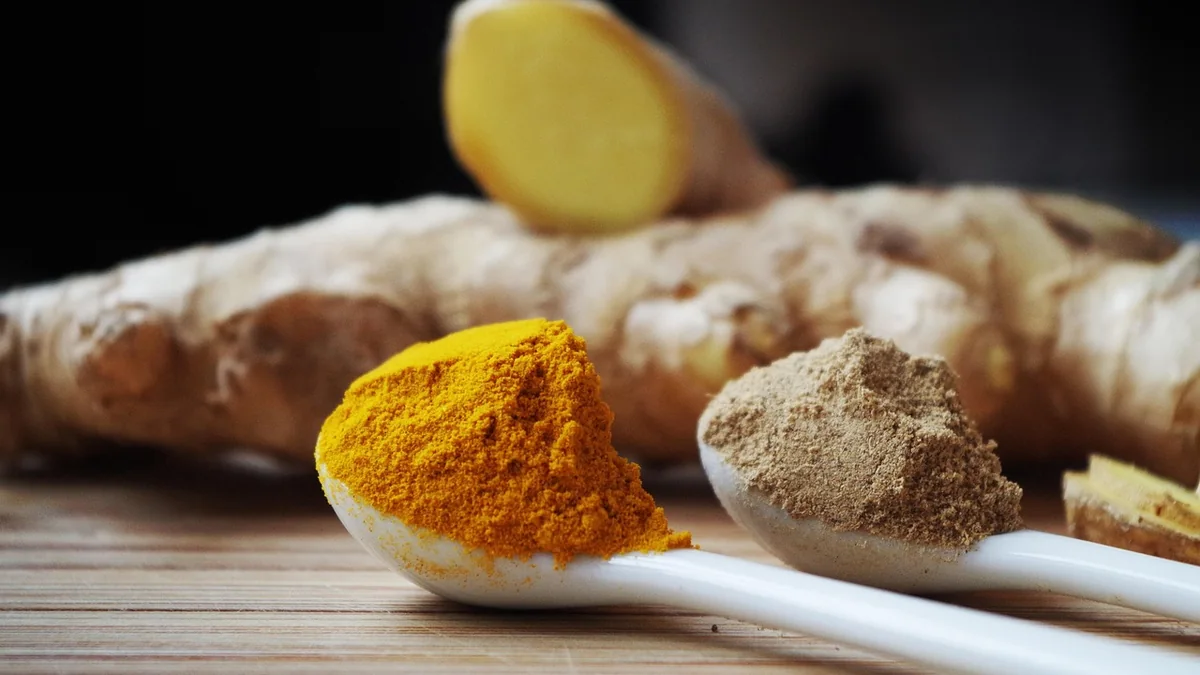
| Turmeric or curcumin | Insufficient | Promising in lab work, with insufficient evidence in people [R20]. |
| Ginger | Insufficient | Evidence is unclear. For osteoarthritis, the authors could not recommend it [R22]. |
| Vitamin E | Insufficient | The authors could not recommend it for osteoarthritis [R22]. |
| Devil's claw | Limited | Some short-term benefit for low back pain, not shoulder pain [R20]. |
| Bromelain | Insufficient | Not enough evidence for musculoskeletal inflammation [R20]. |
| Acupuncture | Insufficient | Results were about the same as sham at two to four weeks [R24]. |
| Heat, massage, creams, taping | Evidence varies | No clear answer in the sources reviewed here. Ask your clinician. |
Many people try several remedies at once. That feels reasonable, but it makes it hard to tell what helped and what did not. Trying one change at a time, with a note of what happened, gives you a clearer answer.
Two things stand out. First, most remedies are rated limited or insufficient. Second, a remedy that helps one joint condition may not help the shoulder. Keep your expectations small and your questions specific.
Hands-on remedies: heat, massage and creams
Some remedies are not pills at all. Warmth, massage, topical creams and taping are common, and many people find them soothing. The sources reviewed for this article do not give a clear answer on how well they work for shoulder pain. The evidence varies, and the results depend on the person and the cause.
Think of these as comfort measures rather than fixes. Warmth may ease stiffness for a while. A massage may feel good and loosen a tight area for a short time. Cold packs are also common after a flare, and the sources here do not settle how well they work for the shoulder. A cream or tape may help you move with less worry. None of them is a substitute for a diagnosis or for exercise. If one of them helps you move more comfortably, keep it as part of a plan, and ask your clinician whether it suits your shoulder.
How to judge any remedy
Before you spend money or time on a remedy, ask a few plain questions:
- Has it been tested in people with shoulder pain? Lab results and animal studies are early signs, not proof.
- Did the trials measure pain or function? A small change in a lab marker may not change how your shoulder feels.
- Is the evidence recent and consistent? Older, small or conflicting studies deserve caution.
- Could it interact with medicine you take? This matters most for supplements.
- What does it cost, and what does it replace? A remedy that pushes out exercise or a clinician visit has a real cost.
- Who is recommending it, and what do they gain? A trusted clinician or pharmacist is a better source than an advertisement.
If a remedy promises fast or complete relief, treat that as a warning sign. Honest sources describe modest, uncertain benefits.
What you can do
- Get the diagnosis first. Only a doctor or physiotherapist can diagnose the cause of your shoulder pain. A clear diagnosis tells you which remedies are worth considering.
- Start with gentle exercise you can keep doing. Resisted, progressive work probably helps more than rest alone [R01]. Seated versions work for most people.
- Use a simple log. Note what you tried, when, and how the shoulder felt the next day. This helps you and your clinician see what works.
- Test one change at a time. Trying three new things in a week makes it hard to tell what helped.
- Ask before you supplement. Check with your pharmacist or doctor before any supplement, especially if you take blood thinners or other medication.
- Use heat or a warm shower if it eases stiffness. Many people find it comforting, and the evidence varies. Stop if the heat makes pain worse.
- Keep a seated routine on low-energy days. A few gentle minutes of movement from a chair still count.

Where ShoulderBack Pro fits — and where it doesn't
The better first step is an assessment and a progressive exercise plan from a clinician, not a gadget. Once you are cleared for gentle movement, a trainer like ShoulderBack Pro is one optional way to keep general conditioning going between visits. The Greet the Morning routine is a seated place to start, and the shop page is there if you want one later. It is a wellness tool with no clinical trials, and it is not a treatment for frozen shoulder, arthritis or a tear.
When to see a professional
See a doctor or physiotherapist promptly if you have: pain after a fall or injury with sudden weakness or loss of movement; a shoulder that looks deformed, very swollen or bruised; fever or feeling unwell alongside the pain; chest pain or breathlessness (call emergency services); constant pain that doesn't change with rest or activity; pain that wakes you most nights; numbness, tingling or weakness into the arm or hand; pain in several joints at once; or pain that hasn't improved after a couple of weeks of sensible self-care.
A few situations need a clinician before any remedy or new routine:
- Frozen shoulder: see a clinician. Waiting it out is not supported by the evidence [R19].
- Acute injury (a fall, sudden weakness, a visible deformity): get a medical assessment first.
- Nerve symptoms (numbness, tingling or weakness in the hand): get assessed first.
- After surgery: follow your surgeon's or physiotherapist's plan, and use other approaches only if they approve.
- Severe osteoporosis, a recent fracture or an inflammatory arthritis flare: ask a clinician before any new routine.
Only a doctor or physiotherapist can diagnose the cause of shoulder pain. This article does not diagnose anything.
Further reading in the cluster
If you are comparing options, these posts go deeper on single remedies: acupuncture for shoulder pain, omega-3s for joint pain and turmeric and curcumin.
Try this movement
Greet the Morning (seated) ritual →Frequently asked questions
Do supplements help shoulder pain?
For most supplements the evidence is weak or mixed. Omega-3s have some support for rheumatoid arthritis, but not clearly for shoulder pain in general. Talk to your pharmacist or doctor first.
Does acupuncture help a sore shoulder?
The evidence is not strong enough to say it works. Some people feel short-term relief, but a Cochrane review found results about the same as a fake treatment at two to four weeks.
Should I wait and see if my frozen shoulder gets better on its own?
No. The idea that frozen shoulder reliably recovers without treatment is not supported. See a clinician soon rather than waiting it out.
Is any remedy proven for shoulder pain?
Exercise is the best-supported approach. Resisted exercise that progresses over time probably helps, and it is usually guided by a clinician or physiotherapist.
Can ShoulderBack Pro replace a remedy?
No. ShoulderBack Pro is not a treatment and is not a replacement for care. If you have been cleared for gentle movement, it is one optional, general-conditioning tool to consider later.
Sources
- Naunton J et al. (2020). Effectiveness of progressive and resisted and non-progressive or non-resisted exercise in rotator cuff related shoulder pain: systematic review and meta-analysis of RCTs. Clinical Rehabilitation. https://search.pedro.org.au/search-results/record-detail/61404
- Wong CK et al. (2017). Natural history of frozen shoulder: fact or fiction? A systematic review. Physiotherapy 103(1):40-47. https://pubmed.ncbi.nlm.nih.gov/27641499/
- NCCIH (US National Center for Complementary and Integrative Health). Nutritional Approaches for Musculoskeletal Pain and Inflammation. https://www.nccih.nih.gov/health/providers/digest/musculoskeletal
- Rosenbaum CC et al. (2010). Antioxidants and antiinflammatory dietary supplements for osteoarthritis and rheumatoid arthritis. Altern Ther Health Med. https://pubmed.ncbi.nlm.nih.gov/20232616/
- Cochrane (Green S et al., 2005; edited, conclusions unchanged). Acupuncture for shoulder pain. CD005319. https://www.cochrane.org/evidence/CD005319