Active aging & sports: keep playing
Gardening Season Shoulder Prep: Digging, Pruning, Hauling
5-minute read · Published May 7, 2025 · Updated May 7, 2025
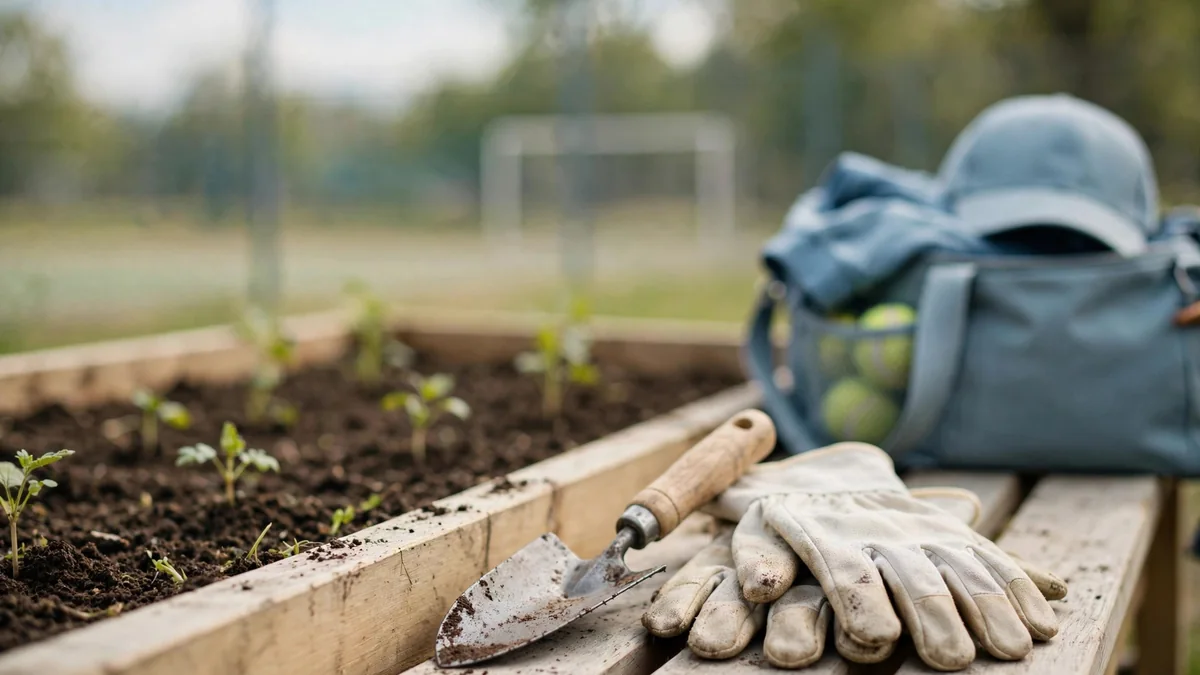
Why gardening loads the shoulder
Each garden task asks something different of the arm:
- Digging combines a forward reach with a lift and a twist through the trunk.
- Pruning often means holding the arms up for a while, which is tiring for the shoulder muscles.
- Hauling asks the shoulder to carry bags, pull a wheelbarrow or lift a pot.
The shoulder blade and rotator cuff steady the arm through all of this. Many people find the first warm weekend is the hardest on their shoulders. They move from winter stillness straight into hours of work.
What the research says
- Strength training helps older adults. Resistance training counters loss of strength and muscle mass and supports function, mobility and independence. Barriers and fears about starting should be addressed [R06].
- Strength guidance is clear. WHO recommends muscle-strengthening activity on at least two days a week for adults. For adults 65 and older, it adds multicomponent activity on at least three days a week [R07].
- Strength supports everyday function. A position statement on resistance training for older adults reports that keeping muscle strength supports physical function, mobility and independence [R06].
- Scapular control and mobility help. A 2025 review found that scapular stabilization exercise and mobilization or stretching improved pain and function in rotator cuff-related shoulder pain [R03].
What you can do
- Start a few weeks early. Begin with short, gentle sessions several days a week. Seated shoulder rolls and easy arm circles are a good start.
- Towel row (seated). Hold a towel with both hands and gently pull the elbows back, squeezing the shoulder blades together. Keep the movement slow and controlled. Standing works too once it feels comfortable.
- Wall or counter reach. Walk your hands up a wall or counter to a comfortable height, then return. This prepares the arms for pruning overhead.
- Use a stool and raised beds. Sitting while you prune or weed takes load off the shoulders and back.
- Lift smart. Keep loads close to the body, bend from the hips and knees, and split heavy bags into smaller loads.
- Switch tasks often. Alternate digging with raking or sweeping so the same muscles do not work nonstop.
- Cool down. After hauling, do gentle arm swings and a slow chest opener.
Where ShoulderBack Pro fits, and where it doesn't
Digging and hauling pull the arms forward and down, so the useful counterbalance is work for the muscles between the shoulder blades. Crosscuts is designed to work the lats, external obliques and scapular retractors in a diagonal glide. Bear Hugs Me is designed to work the middle trapezius and rhomboids, a gentle reset after a long pruning session. Your other arm provides the resistance, so you can resist harder, move through more range or do longer sets as the season goes on.
It's a wellness tool, not a treatment, and it hasn't been through clinical trials. It works seated or standing, and the shop page has the details.
When to see a professional
See a doctor or physiotherapist promptly if you have: pain after a fall or injury with sudden weakness or loss of movement; a shoulder that looks deformed, very swollen or bruised; fever or feeling unwell alongside the pain; chest pain or breathlessness (call emergency services); constant pain that doesn't change with rest or activity; pain that wakes you most nights; numbness, tingling or weakness into the arm or hand; pain in several joints at once; or pain that hasn't improved after a couple of weeks of sensible self-care.
A sudden pain that appears during heavy lifting, such as a hauling mishap, should be assessed. A doctor or physiotherapist can tell you what is going on and what is safe to do next.
Try this movement
Crosscuts (lats, obliques, scapular retractors) →Frequently asked questions
Is gardening good for shoulders?
Gardening involves varied movement, which many people enjoy. Preparing your shoulders helps you handle it. Strength work is linked to better function in older adults.
How early should I start preparing?
Starting a few weeks before the first big session gives your shoulders time to adapt. Many people do short sessions several days a week.
Can I garden with a sore shoulder?
Mild, short-lived discomfort may be manageable with lighter tasks. Sharp, sudden or night pain means stop and get checked.
Should I use a stool?
Yes. Many people find that a stool or a raised bed reduces reaching and bending, which takes load off the shoulders and back.
Sources
- Frontiers in Bioengineering & Biotechnology (2025). Specific modes of exercise to improve rotator cuff-related shoulder pain: systematic review and meta-analysis. https://pmc.ncbi.nlm.nih.gov/articles/PMC12011739/
- Fragala MS, Cadore EL, Dorgo S et al. (2019). Resistance Training for Older Adults: Position Statement From the National Strength and Conditioning Association. J Strength Cond Res. https://pubmed.ncbi.nlm.nih.gov/31343601/
- WHO (2020). Guidelines on physical activity and sedentary behaviour. https://www.sydney.edu.au/news-opinion/news/2020/11/26/new-global-guidelines-on-physical-activity-and-sedentary-behavio.html