Canadian seasons, caregivers & community
Exercise for Couples in Retirement: Doing It Together
4-minute read · Published October 27, 2025 · Updated October 27, 2025
What this is
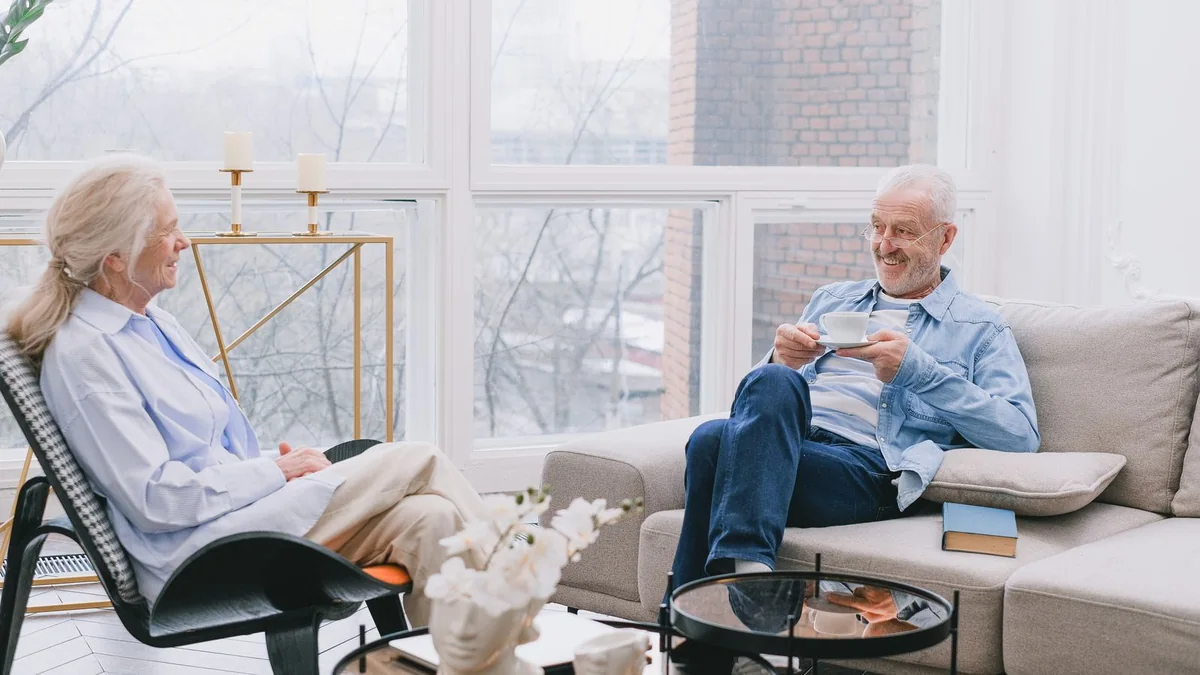
Retirement often brings more shared time and a chance to build new routines. A shared routine works best when it is short, adjustable and easy to repeat. Each partner moves at their own pace, and nobody has to keep up.
The goal is not a competition. It is a few minutes of movement that both of you can do on most days.
What the research says
- Strength and balance count for older adults. The WHO advises adults 65 and older to do multicomponent activity that emphasises balance and strength at least three days a week [R07].
- Strength training helps. Resistance training supports strength and function in older adults, and fears and barriers should be addressed [R06].
- Choose what you will keep doing. For chronic low back pain, researchers suggested people pick exercise they enjoy and will keep doing, since no single type clearly won [R05]. That advice travels well to shared routines.
What you can do
- Pick a time you already share. After breakfast or before lunch works well for many couples.
- Do seated arm circles together. Sit side by side and move both arms in slow circles. Seated: this is the whole routine.
- Take turns leading. One partner calls out each move, then you swap. This keeps it social and shares the effort.
- Add chair stands for legs. Stand up and sit down slowly from a sturdy chair, using your hands only if needed. Seated: this is a sit-to-stand move, so it starts seated.
- Keep a card on the fridge. A printable card keeps the moves visible and easy to follow together.
Where ShoulderBack Pro fits — and where it doesn't
Two pocket-size trainers suit a shared routine, since each partner sets their own effort and range while seated. Around the World is one large, unhurried circle, and Bear Hugs Me draws the trainer to your chest while you breathe wide; the other arm provides the resistance, so you each choose how hard to push. Our printable fridge card lists the moves.
The 4-pack is $87 CAD with free shipping, so it covers two people with spares (shop). It is a wellness tool, not a treatment for a diagnosed shoulder condition, and the same seated moves work without it.
When to see a professional
See a doctor or physiotherapist promptly if you have: pain after a fall or injury with sudden weakness or loss of movement; a shoulder that looks deformed, very swollen or bruised; fever or feeling unwell alongside the pain; chest pain or breathlessness (call emergency services); constant pain that doesn't change with rest or activity; pain that wakes you most nights; numbness, tingling or weakness into the arm or hand; pain in several joints at once; or pain that hasn't improved after a couple of weeks of sensible self-care.
If either partner has a shoulder problem, a doctor or physiotherapist should assess it before starting a new shared routine.
Try this movement
Printable fridge card →Frequently asked questions
Do we both need a trainer?
Not necessarily. The same seated routine works without any equipment. Each partner can use their own trainer if they want one.
How much activity should we aim for?
The WHO advises adults 65 and older to do strength and balance activity at least three days a week.
What if one of us has a sore shoulder?
Start with a clinician. The other partner can lead the gentler moves while you recover.
Sources
- Hayden JA et al. (2021). Exercise therapy for chronic low back pain. Cochrane Database of Systematic Reviews, Issue 9, CD009790. https://pmc.ncbi.nlm.nih.gov/articles/PMC8477273
- Fragala MS, Cadore EL, Dorgo S et al. (2019). Resistance Training for Older Adults: Position Statement From the National Strength and Conditioning Association. J Strength Cond Res. https://pubmed.ncbi.nlm.nih.gov/31343601/
- WHO (2020). Guidelines on physical activity and sedentary behaviour. https://www.sydney.edu.au/news-opinion/news/2020/11/26/new-global-guidelines-on-physical-activity-and-sedentary-behavio.html