Canadian seasons, caregivers & community
Canada's 24-Hour Movement Guidelines for Adults 65+: A Plain Summary
5-minute read · Published June 9, 2026 · Updated June 9, 2026
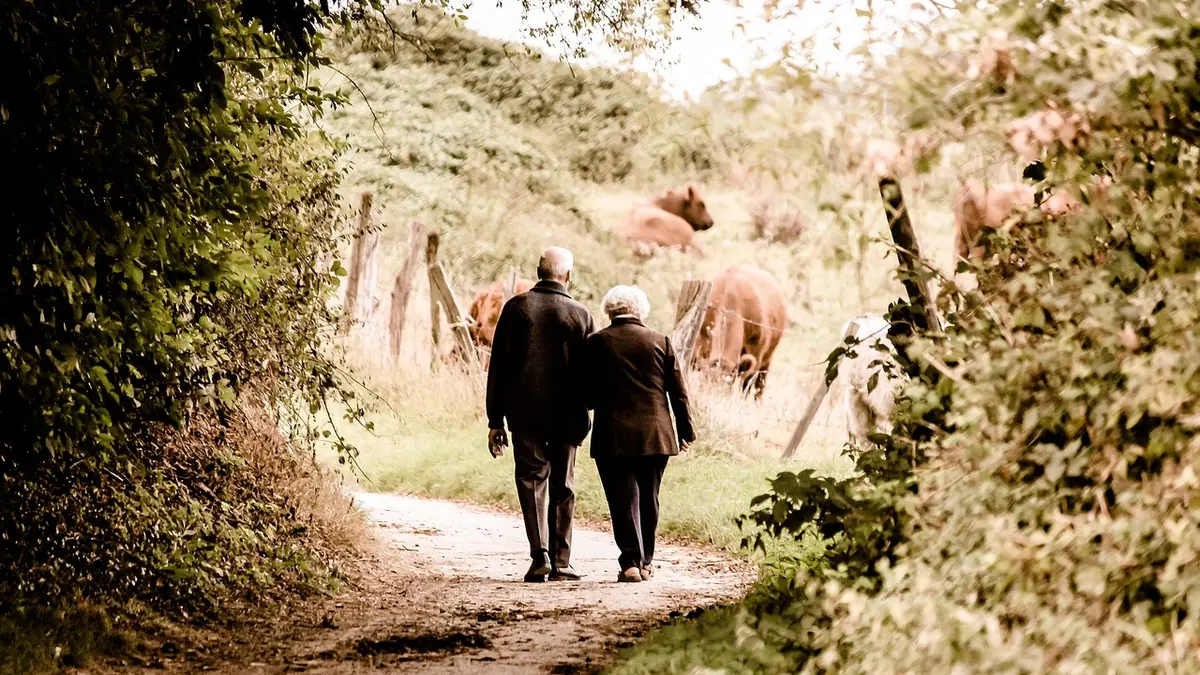
What the "24-hour" idea means
The phrase suggests that the whole day counts: activity, sitting time and sleep. This summary does not cover the full Canadian framework. The numbers below come from WHO guidance [R07].
The main message is simple. Some movement is better than none, and more varied movement is better still.
Why strength and balance matter after 65
Muscle strength supports everyday tasks, such as carrying groceries, getting up from a chair and reaching a high shelf. Resistance training helps older adults keep muscle strength and mass. It also supports function, mobility, independence and quality of life. The same position statement says fears and barriers should be addressed, not ignored [R06].
Shoulders are part of this picture. Strength, mobility, body composition and posture are each linked to shoulder pain and disability in adults 60 and over [R28]. These are targets you can work on, even though the evidence is still developing.
What the research says
- The WHO advises adults to do 150 to 300 minutes of moderate activity a week, or 75 to 150 minutes of vigorous activity [R07].
- Adults should do muscle-strengthening activity at least two days a week [R07]. For adults 65 and over, the WHO also advises multicomponent activity that builds balance and strength at least three days a week [R07].
- Resistance training helps older adults maintain muscle, strength and independence, and it supports quality of life [R06].
- Shoulder pain and disability in older adults are linked to strength, mobility, body composition and posture. The evidence on posture specifically is limited and indirect [R28].
What you can do
If you are new to regular activity, start small and build gradually. Check with your clinician first if you have a heart condition, a recent fall or a shoulder problem.
- Move most days, in small amounts. Short walks, gardening and moving around the house all count toward the weekly total. Seated options, like arm movements in a chair, count too.
- Build strength two or more days a week. Chair-based exercises can build strength. Ask a physiotherapist or certified trainer to show you a safe set for your body.
- Add shoulder work on a regular schedule. Slow, controlled arm movements in a chair are one easy option. Keep them within a comfortable range.
- Practise balance near a support. Stand beside a sturdy counter, and shift your weight slowly from one foot to the other. Hold the counter, and stop if you feel unsteady.
- Keep a simple tally. Note the days you moved. Aim for steady, not perfect.
Where ShoulderBack Pro fits and where it doesn't
The trainer can cover one slice of the plan: seated shoulder work. Overhead Press (High Shelf Reach) and Bicep Tricep are designed to work the shoulders and arms, with the other arm supplying the resistance; resist harder or take longer sets to progress. It does nothing for walking, balance or leg strength, which still need their own time. It is a wellness tool, not a treatment, and has no clinical trials. Details are on the shop page.
When to see a professional
See a doctor or physiotherapist promptly if you have: pain after a fall or injury with sudden weakness or loss of movement; a shoulder that looks deformed, very swollen or bruised; fever or feeling unwell alongside the pain; chest pain or breathlessness (call emergency services); constant pain that doesn't change with rest or activity; pain that wakes you most nights; numbness, tingling or weakness into the arm or hand; pain in several joints at once; or pain that hasn't improved after a couple of weeks of sensible self-care.
If you have had a fall, or your balance is a concern, ask a clinician for a balance check before you start new exercise. A doctor or physiotherapist can diagnose any underlying cause.
Try this movement
Printable fridge card →Frequently asked questions
Do I need the Canadian guidelines specifically?
They are the official Canadian reference, and you should check the current version on a government website. This summary uses WHO guidance, because that is the source reviewed here.
Is any movement better than none?
The WHO says every move counts [R07]. Start with what you can do safely, and build up slowly over weeks.
Can shoulder exercises count toward my strength goals?
They can be one part of it. Shoulder work alone usually does not cover leg strength, balance or whole-body activity, so keep those in the plan too.
I have been mostly inactive for years. Where do I start?
Start with short, easy sessions you can repeat, such as a few minutes of walking or seated arm movement. The WHO's view is that every move counts [R07]. Build up slowly over weeks.
Sources
- Fragala MS, Cadore EL, Dorgo S et al. (2019). Resistance Training for Older Adults: Position Statement From the National Strength and Conditioning Association. J Strength Cond Res. https://pubmed.ncbi.nlm.nih.gov/31343601/
- WHO (2020). Guidelines on physical activity and sedentary behaviour. https://www.sydney.edu.au/news-opinion/news/2020/11/26/new-global-guidelines-on-physical-activity-and-sedentary-behavio.html
- PMC narrative review (2026). Body composition, strength, mobility and posture associated with shoulder pain and disability in community-dwelling older adults. https://www.ncbi.nlm.nih.gov/pmc/articles/PMC13513864/