Sleep, stress, recovery & daily habits
Winter Blues and Stiff Bodies: Light, Routine and Movement in Dark Months
5-minute read · Published January 13, 2025 · Updated January 13, 2025

Winter changes more than the thermometer. Daylight shrinks, walks get shorter, and most of us sit still for longer. By January, many people feel slower, stiffer and less like themselves.
This article looks at the body side of that story. Sleep and daily structure matter just as much, and our guide to sleeping with shoulder pain covers those in more depth. Movement is one piece of a larger picture, not the whole thing.
Why winter can feel heavy and stiff
Less daylight often means less time outside, fewer steps and longer stretches in one chair. When you move less, shoulders, necks and backs often feel tight and slow to start in the morning.
Some people also notice low mood in the darker months. For some, it is mild and passes with the season. For others, it is a pattern called seasonal affective disorder (SAD). SAD is a form of depression that tends to return at the same time each year. Only a doctor or mental health clinician can diagnose it. This article cannot do that for you.
Stiffness and low mood may also feed each other: a stiff shoulder can make you avoid reaching, lifting and walking, and less activity can leave you feeling flatter. A small daily habit is one way to interrupt that loop.
What the research says
- Public health guidance asks adults to do muscle-strengthening activity at least two days a week. It asks adults 65 and older to add balance and functional strength work at least three days a week [R07].
- Tai Chi and Qigong are gentle, flowing practices. A review of clinical trials in older adults found they may help physical function. It also found they may reduce depression and anxiety, though the studies vary in quality [R10].
- Resistance training helps older adults keep strength, mobility and independence. It also supports quality of life [R06].
- In a modest-quality trial, a seven-week Tai Chi softball program improved shoulder mobility and arm strength in older adults [R13].
These studies show that gentle, regular activity is a useful part of a wider plan. None of them show that movement alone treats seasonal depression. That plan can also include daylight, sleep, social contact and professional care when needed.
What you can do
- Start with three minutes a day. Choose one short block you can repeat most mornings. Seated option: sit in an armchair with your feet flat and do slow shoulder rolls and gentle arm reaches.
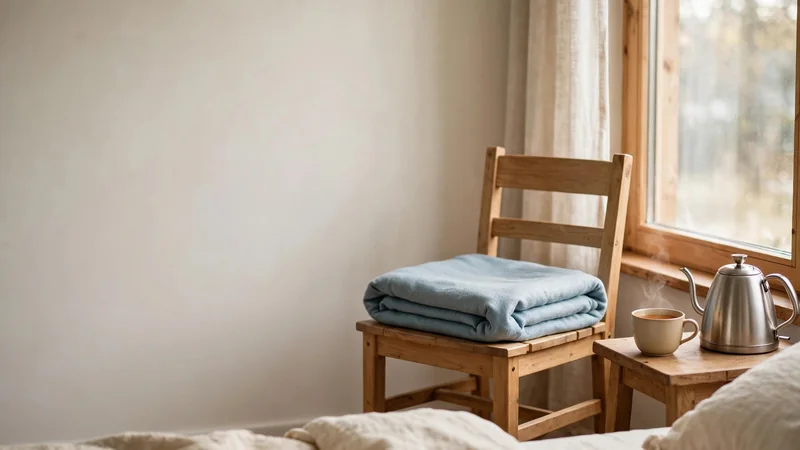
- Get some daylight. Take a short walk outdoors around midday, dressed in warm layers. Watch for ice. Seated option: sit by your brightest window with your morning drink.
- Add light resistance twice a week. Use slow, controlled effort and stop short of strain. Seated option: sit tall and reach slowly with a full water bottle in each hand.
- Attach movement to something you already do. Do your block while the kettle heats or while the coffee brews. Our habit stacking guide has more ideas. Seated option: all of these work from a chair.
- Keep a simple log. Note the days you moved, plus your mood, energy and sleep. Bring the notes to your clinician. Seated option: keep the log beside your chair, where you will see it.
- Keep one social plan each week. A phone call, a coffee with a friend or a seated class at a community centre all count. Seated option: most of these are seated already.
Where ShoulderBack Pro fits — and where it doesn't
ShoulderBack Pro does nothing for low mood or light exposure. What it offers is a ready-made three-minute habit: the Refreshing Awareness ritual strings together SeeSaw, Open The Door and Windshield Wipers, seated or standing, with the other arm providing the resistance. If a small pocket trainer would help you keep a morning routine, it is one optional tool. It is a wellness product with no clinical trials, not an answer to winter low mood.
When to see a professional
See a doctor or physiotherapist promptly if you have: pain after a fall or injury with sudden weakness or loss of movement; a shoulder that looks deformed, very swollen or bruised; fever or feeling unwell alongside the pain; chest pain or breathlessness (call emergency services); constant pain that doesn't change with rest or activity; pain that wakes you most nights; numbness, tingling or weakness into the arm or hand; pain in several joints at once; or pain that hasn't improved after a couple of weeks of sensible self-care.
Low mood that lasts, or that stops you from working, sleeping or eating well, needs a clinician. Only a doctor or mental health clinician can diagnose seasonal affective disorder. If you have thoughts of harming yourself, call or text 9-8-8, Canada's Suicide Crisis Helpline, or call emergency services now.
Try this movement
Refreshing Awareness (morning) ritual →Frequently asked questions
Can exercise replace treatment for seasonal affective disorder?
No. Movement can be a helpful support, but it does not replace care from a clinician. Ask yours how activity fits into your plan.
Is it safe to walk outside with stiff shoulders in winter?
Many people walk safely in winter. Dress in warm layers, watch for ice, and stop if you feel pain, dizziness or chest discomfort.
Should I buy a light box?
Ask a clinician first. Some people find bright light helpful, but the evidence varies, and light therapy is not right for everyone.
Sources
- WHO (2020). Guidelines on physical activity and sedentary behaviour. https://www.sydney.edu.au/news-opinion/news/2020/11/26/new-global-guidelines-on-physical-activity-and-sedentary-behavio.html
- Rogers CE, Larkey LK, Keller C (2009). A review of clinical trials of tai chi and qigong in older adults. West J Nurs Res 31(2):245-79. https://qigonginstitute.org/abstract-print/4690
- Fragala MS, Cadore EL, Dorgo S et al. (2019). Resistance Training for Older Adults: Position Statement From the National Strength and Conditioning Association. J Strength Cond Res. https://pubmed.ncbi.nlm.nih.gov/31343601/
- Lou L et al. (2017). Effect of Tai Chi softball on function-related outcomes in older adults: RCT. Evid Based Complement Alternat Med. https://search.pedro.org.au/search-results/record-detail/49889