Science explainers & myth-busting
Pain Science 101: Why Your Brain Decides How Much a Shoulder Hurts
6-minute read · Published November 20, 2025 · Updated November 20, 2025

What this is
Many pain scientists describe pain as an output, not a simple gauge: nerves send signals, and the brain weighs them against everything else it senses. Its job is protective. It gets your attention when something might be harmful.
The system can become more sensitive after an injury or a long stretch of stress. Clinicians sometimes call this sensitization. It does not mean the pain is made up. It means the alarm is set to a lower threshold, so ordinary movement can feel loud.
Pain and tissue changes do not always match. That is one reason clinicians ask about your whole life, sleep and stress, not only your scan. A picture can show a change that does not hurt, and a sore shoulder can look quite normal on a picture.
What the research says
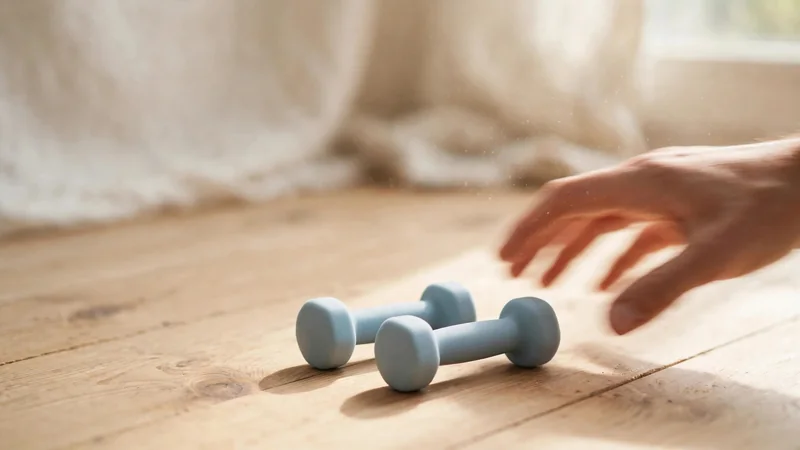
Resisted exercise that progresses over time probably helps shoulder pain and function, though the size of the benefit is uncertain [R01]. Many clinicians think part of the reason is that repeated, graded loading teaches the body that movement is safe.
There isn't strong research on pain science teaching for shoulders specifically; the closest evidence is about exercise.
Most shoulder pain is managed in primary care with advice and exercise. Severe pain after an injury needs a proper diagnosis [R30].
A few ideas are widely shared among clinicians, though the research on each is mixed. Fear of moving can keep a shoulder guarded and stiff. Poor sleep and high stress tend to make pain feel louder. Gradual, repeated, comfortable movement is generally thought to help the system settle, which is why a plan usually starts small and builds. None of this means pain is "all in your head"; it means the whole person is part of the picture, and a clinician can help weigh each piece.
What you can do
- Notice your pattern. Jot down when pain flares: after long screen time, on cold mornings, on stressful days, or after poor sleep. Patterns help you and your clinician.
- Move in small, comfortable ranges. Seated arm glides within a mild level of discomfort are a good place to start.
- Pace it. Several short sessions often work better than one long push followed by a flare.
- Lower the alarm before you start. Slow breathing, a warm drink or a supported seat can help you feel safer before you move.
- Keep a seated option in every plan. Chair-based movement is a real way to keep progressing.
- Build in a check-in. If pain grows, lasts for days, or wakes you at night, book a clinician.
Where ShoulderBack Pro fits — and where it doesn't
ShoulderBack Pro may help with one part of this picture: a sense of control. The SeeSaw glide has one arm guiding the other through gentle reaches, with the other arm providing the resistance, so you choose the effort, pace and range. You can make it harder by resisting more or doing longer sets, seated or standing.
It won't change how your nervous system handles pain, and it won't address a cause such as a tear. It's a wellness tool with no clinical trials behind it, so it is not a treatment for any condition. More here.
When to see a professional
The red-flag list below follows NHS shoulder guidance [R30].
See a doctor or physiotherapist promptly if you have: pain after a fall or injury with sudden weakness or loss of movement; a shoulder that looks deformed, very swollen or bruised; fever or feeling unwell alongside the pain; chest pain or breathlessness (call emergency services); constant pain that doesn't change with rest or activity; pain that wakes you most nights; numbness, tingling or weakness into the arm or hand; pain in several joints at once; or pain that hasn't improved after a couple of weeks of sensible self-care.
Understanding pain does not replace an assessment. A clinician decides what is going on.
Try this movement
SeeSaw (bilateral glide) →Frequently asked questions
If my scan looks fine, is my shoulder pain imaginary?
No. Pain is real even when a scan looks normal. It means the nervous system is responding to something, and a clinician can help work out what.
Can stress make shoulder pain worse?
Stress can make the nervous system more alert, and many people notice more pain on stressful days. Calming routines and steady movement can help some people cope.
Does this mean I should push through pain?
No. Work within a comfortable range and build gradually. Sharp, worsening or night-waking pain means you should get it checked.
Is exercise safe if pain is part of the picture?
Often yes, when it is gentle and progressive and a clinician has ruled out urgent causes. Ask for a plan that starts seated.
Sources
- Naunton J et al. (2020). Effectiveness of progressive and resisted and non-progressive or non-resisted exercise in rotator cuff related shoulder pain: systematic review and meta-analysis of RCTs. Clinical Rehabilitation. https://search.pedro.org.au/search-results/record-detail/61404
- NHS Greater Glasgow & Clyde, Shoulder red flags; NHS MPFT, Shoulder pain self-help; BESS/BOA pathway summary (2021). https://www.nhsggc.scot/page_category/services/page/33