Alternative & complementary remedies: what the evidence says
Kinesiology Tape for Shoulders: What the Studies Show
4-minute read · Published April 10, 2026 · Updated April 10, 2026
What this is
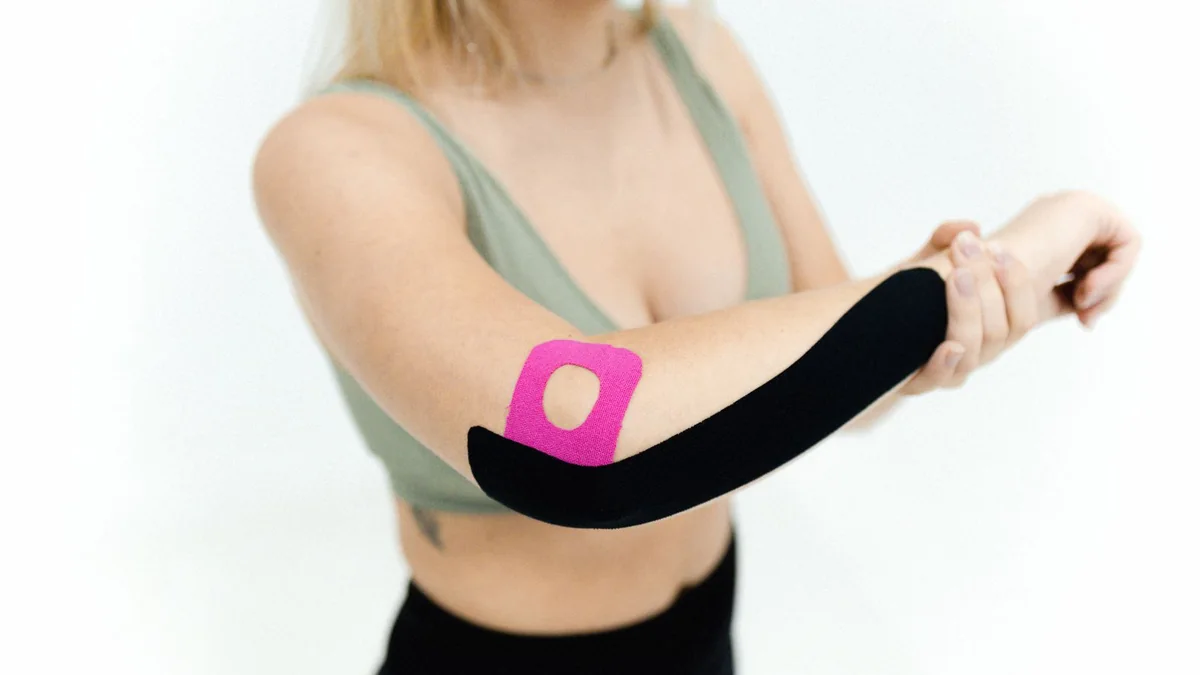
Kinesiology tape is a flexible, elastic tape. People apply it to the skin over a sore area, often with the idea that it lifts the skin or supports the muscle. Many people report comfort from the feel of the tape.
Comfort is worth noticing, but comfort and real improvement are different things. The bigger question is whether tape changes the pain or the tissue itself. The sources we use do not answer that for the shoulder.
What the research says
- Our reference list does not include a trial of kinesiology tape for shoulder pain. The evidence level in our sources is insufficient.
- Acupuncture, another passive approach, had about the same results as sham treatment at two to four weeks, with not enough evidence to say it works [R24]. That pattern is a reminder that passive remedies need careful comparison.
- Gentle movement alone probably does not move rotator-cuff pain much, while progressive, resisted exercise probably helps [R01].
- Most shoulder pain is managed in primary care with advice and exercise [R30].
What you can do
- Get an assessment first. A clinician can tell you whether tape is worth trying. Seated option: book the visit by phone from your chair.
- Ask what you want from it. Comfort, support and pain relief are different goals. Know which one you are chasing.
- Keep moving, gently. Seated shoulder work is a reasonable base. Stop if pain is sharp.
- Protect your skin. If your skin is sensitive, ask a pharmacist about adhesives before you apply anything.
- Track what happens. Note pain and daily function over a few weeks, and bring the notes to your clinician.
For other passive options, see ice for shoulder pain and heat for stiff shoulders.
Where ShoulderBack Pro fits — and where it doesn't
ShoulderBack Pro is a movement trainer, not a tape or a support, so it doesn't fit this question. A physiotherapist who can assess your shoulder is the right person to ask about taping. The routines page is there if you later want a gentle seated habit.
When to see a professional
See a doctor or physiotherapist promptly if you have: pain after a fall or injury with sudden weakness or loss of movement; a shoulder that looks deformed, very swollen or bruised; fever or feeling unwell alongside the pain; chest pain or breathlessness (call emergency services); constant pain that doesn't change with rest or activity; pain that wakes you most nights; numbness, tingling or weakness into the arm or hand; pain in several joints at once; or pain that hasn't improved after a couple of weeks of sensible self-care.
Try this movement
Greet the Morning (seated) ritual →Frequently asked questions
Does kinesiology tape help shoulder pain?
Our sources do not show that it does. Some people find it comforting, so ask a clinician before relying on it.
Is tape safe to use?
Many people tolerate it. Ask a pharmacist if your skin is sensitive, and stop and get advice if your skin reacts.
What should I do instead?
Get an assessment, then choose gentle, progressive movement that a clinician approves.
Sources
- Naunton J et al. (2020). Effectiveness of progressive and resisted and non-progressive or non-resisted exercise in rotator cuff related shoulder pain: systematic review and meta-analysis of RCTs. Clinical Rehabilitation. https://search.pedro.org.au/search-results/record-detail/61404
- Cochrane (Green S et al., 2005; edited, conclusions unchanged). Acupuncture for shoulder pain. CD005319. https://www.cochrane.org/evidence/CD005319
- NHS Greater Glasgow & Clyde — Shoulder red flags; NHS MPFT self-help — Shoulder pain; BESS/BOA pathway summary (2021). https://pmc.ncbi.nlm.nih.gov/articles/PMC7905504
More in this topic
 Essential guide: Alternative Remedies for Shoulder Pain: What the Evidence Says About Each
 Over-the-Counter Pain Relief: Acetaminophen vs NSAIDs for Shoulder Pain
 PRP and Stem-Cell Injections for Shoulders: Expensive, Uncertain
 Shockwave Therapy for Calcific Shoulder Tendinitis: One of the Better-Supported Options