Science explainers & myth-busting
Inflammation Explained: Acute vs Chronic, Friend vs Foe
6-minute read · Published March 2, 2026 · Updated March 2, 2026
What this is
Inflammation is the body's first response to injury, infection or irritation. Your immune system, the body's defence network, sends blood flow and immune cells to the area. That is why a healing cut can look red, feel warm, and swell for a short time.
Acute inflammation usually settles as healing finishes. Chronic inflammation lasts longer. It can be part of conditions such as inflammatory arthritis, which only a doctor can diagnose.
Not all soreness is inflammation in the harmful sense. Feeling sore after new activity is common and often part of adapting. Pain that keeps returning, or swelling that does not go down, deserves a closer look.
What the research says
- Diet patterns are linked to less pain. Whole-diet patterns such as Mediterranean or plant-based eating are linked to less pain and better function in osteoarthritis. The word "linked" matters, because this is an association, not proof [R21].
- Some compounds look promising in the lab. Curcumin, polyphenols and omega-3s show anti-inflammatory effects in laboratory studies and in some clinical work [R21].
- Supplement evidence is mixed. Two studies support omega-3 for rheumatoid arthritis. The authors could not recommend vitamin E, ginger, turmeric or omega-3 for osteoarthritis based on evidence up to 2009 [R22].
- Many supplements lack good evidence. The NCCIH notes that evidence for many supplements is insufficient for musculoskeletal pain. Turmeric has insufficient evidence despite lab promise [R20].
- Anti-inflammatory eating complements care. An anti-inflammatory diet is associated with lower inflammatory markers in rheumatoid arthritis. It complements treatment and never replaces it [R23].
What you can do
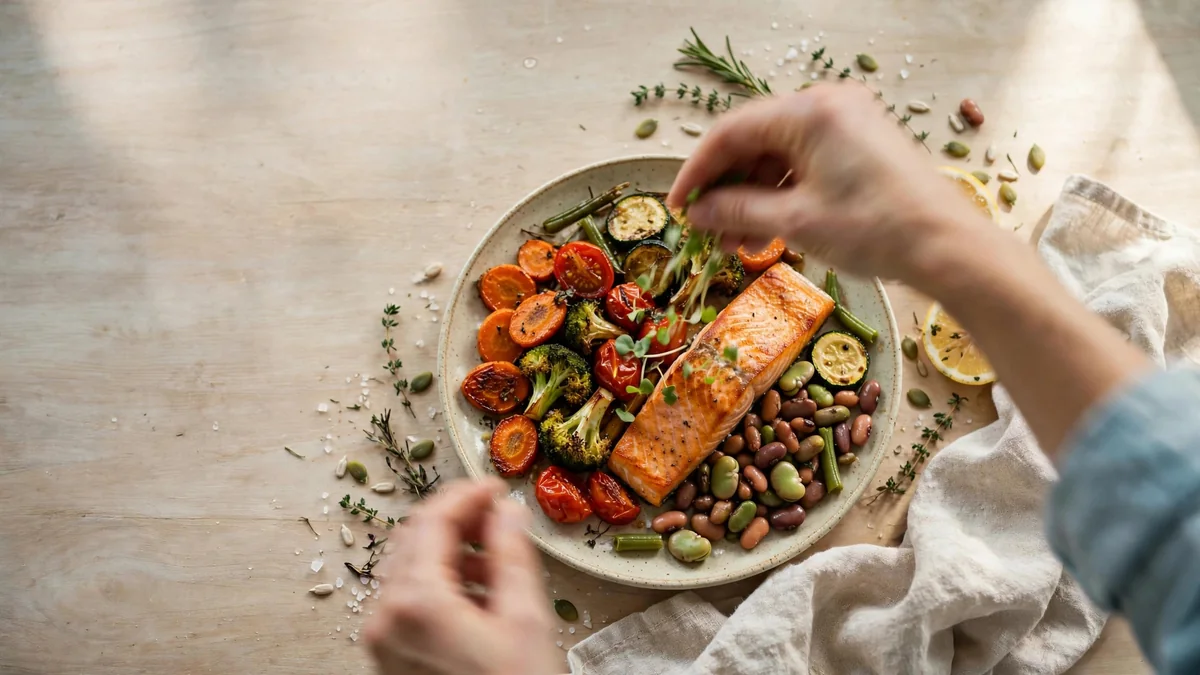
- Eat a varied pattern. Build meals around vegetables, fruit, beans, whole grains, fish and olive oil. A pattern matters more than any single food.
- Keep moving within comfort. The WHO recommends regular activity for adults, and every move counts [R07].
- Choose seated movement on hard days. Seated marching, gentle arm swings, or a chair-based class all count as movement.
- Check supplements with a professional. Talk to your pharmacist or doctor before taking any supplement, especially if you take blood thinners or other medication.
- Notice patterns. Write down swelling, warmth, morning stiffness and how long each lasts. This helps your clinician.
- Do not chase one food. Be wary of claims that a single food or pill calms all inflammation.
Where ShoulderBack Pro fits and where it doesn't
ShoulderBack Pro doesn't fit here, since it isn't a treatment for inflammation. If swelling, warmth or pain keeps coming back, see a doctor. General movement ideas are in the free lessons.
When to see a professional
Only a doctor can diagnose an inflammatory condition. Ask one if swelling, warmth or joint pain persists, or if several joints are affected at once.
See a doctor or physiotherapist promptly if you have: pain after a fall or injury with sudden weakness or loss of movement; a shoulder that looks deformed, very swollen or bruised; fever or feeling unwell alongside the pain; chest pain or breathlessness (call emergency services); constant pain that doesn't change with rest or activity; pain that wakes you most nights; numbness, tingling or weakness into the arm or hand; pain in several joints at once; or pain that hasn't improved after a couple of weeks of sensible self-care.
Try this movement
SeeSaw (bilateral glide) →Frequently asked questions
Is all inflammation bad?
No. Short-term inflammation is part of healing. Long-term inflammation is different and is part of some conditions, which a doctor can diagnose.
Can diet reduce inflammation?
Eating patterns are linked to less pain in osteoarthritis, but the link is not proof. Think of diet as a supporting habit, not a replacement for care.
Should I take turmeric or ginger?
The evidence is insufficient or unclear. Talk to your pharmacist or doctor first, especially if you take blood thinners or other medication.
Does this mean I should avoid movement?
No. Regular movement is generally recommended. If you have an inflammatory condition, check with your clinician about the right level of activity.
Sources
- WHO (2020). Guidelines on physical activity and sedentary behaviour. https://www.sydney.edu.au/news-opinion/news/2020/11/26/new-global-guidelines-on-physical-activity-and-sedentary-behavio.html
- NCCIH (US National Center for Complementary and Integrative Health). Nutritional Approaches for Musculoskeletal Pain and Inflammation. https://www.nccih.nih.gov/health/providers/digest/musculoskeletal
- PMC narrative review (2025/26). Nutritional Interventions in Osteoarthritis: Mechanisms, Clinical Evidence, and Translational Opportunities. https://www.ncbi.nlm.nih.gov/pmc/articles/PMC12844890/
- Rosenbaum CC et al. (2010). Antioxidants and antiinflammatory dietary supplements for osteoarthritis and rheumatoid arthritis. Altern Ther Health Med. https://pubmed.ncbi.nlm.nih.gov/20232616/
- EBSCO Health Notes. Exploring anti-inflammatory diets in rheumatology. https://about.ebsco.com/blogs/health-notes/exploring-anti-inflammatory-diets-rheumatology