Alternative & complementary remedies: what the evidence says
CBD for Joint Pain in Canada: Legal, Popular, Under-Studied
5-minute read · Published February 6, 2026 · Updated February 6, 2026

Why people look at CBD for joints
Joint pain often comes with stiffness, swelling or a sense that the joint is inflamed. People look for ways to feel more comfortable, and CBD is often presented as a natural option.
Many people also choose supplements because they want more control over their pain. That goal is reasonable. The question is whether the choice has evidence behind it, and whether it could interact with other medicines.
Being available is not the same as working. A product can be easy to buy, widely discussed and sold legally, and still have no good trial behind it. Those are three separate questions. Only the last one tells you whether a product is likely to help.
Pain also has many sources, and a clinician who examines you is the person who can say which.
What the research says
- The sources in this article do not study CBD for joint pain, so it cannot be placed on the evidence scale. Treat claims about CBD and joints as unproven. Evidence varies, so ask your clinician.
- The NCCIH summary of nutritional approaches to musculoskeletal pain says the evidence is insufficient for many supplements [R20].
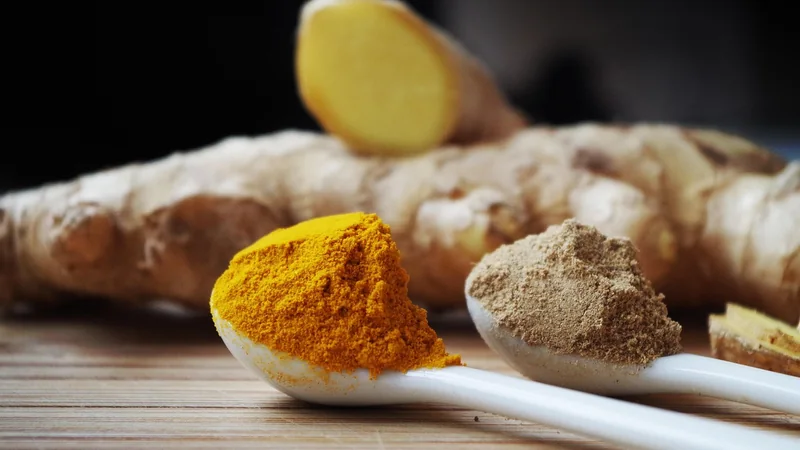
- Within that summary, the picture for a few supplements is as follows. Omega-3 fats show modest benefit in rheumatoid arthritis. Devil's claw shows limited short-term benefit for low back pain. Ginger is unclear. Turmeric and bromelain have insufficient evidence [R20].
- An older review found two studies supporting omega-3 for rheumatoid arthritis. Its authors could not recommend vitamin E, ginger, turmeric or omega-3 for osteoarthritis, based on evidence to 2009 [R22]. The evidence is mixed and dated.
- Whole-diet patterns, such as Mediterranean or plant-based eating, are linked to less pain and better function in osteoarthritis. "Linked to" is not "proven to" [R21].
How to judge a product claim
Before you trust a product claim, ask a few plain questions:
- Was the product tested in people with your condition, or only in a lab or in animals?
- How many people were in the study, and how long did it last?
- Did the study compare the product with a placebo, a sugar pill or no treatment?
- Who paid for the study, and who sells the product?
If the answers are unclear, the claim is probably not well supported. Treat a glowing testimonial as a starting point for a conversation with your clinician, not as proof.
What you can do
- Get the pain checked. Joint pain that lasts, wakes you at night or spreads to other joints needs a clinician's review. Do this before you add anything new.
- Read labels and ask questions. Ask a pharmacist what is in the product, how much is in each dose, and whether it could interact with your other medicines.
- Check interactions if you take blood thinners or other medication. Talk to your pharmacist or doctor first. This applies to CBD and to any supplement.
- Keep a simple log. Note what you tried, when you started it, and how your pain and sleep changed over several weeks. A log helps your clinician see the pattern.
- Keep gentle movement going. Seated shoulder circles or a few slow reaches can be done in a chair. A movement habit you enjoy is more likely to last than any single product.
Where ShoulderBack Pro fits and where it doesn't
This topic is outside what the trainer is for. For ongoing joint pain or questions about CBD, a clinician or pharmacist is the right first step. The routines page covers movement only.
When to see a professional
See a doctor or physiotherapist promptly if you have: pain after a fall or injury with sudden weakness or loss of movement; a shoulder that looks deformed, very swollen or bruised; fever or feeling unwell alongside the pain; chest pain or breathlessness (call emergency services); constant pain that doesn't change with rest or activity; pain that wakes you most nights; numbness, tingling or weakness into the arm or hand; pain in several joints at once; or pain that hasn't improved after a couple of weeks of sensible self-care.
Joint pain and questions about CBD both belong with a clinician. A family doctor can diagnose the cause of the pain. A pharmacist can check for interactions with your medication.
Try this movement
Greet the Morning (seated) ritual →Frequently asked questions
Is CBD proven to relieve joint pain?
Not in the research reviewed here. Some people report relief, but a personal report is not the same as proof. Ask your clinician before trying it.
Are omega-3 fats a better bet?
The evidence is modest, and it is strongest for rheumatoid arthritis rather than general joint pain [R20]. Check with your doctor before starting a supplement.
Can I take CBD with other medicines?
Ask your pharmacist first. Blood thinners and other medicines can interact with supplements. Do not change prescribed medication without advice.
Is CBD safer than prescription pain relief?
The research reviewed here does not answer this. Natural does not automatically mean safe, and a product's side effects and interactions still need a professional check.
Sources
- NCCIH (US National Center for Complementary and Integrative Health). Nutritional Approaches for Musculoskeletal Pain and Inflammation. https://www.nccih.nih.gov/health/providers/digest/musculoskeletal
- PMC narrative review (2025/26). Nutritional Interventions in Osteoarthritis: Mechanisms, Clinical Evidence, and Translational Opportunities. https://www.ncbi.nlm.nih.gov/pmc/articles/PMC12844890/
- Rosenbaum CC et al. (2010). Antioxidants and antiinflammatory dietary supplements for osteoarthritis and rheumatoid arthritis. Altern Ther Health Med. https://pubmed.ncbi.nlm.nih.gov/20232616/
More in this topic
 Essential guide: Alternative Remedies for Shoulder Pain: What the Evidence Says About Each
 Over-the-Counter Pain Relief: Acetaminophen vs NSAIDs for Shoulder Pain
 PRP and Stem-Cell Injections for Shoulders: Expensive, Uncertain
 Shockwave Therapy for Calcific Shoulder Tendinitis: One of the Better-Supported Options