Back & neck: upper, mid and lower
Upper Back Pain: Common Causes, Honest Fixes and When to Get Help
9-minute read · Published June 18, 2026 · Updated June 18, 2026

What upper back pain is
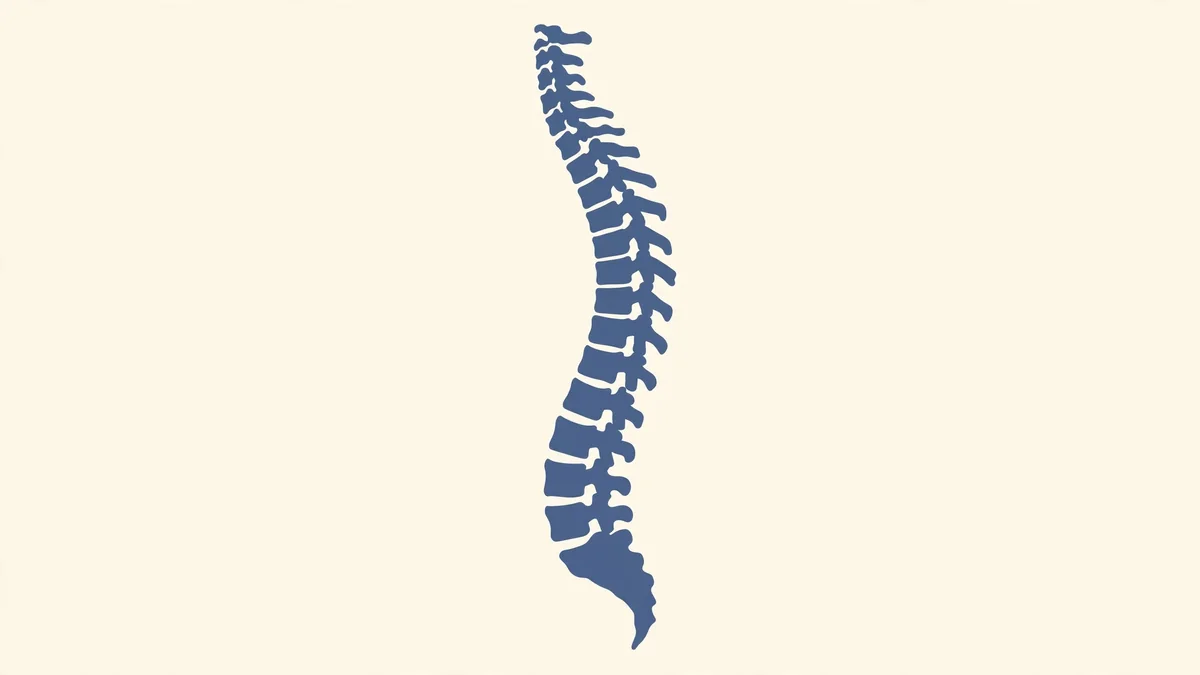
The upper back, also called the thoracic spine, is the middle section of your spine between the neck and the lower back. It connects to your ribs and sits behind your shoulder blades (scapulae). That is why an ache "between the shoulder blades" is a very common complaint. The pain can feel dull, tight, burning or sharp, and it can stay in one place or spread into the neck, the shoulder or the ribs.
Most upper back pain is not dangerous. It is still worth understanding, because the right response depends on the pattern. A doctor or physiotherapist will examine you and decide what is driving the pain. This article can help you describe your symptoms and choose sensible first steps, but it cannot diagnose you.
Common causes and contributors
Upper back pain rarely has one clean cause. Clinicians often look at several contributors together:
- Long periods of sitting or screen work. Holding one position for hours is a common pattern. It does not mean your posture is "wrong," but staying still for long stretches tends to make the body feel stiff.
- Low strength and mobility in the upper back and shoulders. In adults over 60, strength, mobility and body composition are linked with shoulder pain and disability [R28].
- Neck involvement. Forward head posture is associated with neck pain, and the neck and upper back often share the strain [R27].
- Stress and muscle tension. Many people notice more tightness when they are under pressure, and many people report this.
- Sudden or unfamiliar load. Lifting, gardening, moving furniture or a sporting session can flare an ache that was already there.
- Sleep position and previous injury. These can contribute, and a clinician can help you look at them.
Note what the evidence does not show. An umbrella review of 41 systematic reviews found no consensus that spinal posture causes low-back pain [R25]. The same caution is sensible for the upper back, so a posture label is not a diagnosis, and "fixing your posture" is not a reliable answer on its own.
What a clinical check usually involves
If your upper back pain is new, severe or not settling, a doctor or physiotherapist will usually start by asking questions. They will want to know when the pain started, what makes it better or worse, whether it wakes you at night, and whether it spreads into your arms, chest or neck. They may also ask about recent falls, illness, weight changes and your general health.
The physical check normally looks at how your neck, shoulder blades and upper back move, how strong those muscles are, and whether the nerves in your arm are working normally. Imaging is not automatic for most shoulder and upper back pain. NHS England advises against routine scans for shoulder pain unless a treatment pathway calls for one [R30]. A clinician decides, based on your history and exam, whether any test is needed.
Bring a short written list to the appointment: when the pain started, what it feels like, what eases it, and any other symptoms. It helps the clinician reach the cause faster.
What the research says
- For neck pain with forward head posture, exercise-based programs, including stabilisation exercise, are the main studied treatment [R27].
- Therapeutic exercise can improve forward-head angle. The link between that change and a change in pain is still unsettled [R26].
- Strength, mobility and posture are each associated with shoulder pain and disability in adults over 60. The evidence for posture specifically in older adults is limited and indirect [R28].
- Most shoulder pain is managed in primary care with advice and exercise [R30]. There isn't strong research on upper back pain specifically; the points above are the closest evidence.
Pain patterns worth noticing
Pain patterns can give your clinician useful clues. They are not a diagnosis, but they help you describe what you feel.
- Worse after long sitting. This often points to stiffness from holding one position. Changing position more often is a sensible first test.
- Worse after a specific activity. Lifting, gardening or a new sport can add load. Note the activity and how long the ache lasts afterwards.
- Worse at night or lying down. Night pain that wakes you is on the red-flag list in this article, and it needs a clinician's assessment.
- Spreading into the arm, hand or chest. This needs prompt assessment, especially with numbness, tingling, weakness or breathlessness.
Keep a simple note of which pattern fits you, and share it at your appointment.
What you can do
- Move through the day. Stand up, shift position and walk a little regularly. Small movement breaks often help more than one long session of exercise.
- Set up your workspace for comfort, not perfection. Keep the screen at a height where your neck can relax, your elbows can rest near your sides, and your feet are supported. Change your setup over time, and do not chase an ideal you cannot hold.
- Use gentle upper back mobility. Seated thoracic extension, where you lift your chest slightly while keeping your neck easy, is a simple place to start.
- Add controlled strength work for the upper back and shoulders. Chair-based rows, band rows or seated shoulder movements are common options. Progress slowly.
- Seated option for every move. If standing feels hard, do the movement from an armchair with your back supported.
- Keep a simple log. Note what sets the ache off, what eases it, and how long it lasts. Bring it to your appointment.
- Build the habit, not the perfect routine. A short, repeatable plan you will keep is better than a long one you abandon.
For most people, these steps are a sensible first stage. If the pain is not improving after a couple of weeks of sensible self-care, see a clinician. The box below lists when to act sooner.

Where ShoulderBack Pro fits — and where it doesn't
The trainer may help with one part of this: controlled two-arm movement through the upper back and shoulders. The site lists Locomotive (rolling forward circles, aimed at the thoracic extensors and back of the shoulder) and Grinders (small circles between the shoulder blades) as the closest matches. You can do both seated, and the other arm provides the resistance.
It doesn't diagnose the cause, treat a disc, nerve or fracture problem, or replace physiotherapy, and it isn't a posture corrector. It's a wellness tool, and there are no clinical trials of it yet. Once a clinician has cleared you, the routines page shows both movements, and the trainer is $29 CAD.
For related reading, see mid-back stiffness and how to move the thoracic spine, pain between the shoulder blades when sitting, and whether shoulder problems can cause neck pain.
When to see a professional
See a doctor or physiotherapist promptly if you have: pain after a fall or injury with sudden weakness or loss of movement; a shoulder that looks deformed, very swollen or bruised; fever or feeling unwell alongside the pain; chest pain or breathlessness (call emergency services); constant pain that doesn't change with rest or activity; pain that wakes you most nights; numbness, tingling or weakness into the arm or hand; pain in several joints at once; or pain that hasn't improved after a couple of weeks of sensible self-care.
A doctor or physiotherapist diagnoses the cause of upper back pain. Chest pain, breathlessness or pain that spreads with other symptoms needs urgent medical attention, not a self-help plan.
Try this movement
Locomotive (thoracic extensors, posterior cuff) →Frequently asked questions
What is the most common cause of upper back pain?
There is rarely one cause. Long periods of sitting, low strength and mobility in the upper back, stress-related muscle tension and sudden loads are common contributors. A clinician can help sort out which apply to you.
Does bad posture cause upper back pain?
The evidence is not settled. An umbrella review of 41 systematic reviews found no consensus that spinal posture causes low-back pain [R25]. Posture may be one factor among many, not the single cause.
Can exercise help upper back pain?
Exercise is the main studied treatment for neck pain with forward head posture [R27], and it can improve forward-head angle, though the link with pain change is unsettled [R26]. Ask a physiotherapist to help you choose.
Is upper back pain a sign of something serious?
Most upper back pain is not serious, but some signs need prompt assessment. These include pain after a fall, sudden weakness, chest pain or breathlessness, fever, and pain that wakes you most nights. See the box in this article.
Can ShoulderBack Pro help my upper back?
For some people it may help with one part, controlled movement through the upper back and shoulders. It does not diagnose the cause of pain or replace clinical care, and it is not a posture corrector.
Sources
- Swain CTV et al. (2020). No consensus on causality of spine postures or physical exposure and low back pain: umbrella review of 41 systematic reviews. Journal of Biomechanics. https://getfitcraft.com/guides/exercises-for-posture
- Sheikhhoseini R et al. (2018). Effectiveness of therapeutic exercise on forward head posture: systematic review and meta-analysis. Journal of Manipulative and Physiological Therapeutics. https://getfitcraft.com/guides/exercises-for-posture
- Healthcare (MDPI) (2023) 11(19):2604. Treatment of chronic neck pain in patients with forward head posture: systematic narrative review. https://www.mdpi.com/2227-9032/11/19/2604
- PMC narrative review (2026). Body composition, strength, mobility and posture associated with shoulder pain and disability in community-dwelling older adults. https://www.ncbi.nlm.nih.gov/pmc/articles/PMC13513864/
- NHS Greater Glasgow & Clyde, Shoulder red flags; NHS MPFT self-help, Shoulder pain; BESS/BOA pathway summary (2021). https://pmc.ncbi.nlm.nih.gov/articles/PMC7905504